Laser Power and Travel Speed: Finding the Dynamic Balance
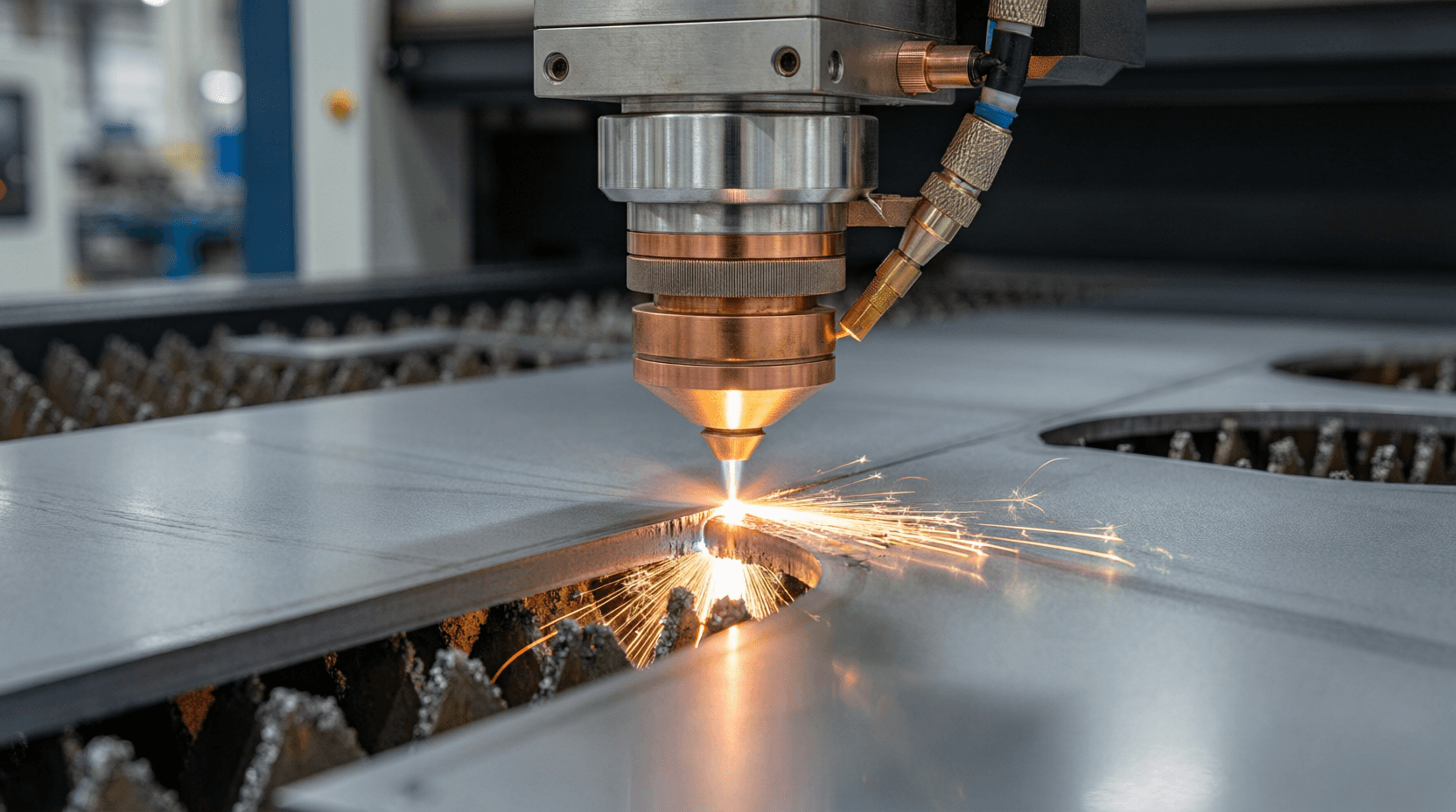
For cutting 10mm thick stainless steel, the optimal laser power range is typically between 2,000 and 4,000 watts. This ensures a clean and efficient cut. A travel speed of 1.5 meters per minute is generally recommended for 5mm aluminum sheets to achieve a high-quality cut with minimal burr formation
In industrial laser processing (intouchray.com), the most frequent question from fresh learners is: “How much power do I need?” The answer is always incomplete without the second half of the equation: “How fast are you moving?”
To master metal fabrication manufacturing (Anti-Collision Systems: Protecting High-Value Cutting Heads), an operator must understand that Laser Power (P) and Travel Speed (v) are the two primary levers that control the thermal input into the workpiece.
1. Laser Power (P): The Energy Source — Power Laser Cutting
Laser power, measured in Watts (W) or Kilowatts (kW), represents the raw energy available to perform work.
High Power: Allows for the processing of thicker materials or faster speeds.
Low Power: Necessary for delicate marking or thin-gauge welding where “burn-through” must be avoided.
However, power is only effective if the material can absorb it. As we learned in Article #32, the absorption coefficient determines how much of this raw power actually turns into heat.
In advanced systems, the CNC and PLC integration (Galvanized Steel Welding: Managing Zinc Vaporization) performs “Look-Ahead” processing. As the machine approaches a sharp corner and must slow down, the CNC automatically lowers the laser power. This prevents the corners from over-melting, ensuring the noble precision of the geometry remains intact.
What is the optimal laser power range for cutting 10mm thick stainless steel?
For cutting 10mm thick stainless steel, the optimal laser power range is typically between 2,000 and 4,000 watts. This ensures a clean and efficient cut.
How does travel speed affect the quality of the laser cut on 5mm aluminum sheets?
A travel speed of 1.5 meters per minute is generally recommended for 5mm aluminum sheets to achieve a high-quality cut with minimal burr formation.
Can you provide a tolerance range for edge quality when using a 3,000-watt laser at 2.0 meters per minute on 8mm mild steel?
When using a 3,000-watt laser at 2.0 meters per minute on 8mm mild steel, the edge quality can be expected to have a tolerance of ±0.1 mm, ensuring a precise and smooth finish.
What is the cost impact of increasing laser power from 2,000 watts to 4,000 watts for a 6-hour operation?
Increasing the laser power from 2,000 watts to 4,000 watts for a 6-hour operation can increase the energy cost by approximately $15, assuming an electricity rate of $0.10 per kilowatt-hour.
What is the maximum travel speed for a 5,000-watt laser when cutting 12mm carbon steel to maintain a 0.2 mm kerf width?
To maintain a 0.2 mm kerf width when cutting 12mm carbon steel with a 5,000-watt laser, the maximum travel speed should not exceed 1.2 meters per minute.
What is the minimum laser power required to achieve a 0.1 mm tolerance on 3mm titanium sheets at a travel speed of 1.0 meter per minute?
To achieve a 0.1 mm tolerance on 3mm titanium sheets at a travel speed of 1.0 meter per minute, the minimum laser power required is 1,500 watts.
Intouchray Laserolutions
As a leading manufacturer of industrial laser equipment, Intouchray designs and builds laser cladding, hardening, and surface repair systems that combine precision engineering with operational reliability. Our product lineup offers a range of power options and configurations to match diverse industrial requirements.
Product Models
CML-3000
Ground Rail
IT-RF5018-1
IT-RF5018-2
IT-RF5018-3
Laser Cladding & Hardening Head
Laser Cladding Head
Laser Hardening Head
Key Features
Laser cladding forms a strong metallurgical bond with the workpiece surface.
Concentrated laser energy control minimizes workpiece deformation due to heat input.
Improves wear resistance, corrosion resistance, and oxidation resistance of the part surface.
Enables recycling and remanufacturing, extending equipment lifespan and saving operating costs.
Laser cladding layer and workpiece surface form a firm metallurgical interface.
Laser energy control is precise, resulting in minimal thermal distortion.
Industry Applications
Additive manufacturing
Aerospace
Agricultural machinery tools
Assembly lines
Automated assembly lines
Automated welding and cutting
All laser claddlasermanufactured under ISO 9001 quality management protocols. Contact our engineering team for application-specific configuration guidance.