Application of laser welding in kitchen appliance industry
In the kitchen appliance industry, welding primarily involves thin stainless steel sheets approximately 1 millimeter thick, using either butt welding or fillet welding. Compared to conventional TIG welding, laser welding achieves 5 to 10 times faster processing speeds while consuming significantly less power and materials, with exceptionally stable welding quality.
The heat affected zone of welding is small, which can better guarantee the yield of welding products.
Key Considerations in Laser Welding
It can help customers to reduce the polishing process, and the finished product can be put on the line directly after drawing wire. It can also save some labor and equipment input costs for customers, so that customers’ products are more competitive in the market.
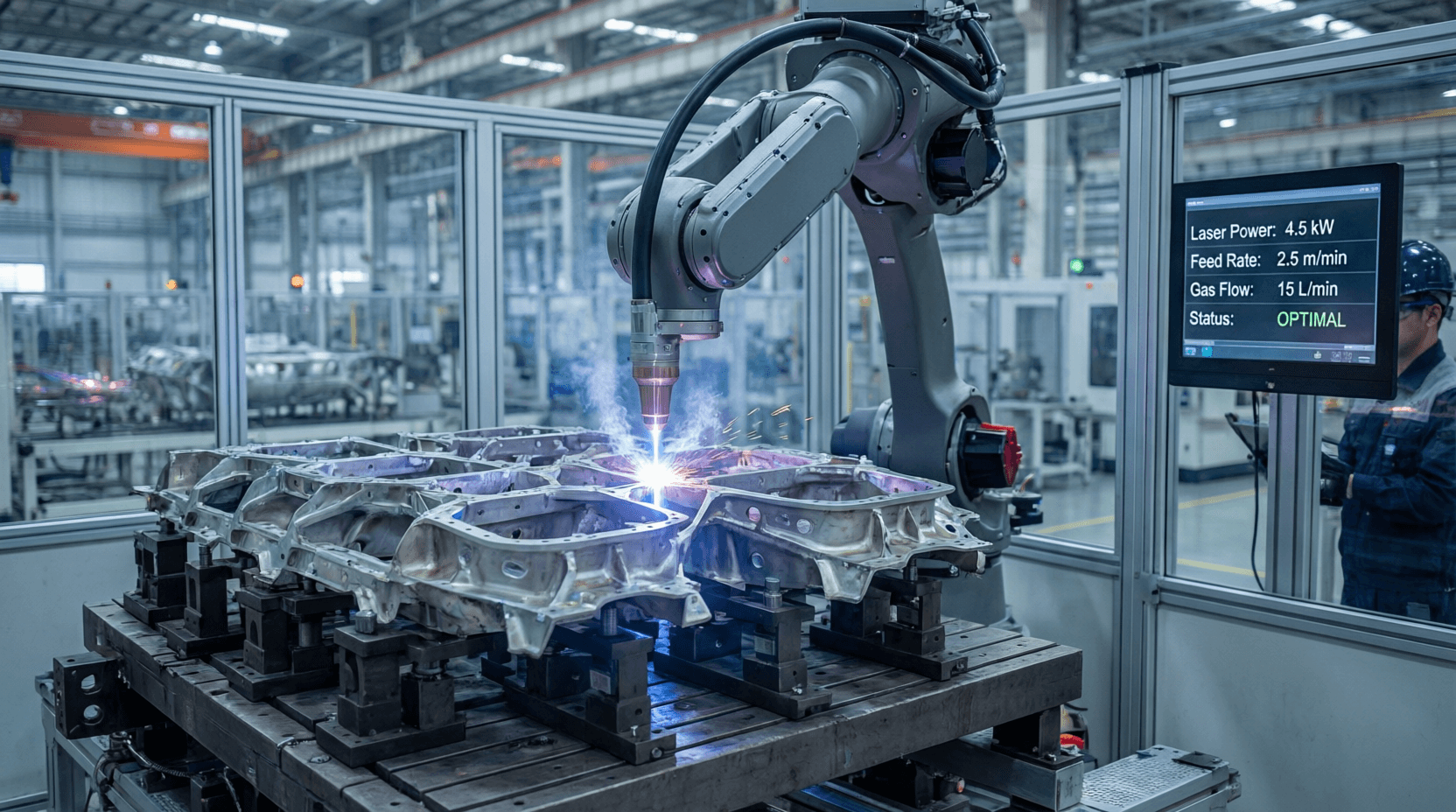
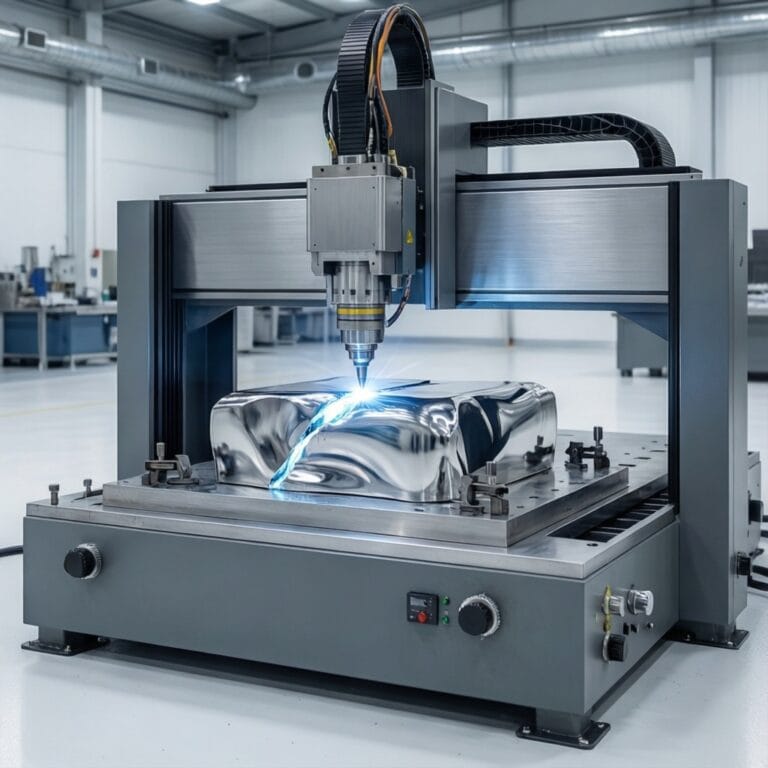
This workstation is highly flexible and can weld 3d curved surfaces or irregular workpieces. With special fixtures and linkage workbenches, it can realize automatic welding in one clamp.
Robotic laser welding cell in an aerospace manufacturing facility showing multiple aerospace compone — Application of robot laser welding station in kitchen applia
Laser welding has less smoke and radiation, and is more environmentally friendly and safe.
Technical Analysis: Laser Welding
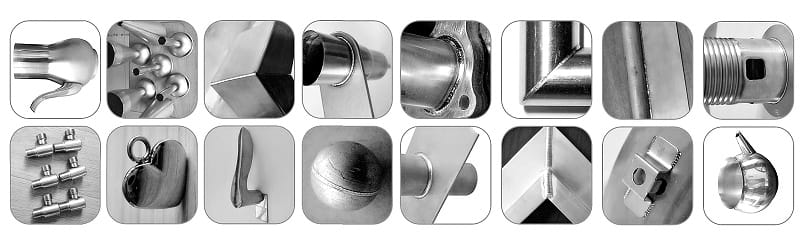
Robot laser welding sample
Specification Comparison
Specification
Single-Robot Welding Station
Dual-Robot Welding Station
Maximum weldable part length
1,500 mm
3,000 mm
Number of welding axes
6 axes
12 axes (6 per robot)
Typical cycle time (stainless steel sink)
45 seconds
28 seconds
Welding speed (1.2 mm sheet)
1.2 m/min
2.4 m/min
Repeatability (ISO 9283)
±0.08 mm
±0.05 mm
Floor space requirement
8.5 m²
14.0 m²
Power consumption (full load)
12.5 kW
22.0 kW
System cost (base configuration)
€85,000
€142,000
Robotic laser welding cell in an aerospace manufacturing facility showing multiple aerospace compone
Frequently Asked Questions
What is the maximum welding speed for stainless steel sink seams using your robot laser welding station?
Our station achieves a maximum welding speed of 8.5 meters per minute on 1.2 mm thick 304 stainless steel sink seams, reducing cycle time by 40% compared to traditional MIG welding.
What joint gap tolerance can the system handle without pre-fit adjustment?
The station compensates for gaps up to 0.4 mm in real time using seam tracking, ensuring weld quality with a repeatability of ±0.03 mm on complex kitchen appliance contours.
Applications and Industry Impact
What is the typical return on investment (ROI) period for a dual-robot laser welding cell?
For a mid-volume kitchen appliance manufacturer producing 50,000 units per year, the typical ROI period is 18 months, with a total system cost starting at $185,000 including installation and training.
What IP rating does the laser welding head have for food-grade production environments?
The welding head is rated IP65, allowing direct wash-down with chemical cleaners, and the entire station meets ISO 22000 hygiene standards for food-contact kitchen equipment.
What is the maximum part size that can be welded in a single setup without re-fixturing?
The standard station handles parts up to 1,200 mm x 800 mm x 500 mm in a single fixture, with a positioning accuracy of ±0.02 mm across the entire working envelope.
Performance Metrics and Benchmarks
How much floor space is required for a complete turnkey robot laser welding station?
The station footprint is 3.5 m x 4.0 m (14 square meters) including the robot base, laser source, safety enclosure, and fume extraction unit, with an optional 1.2 m clearance zone for maintenance access.
Laser Welding Solutions
As a leading manufacturer of industrial laser equipment, Intouchray designs and builds fiber laser welding and handheld welding systems that combine precision engineering with operational reliability. Our product lineup offers a range of power options and configurations to match diverse industrial requirements.
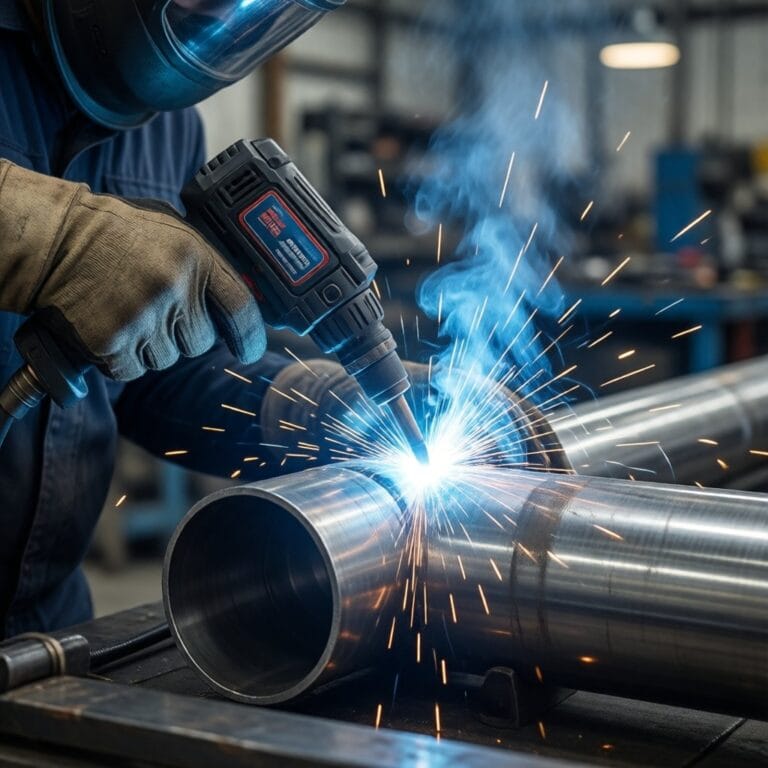
Versatile functions: welding, cleaning, and cutting
Portable design with wheels
Suitable for various materials up to 10mm thickness
Water Cooling Option
Industry Applications
Automotive Industry
Automotive Repair
Automotive industry
Automotive parts welding
Cutting of thin metal sheets
Electronics Assembly
All Intouchray laserstems are manufactured under CE protocols. Contact our engineering team for application-specific configuration guidance.
As a leading manufacturer of industrial laser equipment, Intouchray designs and builds fiber laser welding and handheld welding systems that combine precision engineering with operational reliability. Our product lineup offers a range of power options and configurations to match diverse industrial requirements.
All laser weldiare manufactured under CE protocols. Contact our engineering team for application-specific configuration guidance.