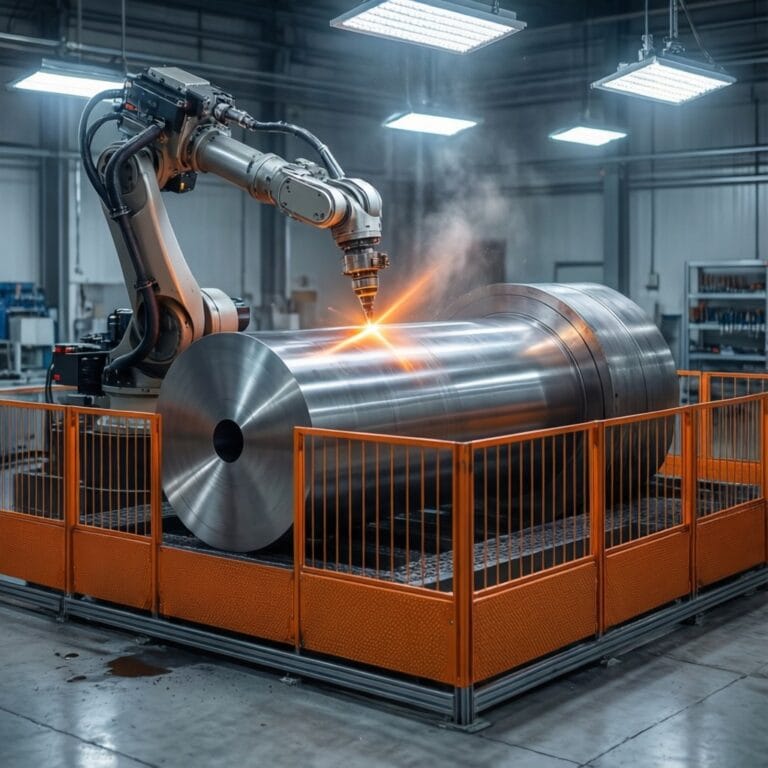
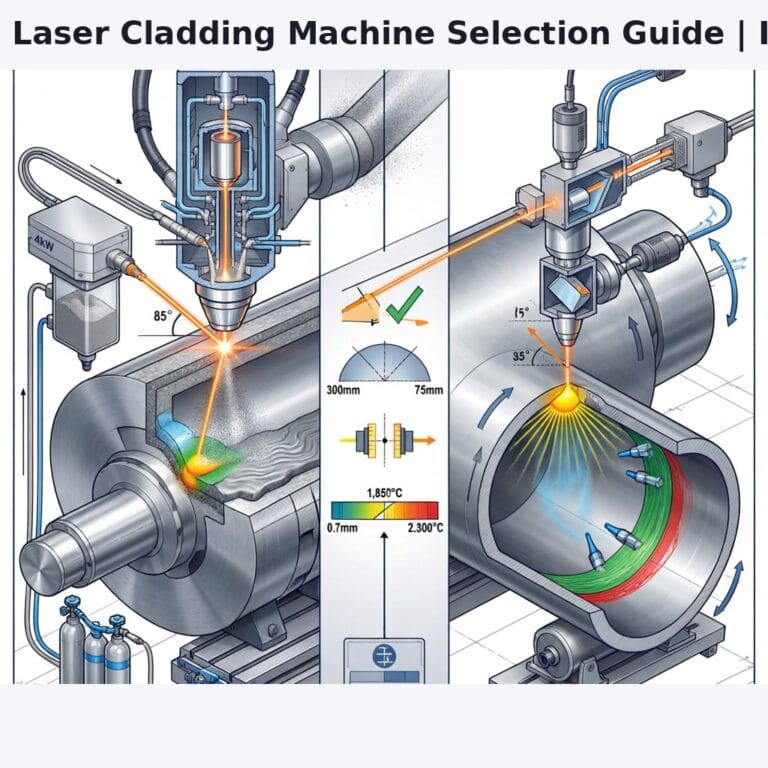
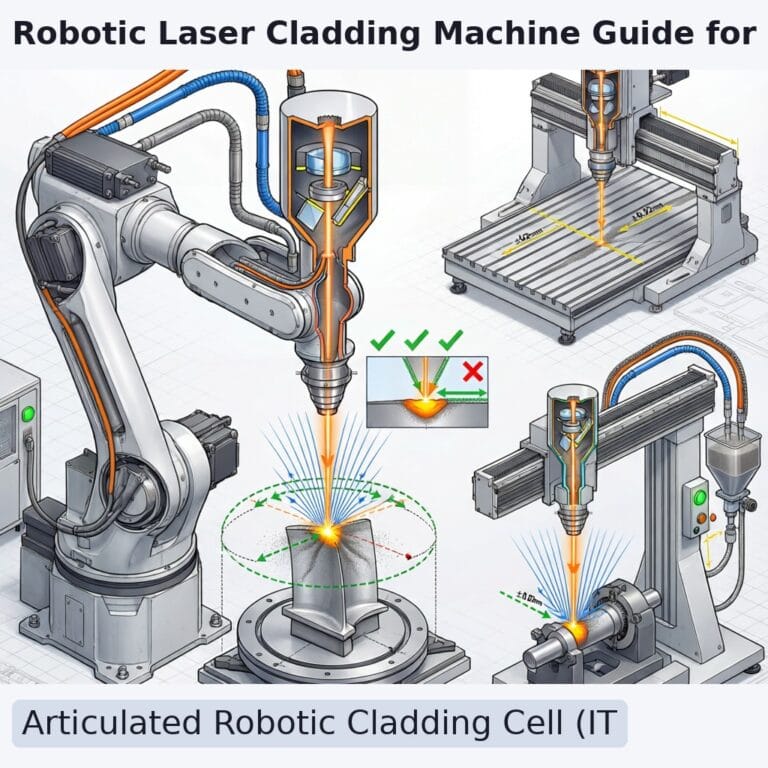
If you are evaluating laser cladding equipment, the sheer variety of configurations can be overwhelming. Options span from compact 3kW units to comprehensive 12kW robotic cells, with investment levels varying significantly based on capability. When you begin to choose machine buyer solutions for your facility, the decision should not rest solely on maximum power or lowest cost.
The optimal laser cladding system aligns with your specific application requirements, part geometries, production volumes, and operational budget. With over 20 years of experience in fiber laser manufacturing, Intouch has developed this guide to help buyers navigate the critical technical and commercial factors involved in selecting laser metal deposition technology.
Assessing Your Specific Application Requirements
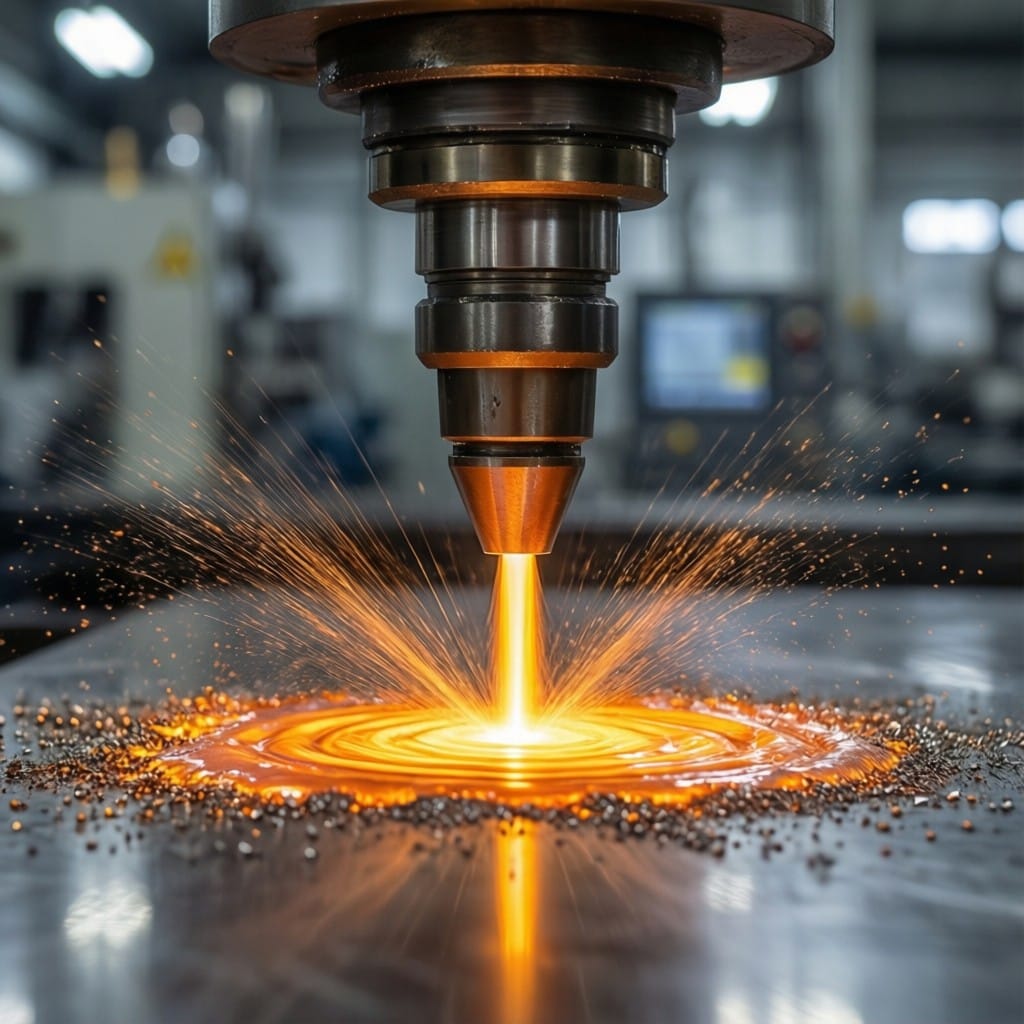
Before reviewing equipment specifications, analyze the parts you intend to process. A thorough assessment prevents overspending on unnecessary capacity or under-specifying a system that cannot handle future work.
- Part Dimensions and Geometry: Are components small and intricate, or large and heavy? Complex freeform surfaces require different motion systems than flat plates or cylindrical shafts.
- Base Materials: Identify the substrates you will clad, such as carbon steel, stainless steel, cast iron, or superalloys like Inconel. Different materials have distinct thermal properties that influence laser parameter selection.
- Coating Alloys: Determine whether you will use nickel-based, cobalt-based, or iron-based powders. The melting point and flow characteristics of these alloys dictate nozzle design and powder feed rates.
- Surface Complexity: Consider if you need laser hardfacing on uneven surfaces or internal diameters. Specialized optics may be required for valve bodies, pipe interiors, or turbine blades.
Aligning Laser Power with Production Needs
Laser power is the primary determinant of both processing speed and capital expenditure. However, higher wattage does not automatically translate to better results for every application.
Select power based on your largest typical part and required throughput. For example, a 3kW source may be ideal for precision mold repair, while 6kW to 12kW systems are necessary for high-volume industrial laser cladding on mining or oil and gas components. Excessive power for thin coatings can cause dilution issues and waste energy. Conversely, insufficient power limits deposition rates and bonding quality. Understanding how pricing correlates with power output helps establish a realistic budget framework before engaging suppliers.
Determining the Right Automation Level
The degree of automation should match your labor environment and production consistency requirements.
- Labor Availability: In regions with high skilled-labor costs, robotic laser cladding systems offer faster ROI by reducing operator dependency.
- Geometric Complexity: Six-axis robots excel at maintaining consistent standoff distance and angle on complex 3D paths, whereas CNC gantries suit prismatic parts.
- Volume Demands: High-mix, low-volume shops often benefit from semi-automated stations, while dedicated production lines justify fully automated cells with integrated positioners.
Intouch offers flexible configurations ranging from flatbed IT-RF5018-1 models for precise benchtop work to robot-integrated IT-RF5018-2 systems featuring Fanuc, Kuka, or Yaskawa arms for complex laser metal deposition tasks.
Critical Technical Features for Quality Assurance
Certain features distinguish industrial-grade laser cladding equipment from basic welding adapters. These capabilities directly impact metallurgical integrity and process reliability.
Closed-Loop Temperature Control
Real-time melt pool monitoring is essential for preventing cracks in sensitive materials like cast iron and ensuring consistent dilution ratios. Advanced systems adjust laser power dynamically based on pyrometer feedback, maintaining stable thermal conditions regardless of heat accumulation.
Specialized Processing Capabilities
For comprehensive service offerings, verify the system supports:
* Internal diameter cladding heads for pipes and cylinders
* Adaptive path planning for uneven surface laser cladding
* Vision systems for seam tracking and post-process inspection
Evaluating Total Operational Costs
The initial purchase price represents only one component of ownership. Sustainable operations depend on efficiency metrics and utility consumption.
Powder utilization rates significantly affect consumable expenses. Well-designed coaxial nozzles typically achieve 80–95% catchment efficiency, minimizing waste of expensive alloy powders. Energy consumption also scales with laser output; a 6kW system generally draws 30–40 kW of total facility power including chillers and extractors. Factor these ongoing costs into your financial model when comparing quotes from different manufacturers.
Configuration Recommendations by Use Case
Different applications demand tailored hardware configurations. Below are general guidelines for matching system architecture to common industrial scenarios.
| Application Scenario | Recommended Configuration | Key Rationale |
|---|---|---|
| Mold Repair & On-Site Work | 3kW Manual/Semi-Auto | Portability, precision, lower capital outlay |
| General Industrial Parts | 3-6kW CNC System | Versatility, balanced cost-to-performance ratio |
| High-Volume Production | 6-12kW Robotic Cell | Throughput, repeatability, unmanned operation potential |
| Pipe & Valve Internals | 3-6kW with ID Head | Specialized reach, right-angle optics, bore coverage |
Structured Evaluation Framework
Adopt a systematic approach when vetting potential suppliers and equipment. This reduces risk and ensures long-term satisfaction.
- Define technical specifications based on actual part samples
- Request application testing using your specific materials and geometries
- Verify supplier references in similar industries
- Compare comprehensive costs including installation, training, and consumables
- Assess local support infrastructure for spare parts and service response
Due Diligence Before Final Selection
Never commit without validation. Reputable laser cladding equipment manufacturers should provide sample processing reports demonstrating bond strength, hardness profiles, and microstructure analysis on your actual components. Discuss maintenance schedules and expected component lifespans openly. Regional support availability is particularly crucial for minimizing downtime in continuous production environments.
Summary: Integrating Requirements with Capability
Selecting appropriate laser cladding machinery requires balancing technical performance with economic reality. Whether you need a standalone station for tooling repair or an automated cell for serial production, the foundation lies in understanding your unique processing demands.
Intouch engineers leverage two decades of fiber laser expertise to help clients evaluate application requirements, recommend suitable power and automation levels, and arrange verification testing on actual parts. For detailed consultations regarding laser cladding systems or to discuss your specific project needs, please contact us at info@intouchray.com or visit www.intouchray.com.