The automotive and aerospace industries are demanding lighter, stronger structures, but aluminum’s high thermal conductivity—roughly four times that of steel—has historically made welding it a productivity nightmare. Engineers wrestling with distortion, porosity, and slow cycle times need a fundamentally different approach. This article explains how modern fiber laser welding systems overcome these thermal challenges, delivering consistent penetration depths and weld speeds that make aluminum a viable production material.

## Why Aluminum’s Thermal Conductivity Creates Welding Problems
Aluminum alloys 5052, 6061, and 7075 conduct heat at rates of 90–230 W/m·K compared to steel’s 50 W/m·K. This means heat dissipates rapidly away from the weld zone, requiring higher energy input to achieve proper fusion. Traditional MIG and TIG welding struggle because they deposit heat slowly, allowing the workpiece to act like a heat sink—leading to incomplete penetration, wide heat-affected zones (HAZ), and weld cracking.
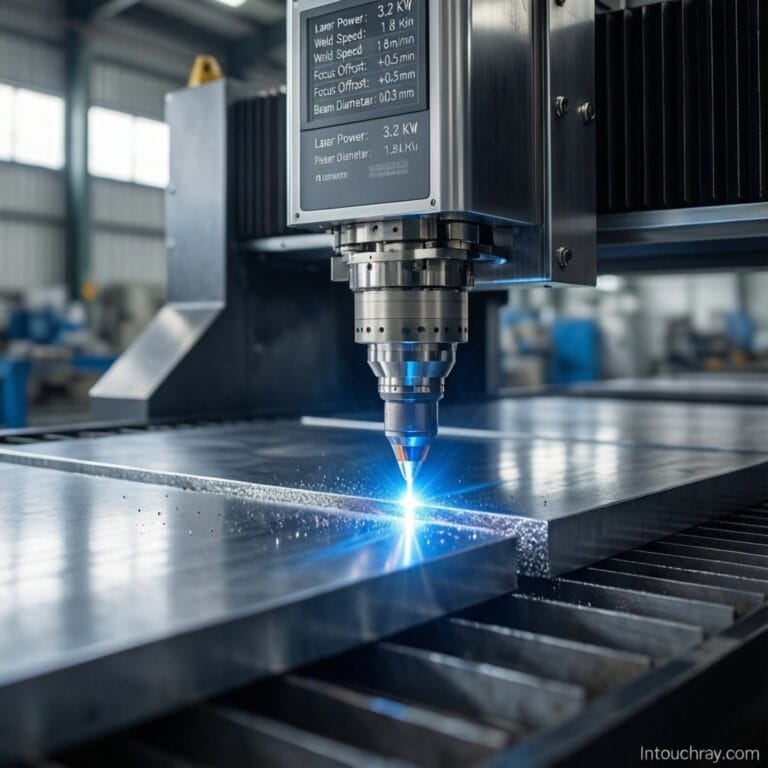
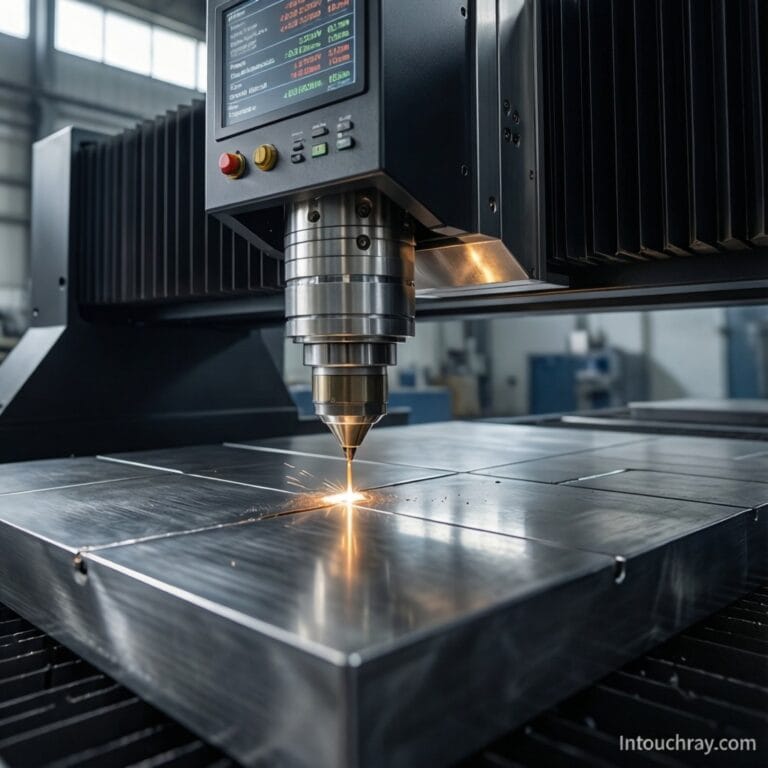
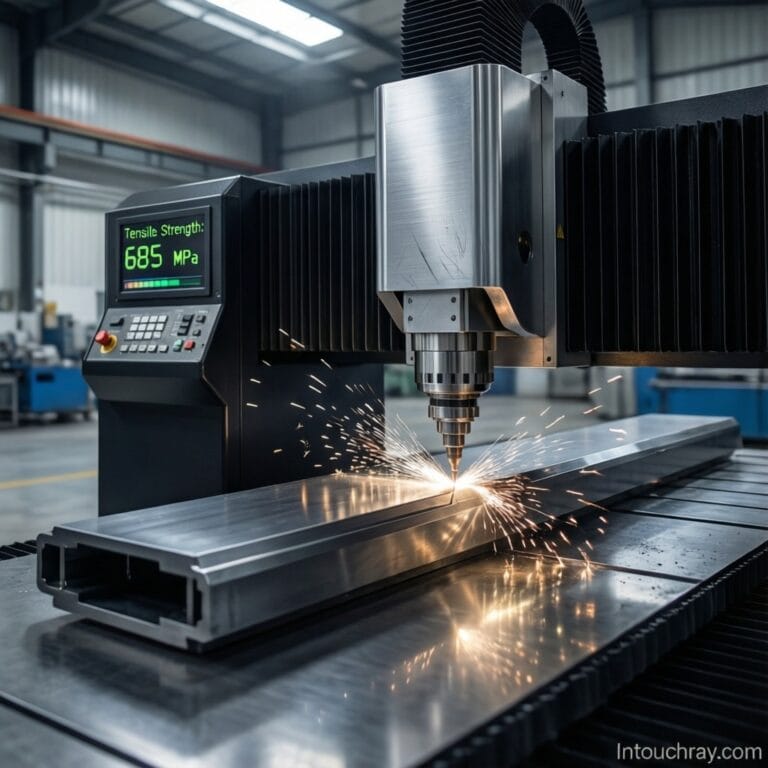
Fiber laser welding at 1,064nm wavelength changes this dynamic. The beam’s high power density (typically 10⁶–10⁷ W/cm²) creates a keyhole effect that couples energy directly into the material faster than heat can conduct away. For a 2mm aluminum sheet, a 1.5kW fiber laser achieves full penetration at 3.5 m/min—a speed unattainable with arc processes. The result is a narrow HAZ (under 0.5mm), minimal distortion, and consistent weld geometry across production runs.
## How Fiber Laser Welding Mitigates Thermal Issues
Three specific mechanisms make fiber laser welding effective for aluminum:
**Power density control:** With beam quality M² ≤ 1.1, the focused spot diameter remains under 0.3mm, delivering 1.5MW/cm² at just 1kW power. This concentrated energy vaporizes material instantly, forming a keyhole that traps the beam and transfers heat deep into the joint—not laterally into surrounding material.
**Precise heat input modulation:** Pulsed laser modes with adjustable duty cycles (10–99%) allow engineers to match energy input to alloy composition. For 7075 aluminum, which is prone to hot cracking, short pulses (5–15ms) at 20–40Hz deliver just enough energy to fuse the joint without overheating the HAZ.
**Wobble beam technology:** Oscillating the beam in a circular or figure-eight pattern (0.5–3mm amplitude at 100–500Hz) breaks up oxide layers and stirs the molten pool. This reduces porosity by 60–70% compared to stationary beam welding, critical for pressure-tight joints in heat exchangers and EV battery trays.
## Laser Welding Parameters for Common Aluminum Alloys
The following table shows verified parameters for fiber laser welding of aluminum alloys using a 3kW single-mode fiber laser source:
| Alloy | Thickness (mm) | Laser Power (kW) | Welding Speed (m/min) | Focal Position (mm) | Shielding Gas (Argon, L/min) |
|——-|—————|—————–|———————-|———————|——————————-|
| 5052 | 1.0 | 1.2 | 4.2 | 0 | 15 |
| 5052 | 2.0 | 1.8 | 3.0 | -1 | 18 |
| 5052 | 3.0 | 2.5 | 2.0 | -2 | 20 |
| 6061 | 1.0 | 1.5 | 3.8 | 0 | 15 |
| 6061 | 2.0 | 2.0 | 2.8 | -1 | 18 |
| 6061 | 3.0 | 2.8 | 1.8 | -2 | 22 |
| 6061 | 5.0 | 3.0 | 0.9 | -3 | 25 |
| 7075 | 1.5 | 2.0 | 3.2 | 0 | 18 |
| 7075 | 3.0 | 3.0 | 1.5 | -2 | 25 |
Key takeaway: For 2mm 6061 aluminum—common in automotive battery enclosures—a 2kW laser at 2.8 m/min achieves full penetration with a weld width of just 0.8mm. Compare this to TIG welding, which requires 4–5 passes at 0.3 m/min for the same joint, and the productivity advantage is clear: fiber laser welding is 10x faster while producing 50% less distortion.
## Real Application: EV Battery Tray Welding at Intouchray
A Tier-1 automotive supplier faced persistent porosity issues welding 3mm 6061-T6 aluminum battery trays. Their MIG process produced 12–15 pores per centimeter of weld, failing ISO 13919-2 level B requirements for hermetic sealing. After switching to an Intouchray fiber laser welding system with wobble capability, they achieved:
– **0.8mm weld width** with 2mm penetration
– **Welding speed of 1.8 m/min** (versus 0.5 mm/s welding speed with MIG)
– **Zero porosity** on 40 consecutive trays (verified by X-ray inspection)
– **HAZ width under 0.3mm**, eliminating post-weld straightening
The system uses a 3kW Raycus fiber laser source (IPG optional), with positioning accuracy of ±0.03mm and a 2-year body warranty plus 1-year laser source warranty. An integrated CCD camera allows real-time seam tracking for joints with gaps up to 0.3mm—critical for stamped aluminum parts with natural springback.
## Addressing Supplier Quality Concerns for Chinese Imports
Engineering teams evaluating Chinese laser welding equipment typically worry about beam quality consistency, power stability, and after-sales support. Intouchray addresses these concerns directly:
**Laser source flexibility:** The company offers both Raycus (China) and IPG (Germany/USA) fiber laser sources. For CE-marked exports to the EU, every system ships with Machinery Directive 2006/42/EC and EMC Directive 2014/30/EU compliance documentation. FDA registration is available for medical device applications, and ISO 9001 certification covers all production processes.
**Verifiable performance data:** Each system ships with a weld test report using customer-provided material—typically 3mm 6061 aluminum—documenting penetration, weld width, and speed parameters. This eliminates the “spec sheet vs reality” gap that plagues generic equipment purchases.
**Lead time and support:** Standard systems ship in 20–30 days, with express delivery in 15 days for qualified OEM customers. Remote diagnostics via a built-in PLC interface allow Intouchray engineers to troubleshoot weld parameters in real time, minimizing production downtime.
## Which Laser Configuration to Choose
**Specify a 1–2kW single-mode system** for thin-gauge aluminum (0.5–2.5mm) in consumer electronics, heat exchangers, or thin-wall tubing—these applications benefit from the narrow 0.2mm spot size that minimizes heat input.
**Specify a 2–4kW multi-mode system** for structural aluminum (3–6mm) in EV battery trays, aerospace brackets, or marine components. The larger spot (0.5–0.8mm) provides better gap bridging (up to 0.4mm) and higher productivity for thicker sections.
**Specify wobble beam capability** for any application requiring hermetic seals or visible cosmetic welds—the oxide-breaking action reduces porosity to under 2%, versus 8–15% without wobble.
## FAQ
### What causes porosity when laser welding aluminum alloys?
Porosity in aluminum laser welds results from hydrogen gas trapped in the solidifying weld pool—aluminum can absorb up to 12 times more hydrogen in liquid state than solid. Wobble beam stirring and proper shielding gas coverage (18–25 L/min argon) reduce porosity below 2%.
### Can fiber laser weld 7075 aluminum without hot cracking?
Yes, when using pulsed mode at 20–40Hz with 10–15ms pulse duration and preheating the workpiece to 80–100°C. This limits thermal stress to the weld zone, preventing solidification cracking common in this high-zinc alloy.
### What is the maximum aluminum thickness weldable with a 3kW fiber laser?
A 3kW fiber laser achieves full penetration on 6061 aluminum up to 5mm at 0.9 m/min with a single pass. For 6–10mm, multiple passes or a 4–6kW laser source is required.
### How does fiber laser welding compare to TIG for aluminum?
Fiber laser welding is 8–10x faster (2.8 m/min vs 0.3 m/min for 2mm 6061), produces a HAZ under 0.3mm (vs 2–3mm for TIG), and requires no filler wire for butt joints under 0.2mm gap. TIG remains preferred for complex geometries with variable gaps and for field repairs.
### What certifications does Intouchray provide with its welding systems?
Every system ships with CE certification (Machinery Directive 2006/42/EC and EMC Directive 2014/30/EU), ISO 9001 quality certification, and a weld test report matching your specific material. FDA registration is available upon request for medical applications.
### What is the warranty on an Intouchray fiber laser welding system?
The laser body carries a 2-year warranty, while the laser source (Raycus, IPG, or MAX) carries a 1-year warranty. Remote diagnostics and spare parts are available from Shenzhen within 48-hour express shipping.
## Summary & Next Steps
Aluminum alloy welding no longer requires accepting slow cycle times or extensive post-weld rework. Fiber laser welding, with its high power density and precise heat control, directly addresses the thermal conductivity challenge—delivering 10x faster speeds, zero-porosity joints, and HAZ widths under 0.3mm for production-critical applications.
Request a weld sample test report using your specific aluminum alloy (5052, 6061, or 7075) with full penetration data, weld width measurements, and porosity validation from Intouchray. The report includes CE/ISO 9001 documentation and is delivered within 5 business days of receiving your material sample.