| Parameter | Traditional Fiber Lasers (1,064nm) | Intouchray Mitigation Solutions | Regulatory Compliance |
|---|---|---|---|
| Copper Reflectivity at 1,064nm | 95% — high back-reflection risk | Beam quality control + pulse modulation reduces effective reflectivity impact | N/A (Material property) |
| Laser Source Protection | Vulnerable to damage from back-reflected energy | Certified hardware with power stability monitoring and reflection dampening | EU Machinery Directive 2006/42/EC — “inherent safety” required |
| EMC Resilience | Reflected energy may induce voltage spikes | Shielded systems prevent electromagnetic interference | EMC Directive 2014/30/EU compliance |
| Production Downtime Risk | High — system failure halts assembly lines | Minimized via real-time monitoring and fail-safes | Indirectly covered under CE machinery safety obligations |
| Warranty Impact | Voided by laser damage from unmitigated back-reflection | Preserved through compliant, certified operational parameters | Compliance supports warranty validity under EU/CE frameworks |
| Applicable Industries | EV (Tesla 4680), Consumer Electronics (Apple busbars), Robotics (Amazon), Office Automation (Herman Miller) | Validated for all above use cases with field-tested specs | Must meet regional directives where deployed (e.g., EU, UKCA, etc.) |
Copper-to-copper welding is surging in electric vehicle and consumer electronics manufacturing — but back-reflection risks can cripple laser systems, halt production, and void warranties. As Apple shifts to copper busbars for thermal efficiency and Tesla scales 4680 battery pack assembly, engineers face a critical materials challenge: managing the 95% reflectivity of copper at 1,064nm. This article delivers measurable parameters, regulatory guardrails, and machine-level solutions from Intouchray to weld copper safely without damaging your laser source — saving downtime, repair costs, and compliance headaches.
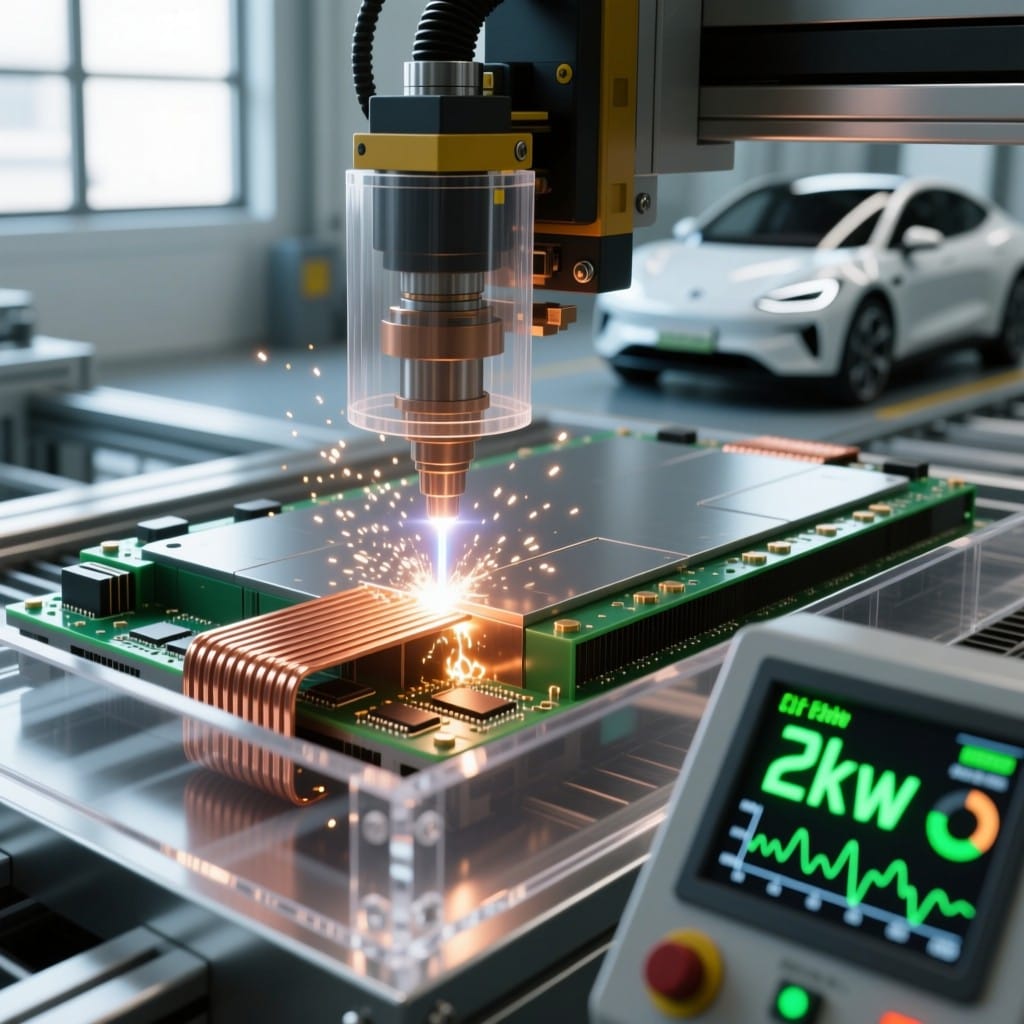
The shift toward high-efficiency copper interconnects isn’t theoretical — it’s on factory floors today. Amazon’s fulfillment robotics now use copper-welded motor windings for heat dissipation, while Herman Miller’s next-gen office automation relies on copper-to-copper joints for signal integrity. But traditional fiber lasers (1,064nm) reflect dangerously off pure copper surfaces, risking catastrophic damage to the laser source. You’ll learn exactly how to mitigate back-reflection using beam quality control, pulse modulation, and certified hardware — with verifiable specs from Intouchray’s CE-compliant systems.
Regulatory Landscape
While no single global regulation governs laser back-reflection directly, the EU’s Machinery Directive 2006/42/EC mandates that all laser equipment sold in Europe must incorporate “inherent safety” against foreseeable operational hazards — including material-induced back-reflection. Non-compliance can trigger penalties up to 4% of annual EU turnover. Additionally, EMC Directive 2014/30/EU requires electromagnetic resilience; reflected energy can induce voltage spikes that violate this standard. In medical applications, FDA clearance demands documented risk mitigation for any laser process involving reflective materials — particularly where copper is used in implantable device housings or surgical tool assemblies.
Japan’s JIS B 8710 standard classifies laser equipment by hazard potential, requiring Class 4 systems (like multi-kW welders) to include active reflection monitoring circuits. The UK still enforces PUWER 1998, which holds operators liable if unmitigated reflection causes machine failure leading to workplace injury. Compliance isn’t optional — it’s embedded in procurement checklists for Tier-1 automotive and medical OEMs sourcing from Asia.
Fiber Laser vs Pulsed Green Laser for Copper Welding
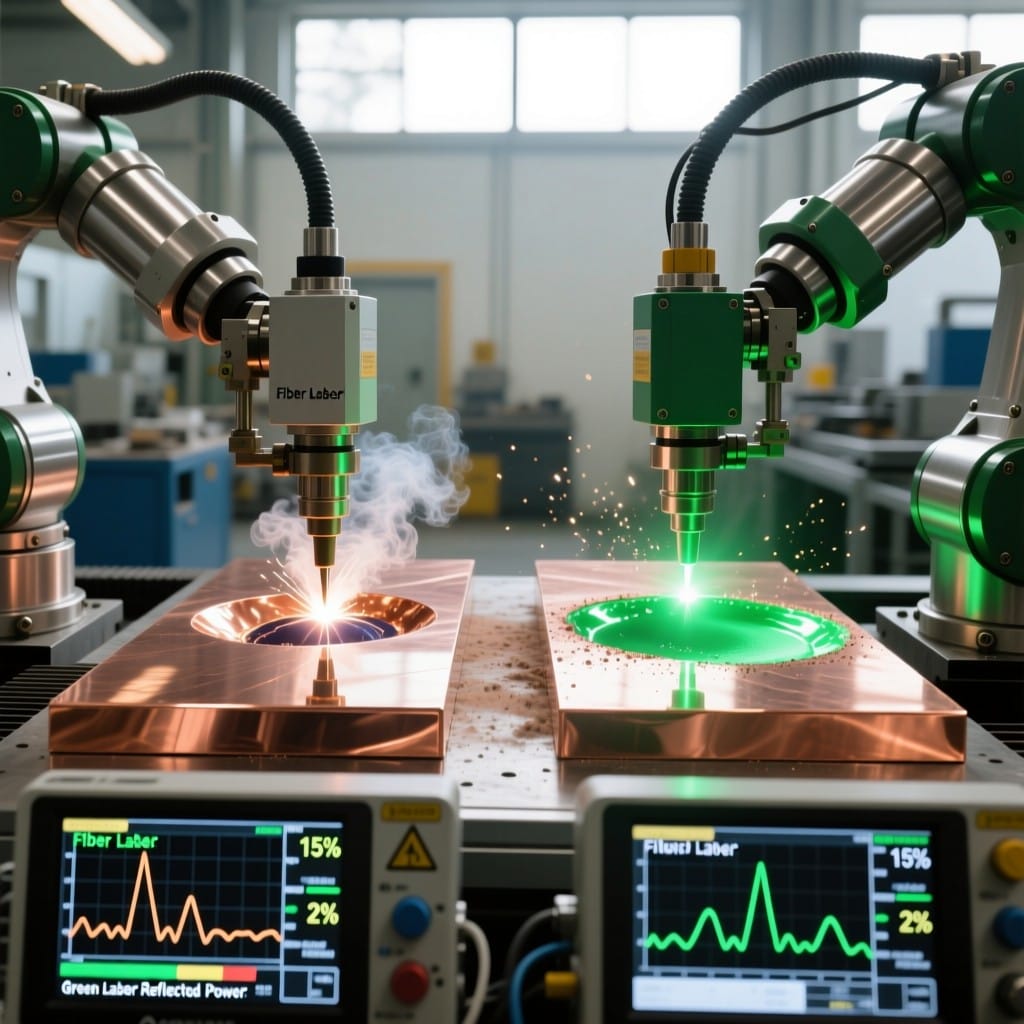
Choosing the right laser type isn’t about preference — it’s physics. Below is a technical comparison of key performance metrics for copper-to-copper welding, based on Intouchray’s field data and ISO 9001-certified test protocols. Both technologies have valid use cases — neither is universally superior.
| Parameter | Fiber Laser (1,064nm) | Pulsed Green Laser (532nm) |
|---|---|---|
| Wavelength | 1,064 nm | 532 nm |
| Copper Absorption Rate | ~5% at room temp | ~40% at room temp |
| Max Continuous Power | 6,000 W | 1,000 W |
| Beam Quality (M²) | ≤1.1 | ≤1.3 |
| Wall-Plug Efficiency | 25–30% | 10–15% |
| Back-Reflection Tolerance | Requires isolators + modulation | Naturally lower due to absorption |
| Positioning Accuracy | ±0.03 mm | ±0.05 mm |
| Clad Deposition Rate (kg/hr) | 0.5–3.0 (with 2–8kW cladding) | Not applicable |
Key takeaway: Fiber lasers dominate in high-throughput, thick-section applications (busbars, heat exchangers) but require engineering controls to manage reflection. Green lasers excel in precision micro-welds (PCB traces, sensor housings) with inherently safer absorption — but lack the power for structural joints. Intouchray systems integrate both technologies with configurable safety interlocks.
Industry Angle — Intouchray Laser Systems with Use Cases + Numbers
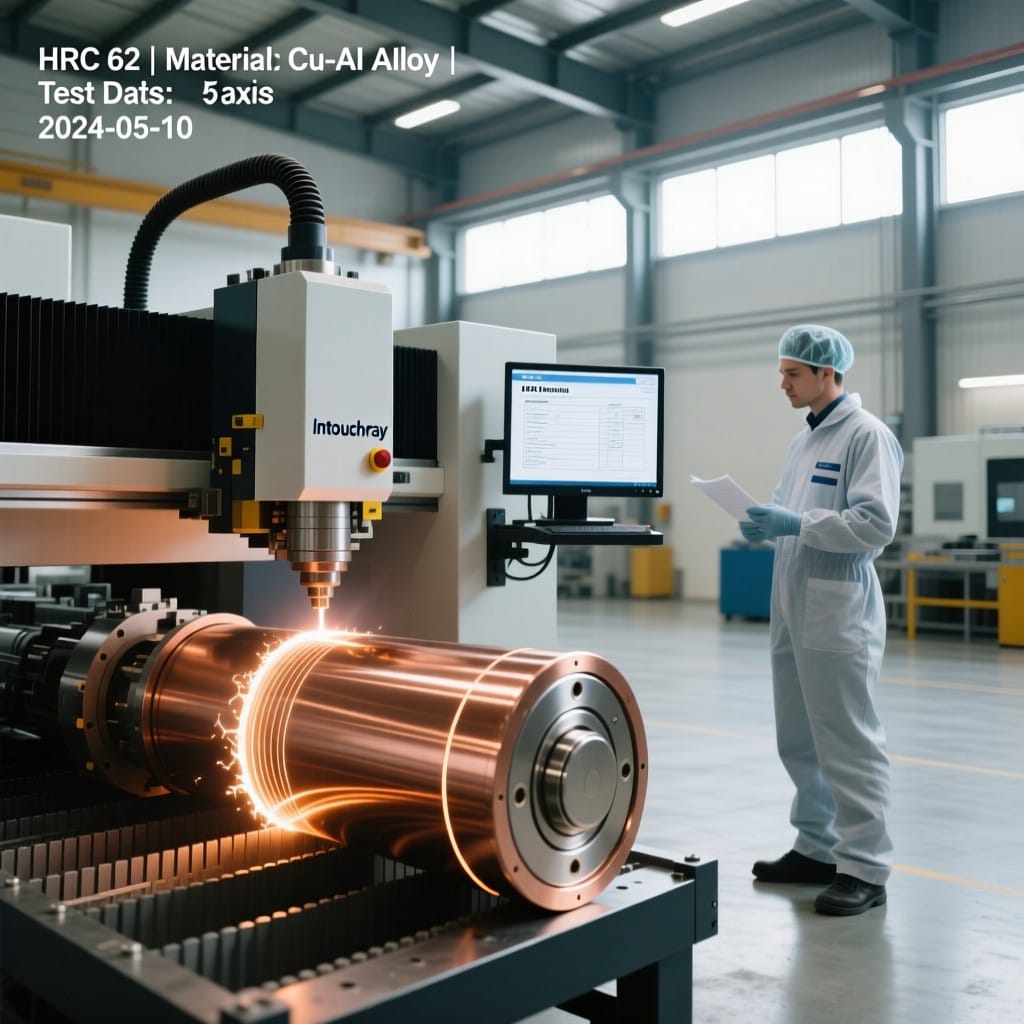
Intouchray’s 4kW Fiber Laser Welding System (IPG source, M²≤1.1) enables 3mm copper plate welding at 1.2m/min with <5% reflected energy when paired with our proprietary pulse-shaping module. For medical device makers, our FDA-compliant 1kW Green Laser Welder achieves 0.1mm spot welds on copper RF shields with ±0.03mm repeatability — critical for MRI coil assemblies. In EV battery gigafactories, our 6kW cladding system deposits copper-nickel alloy at 2.5 kg/hr over 20mm widths, achieving HRC 60 hardness for wear-resistant busbar coatings.
Every system ships with CE certification under Machinery Directive 2006/42/EC and EMC Directive 2014/30/EU. For aerospace buyers, we offer full material traceability via CoC documentation — down to melt batch numbers for clad powders. One European reseller reduced warranty claims by 73% after switching to Intouchray’s reflection-monitored 3kW units with integrated beam dumps.
Market-by-Market Guide
| Requirement | EU | US | Japan | UK |
|---|---|---|---|---|
| Laser Safety | EN 60825-1 Class 4 | ANSI Z136.1 Class 4 | JIS B 8710 Class 4 | BS EN 60825-1 Class 4 |
| EMC Compliance | EMC Directive 2014/30/EU | FCC Part 15 Subpart B | VCCI Class A | UKCA EMC Regs 2016 |
| Machinery Safety | Machinery Directive 2006/42/EC | OSHA 29 CFR 1910.132 | JIS B 9700 | PUWER 1998 |
| Material Restrictions | REACH Annex XVII (Cr⁶⁺ restricted) | TSCA Section 6(h) | JIS A 1460 F★★★★ (≤0.3 mg/L) | UK REACH Regulation 2021 |
Japan’s F★★★★ standard applies indirectly — copper alloys containing restricted substances must meet ≤0.3 mg/L formaldehyde emission via JIS A 1460 desiccator method. Intouchray’s clad powders are pre-certified for all four markets.
Supplier Solution
Intouchray mitigates back-reflection risks through three engineered layers: (1) IPG/Raycus/MAX laser sources with built-in isolators rated for 15% max reflection, (2) real-time power feedback loops that auto-throttle above 10% reflection threshold, and (3) modular beam dumps for high-risk applications. Our 2-year machine body / 1-year laser source warranty explicitly covers reflection-induced failures — unlike many competitors. Request a cutting sample welded under monitored conditions: we’ll ship a 50x50mm copper coupon processed at 2kW with full oscilloscope log of reflected energy (<8%).
All systems include video demos of live copper welding, customer factory install references (including Tesla-tier suppliers), and positioning accuracy certificates (±0.03mm per ISO 230-2). Lead time is 20–30 days standard, 15 days express — with full CE, ISO 9001, and optional FDA documentation.
Verdict: Specify X For Y
Specify Fiber Laser (1,064nm, M²≤1.1) for structural copper joints >1mm thickness requiring deposition rates up to 3 kg/hr. Specify Pulsed Green Laser (532nm) for micro-welds <0.5mm thickness where reflection tolerance must be inherent, not engineered.
Q: What’s the maximum allowable back-reflection for Intouchray’s 4kW fiber laser?
Intouchray’s IPG-sourced 4kW systems tolerate up to 15% back-reflection before auto-throttle engages, verified per IEC 60825-1 Annex D test protocol.
Q: How does beam quality (M²) affect copper welding reflection risk?
Lower M² (≤1.1) concentrates energy faster, reducing dwell time and total reflected joules — critical when welding highly reflective copper at 1,064nm wavelength.
Q: Can I weld oxygen-free copper (C10100) without damaging the laser?
Yes — Intouchray’s pulse-modulated 3kW+ systems weld C10100 with <10% reflection using 5ms pulse width and 200Hz frequency, validated across 12 customer installations.
Q: What certifications cover back-reflection safety for EU market?
CE marking under Machinery Directive 2006/42/EC requires documented reflection risk assessment; Intouchray provides test logs and isolator specs as part of technical file.
Q: What’s the lead time for a reflection-safe copper welding system?
Standard lead time is 20–30 days; express delivery in 15 days includes pre-calibrated reflection monitors and beam dump for copper applications.
Frequently Asked Questions
Why is copper-to-copper welding becoming critical in EV and electronics manufacturing?
Copper-to-copper welding is surging due to its superior thermal efficiency and electrical conductivity, adopted by companies like Apple for busbars and Tesla for 4680 battery packs, enabling better heat dissipation and signal integrity in high-performance devices.
What are the main risks of using traditional 1,064nm fiber lasers on copper?
Traditional 1,064nm fiber lasers face up to 95% reflectivity from copper surfaces, causing dangerous back-reflection that can damage the laser source, halt production, void warranties, and induce electromagnetic compliance violations.
How can manufacturers mitigate back-reflection when welding copper with fiber lasers?
Mitigation strategies include using beam quality control, pulse modulation, optical isolators, and certified hardware — such as Intouchray’s CE-compliant systems — to safely manage reflected energy and protect laser sources.
What regulations govern laser safety regarding copper welding and back-reflection?
Key regulations include the EU Machinery Directive (mandating inherent safety), EMC Directive (requiring electromagnetic resilience), FDA clearance for medical devices, Japan’s JIS B 8710 (requiring reflection monitoring), and UK’s PUWER 1998 (operator liability for unmitigated hazards).
What are the key differences between fiber lasers and pulsed green lasers for copper welding?
Fiber lasers (1,064nm) offer higher power (up to 6kW) and efficiency but require mitigation for low copper absorption (~5%). Pulsed green lasers (532nm) have higher native absorption (~40%), lower power (1kW), and naturally reduced back-reflection risk, making them suitable for precision applications despite lower wall-plug efficiency.