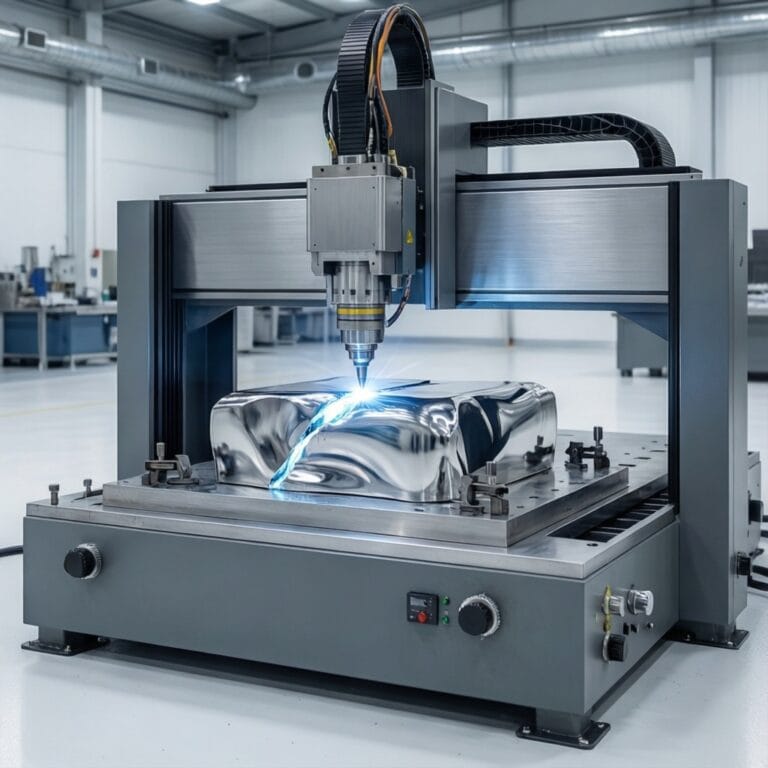
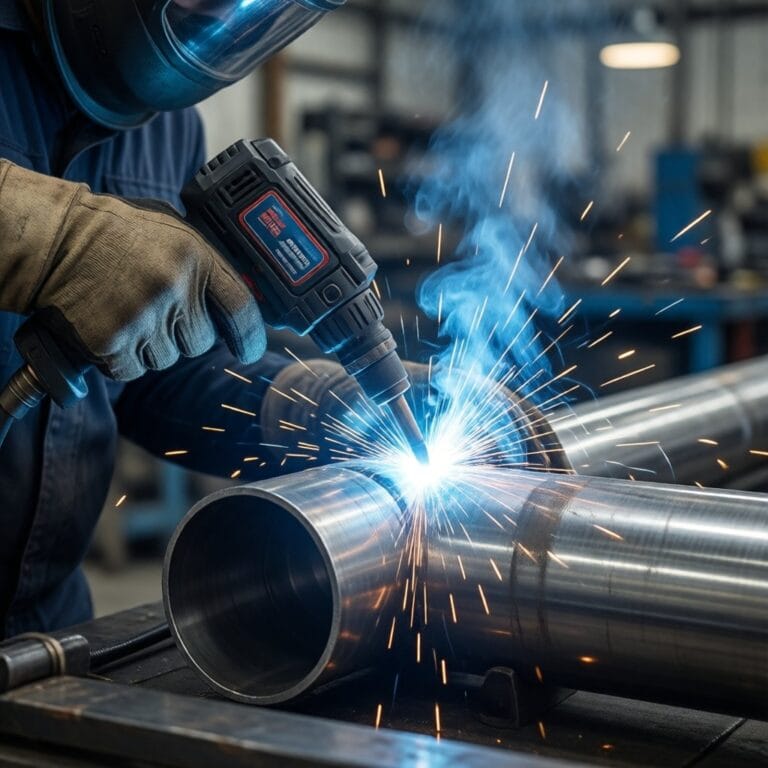
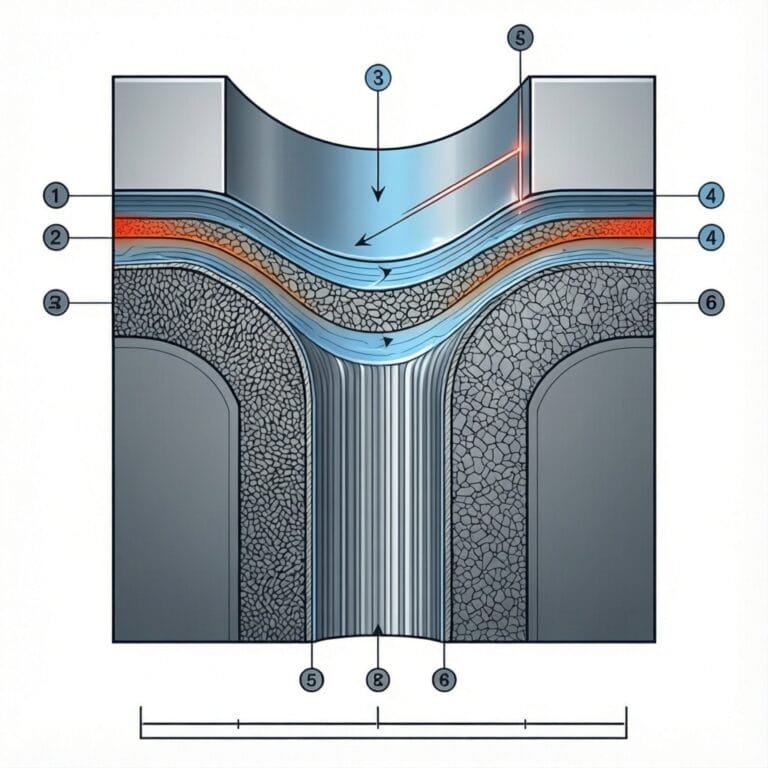
When Leading EV manufacturers shifted its battery pack production to laser welding, they didn’t just pick a laser source—they chose a specific weld mode. Food & Medical Grade Seams: Achieving Porosity-Free Welds Every engineer who has welded stainless steel battery housings or aluminium enclosures has confronted the same fork in the road: keyhole welding for penetration, or heat conduction for surface finish. This decision directly impacts joint strength, thermal distortion, and cycle time—and getting it wrong means scrapping thousands of parts. In this article, you’ll learn exactly when to specify each mode, backed by measurable thresholds and real production data.
The Physics Behind the Two Weld Modes
Laser welding at 1,064nm wavelength (the standard for fiber lasers) operates in two fundamentally different regimes. Laser vs. MIG/TIG: The ROI Comparison for Job Shops Gap Bridging Technology: Solving Fit-Up Issues in Large Parts The distinction comes down to power density at the workpiece surface—specifically, whether the beam’s energy exceeds approximately 1×10⁶ W/cm².
Key Considerations in Laser Welding Key
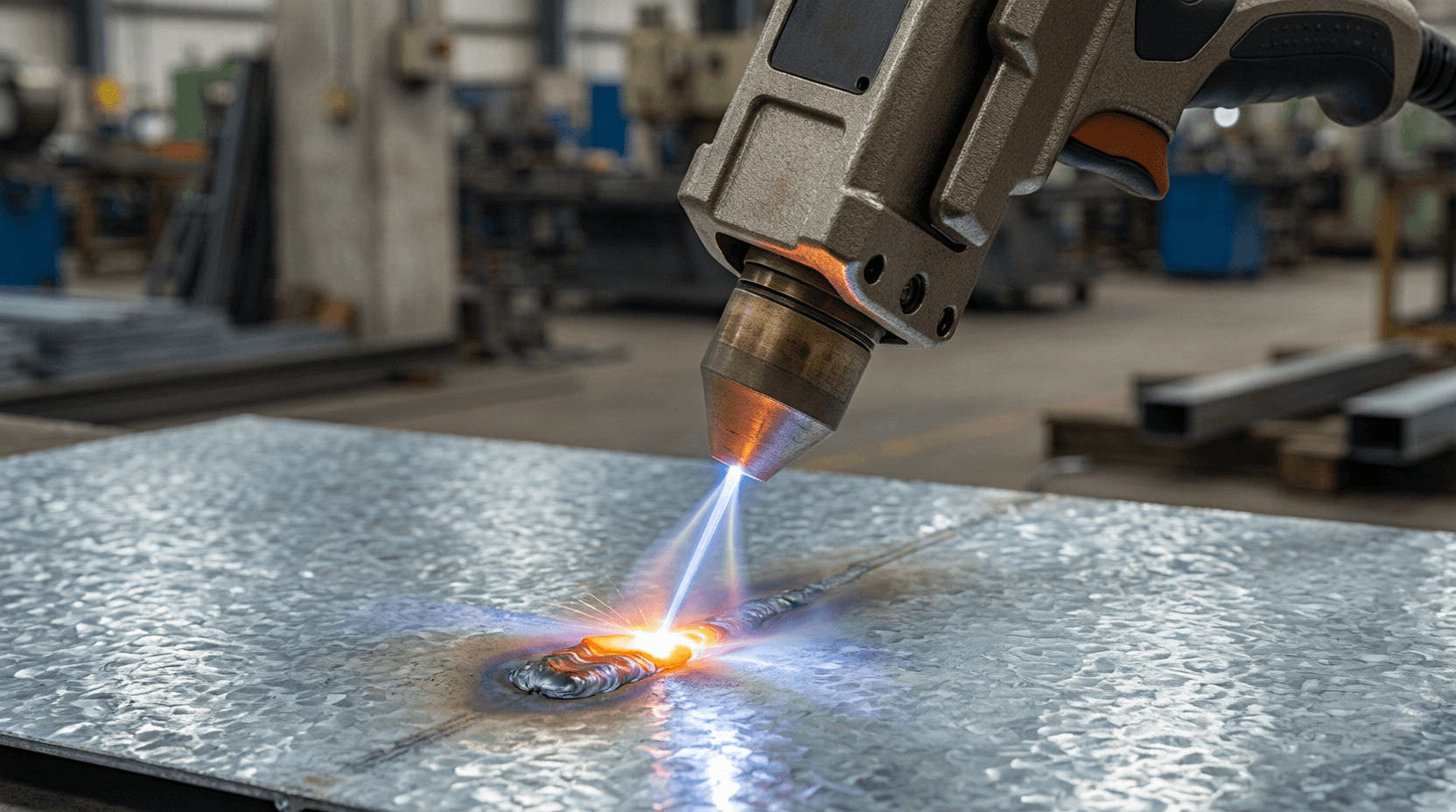
In heat conduction mode, the laser energy is absorbed entirely at the surface, then conducted into the material. The weld pool remains shallow—typically 0.5mm to 1.5mm depth depending on power and travel speed. The surface tension keeps the melt pool stable, producing a smooth, aesthetic bead with minimal spatter. This mode operates with power densities typically below 5×10⁵ W/cm².
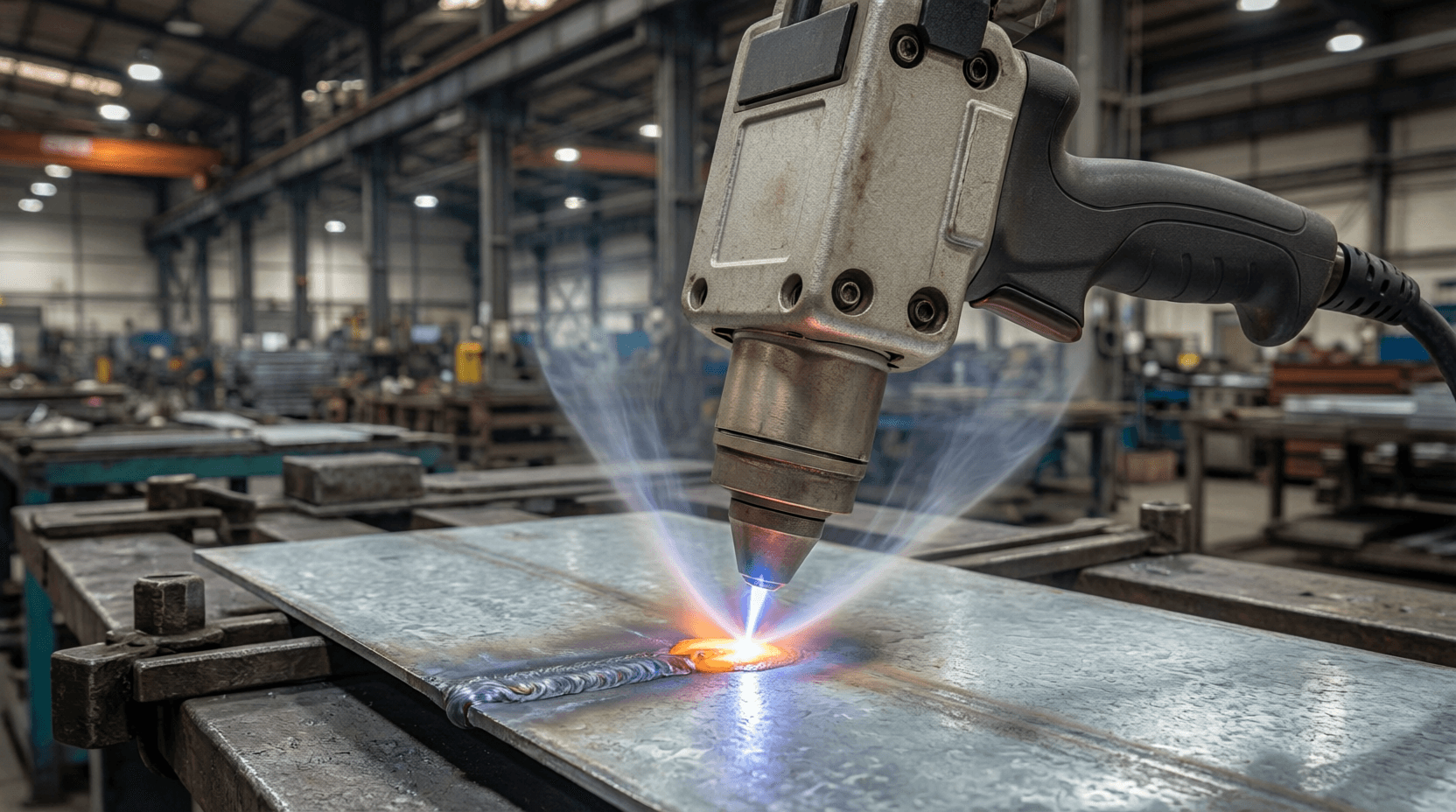
In keyhole mode, the power density exceeds the vaporisation threshold. The material boils, creating a vapour capillary (the “keyhole”) that extends deep into the joint. This vapour cavity traps beam energy, enabling penetration depths of 3mm to 8mm or more in a single pass. The capillary is unstable by nature, and this instability can produce porosity if parameters aren’t carefully controlled.
Technical Analysis: Laser Welding Key
The fundamental trade-off is this: keyhole welding delivers speed and depth, but requires tighter parameter control. Conduction welding delivers surface quality, but limits joint strength and throughput.
Keyhole vs Heat Conduction: Technical Comparison
The table below provides the measurable differences that engineering teams need when selecting weld mode for a specific application.
Applications and Industry Impact
| Parameter | Keyhole Mode | Heat Conduction Mode |
|---|---|---|
| Power density threshold | >1×10⁶ W/cm² | <5×10⁵ W/cm² |
| Typical penetration depth (1kW, steel) | 3.0–5.0 mm | 0.5–1.2 mm |
| Weld aspect ratio (depth:width) | 3:1 to 8:1 | 0.5:1 to 1.5:1 |
| Surface roughness (Ra, weld bead) | 6–12 µm | 2–5 µm |
| Heat-affected zone width (2mm steel) | 0.8–1.5 mm | 0.3–0.6 mm |
| Weld speed (2mm stainless, 1.5kW) | 1.2–2.0 m/min | 0.6–1.0 m/min |
| Porosity risk (aluminium 5xxx) | 3–8% (requires filler) | <1% (no filler) |
| Typical applications | Structural joints, thick sections | Hermetic seals, cosmetic surfaces |
The key takeaway: keyhole welding gives you penetration at speed—a 1.5kW fiber laser welding 2mm stainless at 1.5 m/min versus 0.8 m/min in conduction mode. But that speed comes with a wider HAZ and higher porosity risk, especially in aluminium alloys where hydrogen solubility changes during keyhole collapse.
Industry Examples with Real Specifications
For precision hermetic sealing of electronic enclosures, heat conduction mode is the standard. the company’s HWL-1000 handheld laser welding system, operating at 1kW with a 0.2mm spot size and wobble function, produces conduction-mode welds with Ra ≤ 4µm on 0.8mm 304 stainless steel battery housings. The beam quality of M² ≤ 1.1 ensures a stable spot that transitions into conduction mode naturally at the correct standoff distance.
A medical device manufacturer welding titanium implant casings specified heat conduction mode to prevent any keyhole collapse porosity. With the company’s system at 800W, 0.6 m/min travel speed, and argon shielding at 18 L/min, they achieved Class 1 weld quality per ISO 13919-1 with zero porosity on 1.2mm Grade 2 titanium.
For structural applications, keyhole mode is non-negotiable. A heavy equipment fabricator welding 4mm S355 structural steel needed full penetration at 1.2 m/min to maintain production cycle times. Using the company’s HWL-2000 system at 2kW, with 0.4mm spot diameter and a 2mm defocus, they achieved 4.5mm penetration with consistent keyhole stability. The resulting joint passed ISO 15614-1 destructive testing with tensile strength of 510 MPa—matching the base metal.
Application Context Across Industries
The choice between keyhole and conduction mode varies significantly across manufacturing sectors.
Performance Metrics and Benchmarks
Battery and energy storage demands conduction mode for copper and aluminium busbar welds where electrical conductivity and low porosity are critical. Joint depths rarely exceed 1.5mm, and the smooth bead profile reduces current resistance. systems with 500W–1kW power and wobble frequencies of 200–400 Hz produce consistent conduction welds on 0.3mm copper to 1mm aluminium terminal joints.
Automotive body-in-white applications predominantly use keyhole mode for structural joints in galvanised steel and aluminium. A 2mm lap joint on 6000-series aluminium requires keyhole penetration of 1.8mm minimum to achieve the 80% joint strength requirement per DIN EN 15085-3. Conduction mode would leave the joint under-welded and at risk of fatigue failure.
Aerospace and medical favour conduction mode for thin-gauge components where thermal distortion must stay within ±0.03mm positioning accuracy. the company’s 500W system with closed-loop power control maintains conduction mode within a ±2% power window, keeping the HAZ to 0.3mm on 0.5mm Inconel 718 sheets.
Supplier Solution: the company’s Weld Mode Flexibility
Not all laser welding systems can operate reliably in both modes. Intouchray’s fiber laser welding systems, equipped with IPG, Raycus, or MAX laser sources (500W to 6kW+), are engineered for stable operation in both keyhole and conduction regimes.
The system’s beam quality of M² ≤ 1.1 ensures the 1,064nm wavelength beam maintains a tight focus, enabling power densities from 3×10⁴ W/cm² (conduction) to 5×10⁶ W/cm² (keyhole) simply by adjusting the spot size and power. Wall-plug efficiency of 25–30% means less heat rejection and lower operating costs compared to CO₂ welding lasers (which operate at 10,600nm with under 15% efficiency).
Future Trends in Laser Welding Key
Certifications matter when your welded components enter regulated markets. systemsertification under Machinery Directive 2006/42/EC and EMC Directive 2014/30/EU, plus ISO 9001 quality management. For medical applications, FDA registration covers Class 1 and Class 4 laser safety ratings, depending on enclosure configuration.
After-sales support includes a 2-year warranty on the machine body and 1-year on the laser source, with lead times of 20–30 days standard and 15-day express for priority orders. Video demonstrations of actual factory installations—including weld samples shipped to your facility—are available on request.
Which One To Choose
Specify keyhole mode for structural joints requiring penetration depth ≥ 2.5mm, in materials such as 4mm structural steel, thick aluminium sections, or stainless steel pressure vessels where joint strength must match base metal properties. Specify heat conduction mode for hermetic seals, visible cosmetic surfaces, thin-gauge components under 1.5mm, and any application where porosity must remain below 1% and surface roughness below Ra 5µm.
Cost Analysis and ROI
What power level is needed to achieve keyhole mode in steel?
For stainless steel, keyhole mode typically requires power density above 1×10⁶ W/cm². With a 0.3mm spot diameter, this translates to approximately 700W minimum at the workpiece.
Can the same laser perform both keyhole and conduction welding?
Yes. Intouchray’s fiber laser systems with M² ≤1.1 beam quality can switch between modes by adjusting power, spot size, and travel speed. The same 1.5kW system can weld 0.8mm sheet in conduction mode at 0.8 m/min or 3mm plate in keyhole mode at 1.2 m/min.
What is the main cause of porosity in keyhole welds?
Keyhole instability causes the vapour capillary to collapse, trapping gas in the solidifying melt pool. This is most severe in aluminium alloys at hydrogen solubility transition points. Using filler wire or controlling shielding gas flow (15–20 L/min argon) reduces porosity to below 3%.
FAQ
How does weld speed differ between the two modes?
On 2mm stainless steel with a 1.5kW fiber laser, keyhole welding achieves 1.2–2.0 m/min, while heat conduction welding is typically 0.6–1.0 m/min for the same material thickness.
What is the maximum penetration depth for conduction mode?
With a 6kW fiber laser, conduction mode can reach approximately 1.5mm penetration before surface vaporisation triggers keyhole transition. Beyond this depth, keyhole mode is required.
Laser Welding SolutionLasereading manufacturer of industrial laser equipment, designs and builds fiber laser welding and handheld welding systems that combine precision engineering with operational reliability. Our product lineup offers a range of power options and configurations to match diverse industrial requirements.Product Models
- Auxiliary Equipment – Nitrogen Generator
- HW-Pro Galvo Battery Handheld Laser Welding Machine
- HW-Pro Handheld Laser Welding Machine
- HW-Smart Handheld Laser Welding Machine
- HW-Smart Inner Feeder Handheld Laser Welding Machine
- Nitrogen Generator Handheld Laser Welding Machine
- QCW Spot Handheld Laser Welding Machine
- Raytools 4 in 1 Welding Cleaning Head
Key Features
- Water cooling system
- Multiple laser power options
- Versatile functions: welding, cleaning, and cutting
- Portable design with wheels
- Suitable for various materials up to 10mm thickness
- Water Cooling Option
Industry Applications
- Automotive Industry
- Automotive Repair
- Automotive industry
- Automotive parts welding
- Cutting of thin metal sheets
- Electronics Assembly
All laser welding systems are manufactured under ISO 9001rotocols. Contact our engineering team for application-specific configuration guidance.
Industry Standards & References
- TRUMPF: Laser Welding Technology Overview — Laser welding process fundamentals and industrial applications
- AWS D17.1: Fusion Welding for Aerospace Applications — Aerospace welding specification by American Welding Society
- The Fabricator: Laser Welding Best Practices — Practical guide to laser welding in metal fabrication
Industry Use Cases
Your weld mode decision reduces to a single trade-off: do you need depth and speed, or surface quality and minimal thermal impact? Keyhole mode pushes 3mm+ penetration at speeds up to 2 m/min, while conduction mode holds Ra below 5µm and porosity under 1% for thin-gauge applications. Intouchray’s fiber laser systems deliver both regimes with certified performance.
Request a weld sample with full process parameters and power/material compatibility data from . Specify material type, thickness, and joint geometry, and receive a test coupon welded under your target conditions.