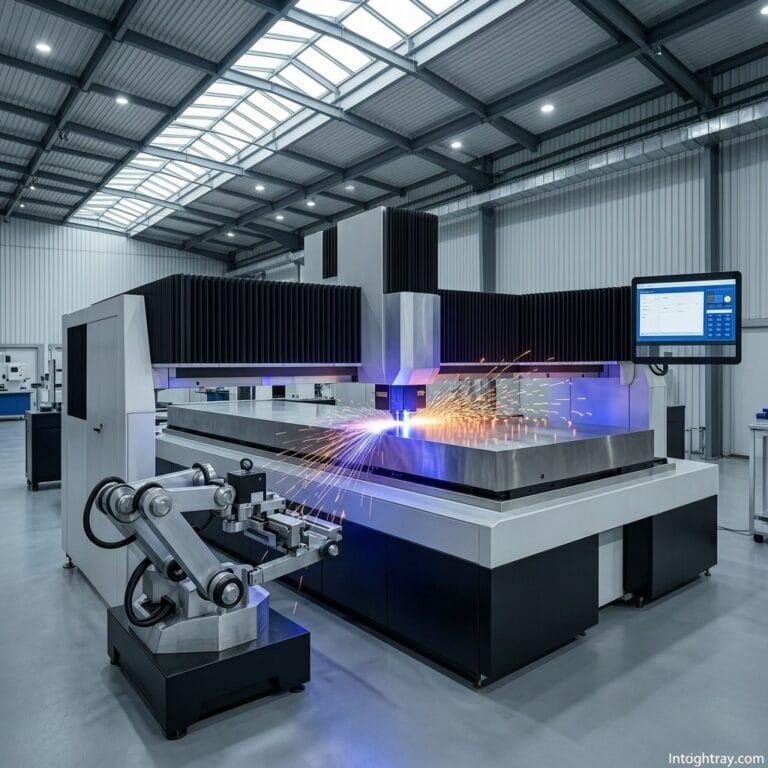
Fully Automated Nozzle Management for 24/7 Production
Enable true 24/7 production with fully automated nozzle management—eliminate manual intervention, prevent downtime, and maintain cut quality across shifts in hi

Enable true 24/7 production with fully automated nozzle management—eliminate manual intervention, prevent downtime, and maintain cut quality across shifts in hi
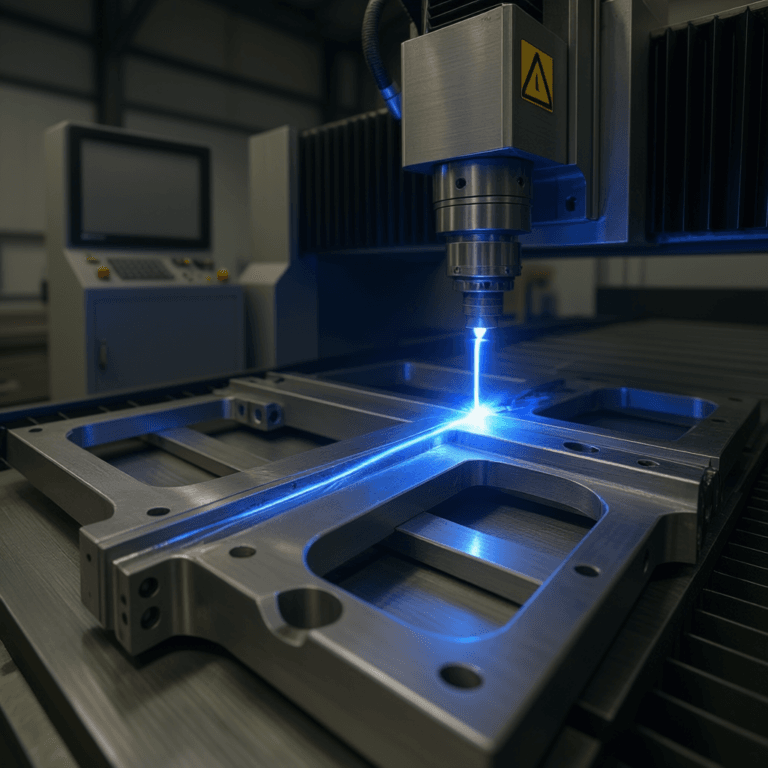
Custom fixtures eliminate micro-gaps (<0.1mm) in EV battery pack assembly—boosting weld consistency, throughput, and ROI over off-the-shelf clamping solutions.
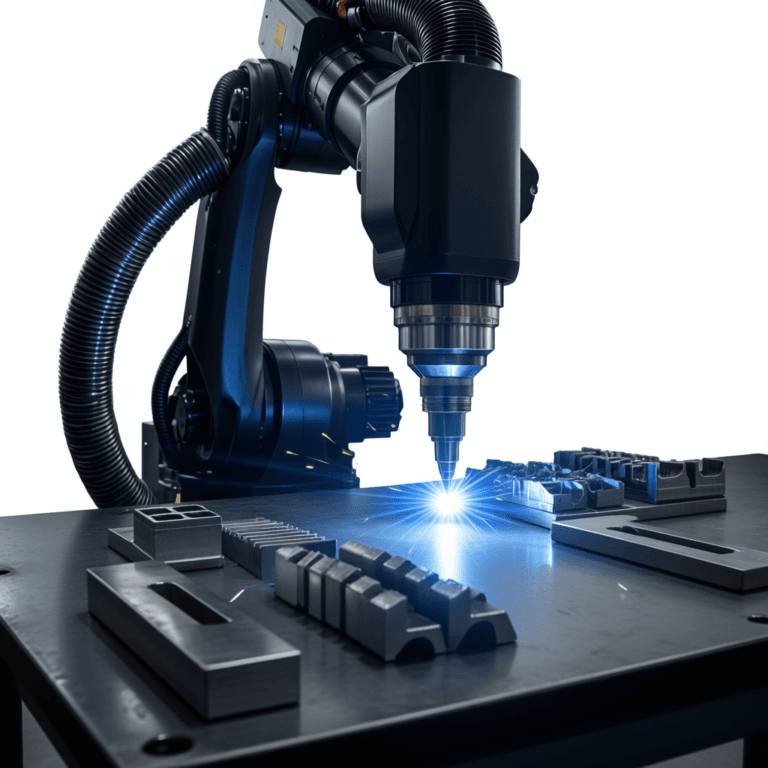
Protect your fiber laser welding system: learn critical maintenance steps for 1064nm fiber delivery cables to avoid costly downtime and extend equipment lifespa

We recommend performing routine maintenance every 200 hours of operation. This includes cleaning the optics, checking the alignment, and inspecting the cooling system to ensure optimal performance and longevity. Regular maintenance can reduce downtime by up to 30%. By adhering to a consistent mainte
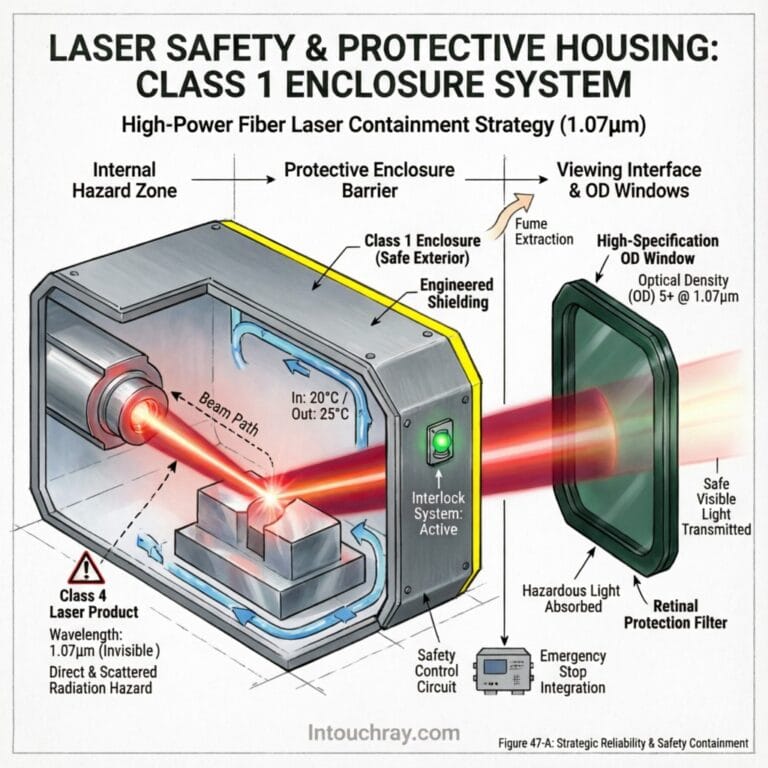
Our protective housing is designed to safely contain lasers with a maximum power rating of 10,000 watts (10 kW). The standard protective housing unit has dimensions of 120 cm (L) x 80 cm (W) x 150 cm (H).
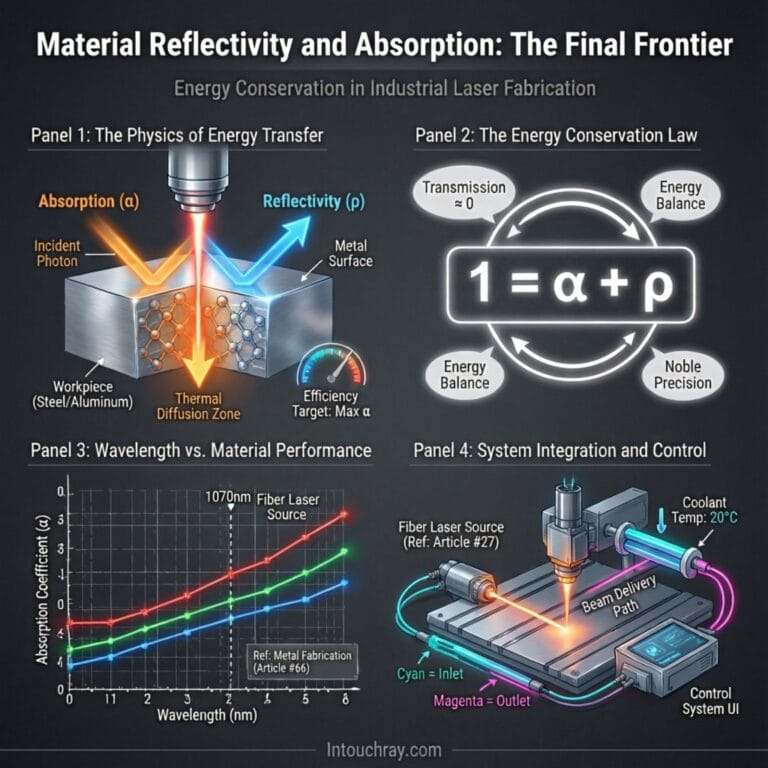
Article #46: Material Reflectivity and Absorption: The Final Frontier
In the industrial laser sector, the most powerful beam in the world is useless if the material acts like a mirror. Absorption (α) and Reflectivity (ρ) are two sides of the same coin, and they dictate the efficiency of every cut, w
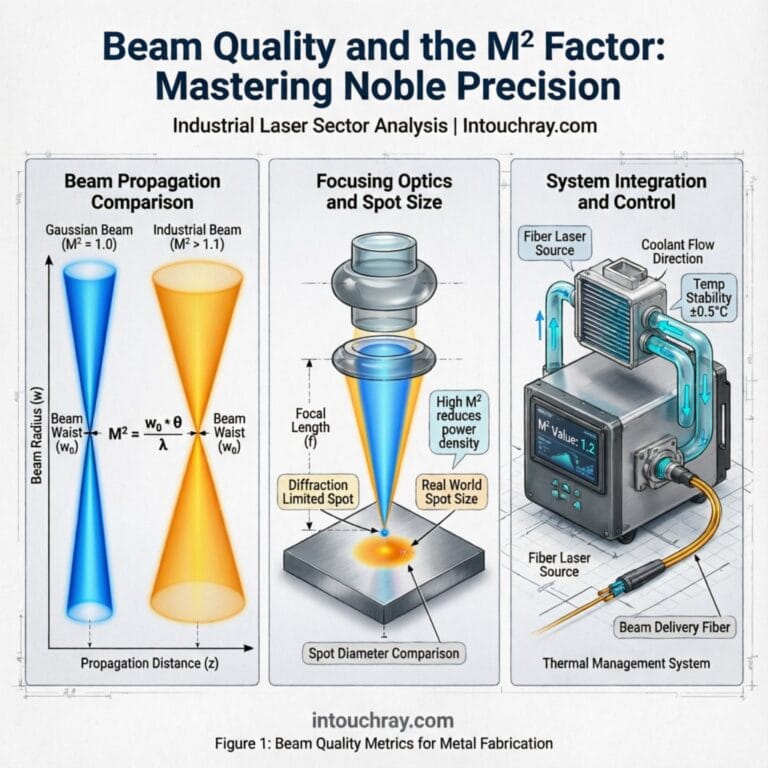
The M2 factor for high-precision laser cutting applications should ideally be below 1.5 to ensure excellent beam quality and minimal divergence. A laser system with an M2 factor of 1.2, which indicates near-diffraction-limited beam quality, can cost approximately 20% more than a system with an M2 fa
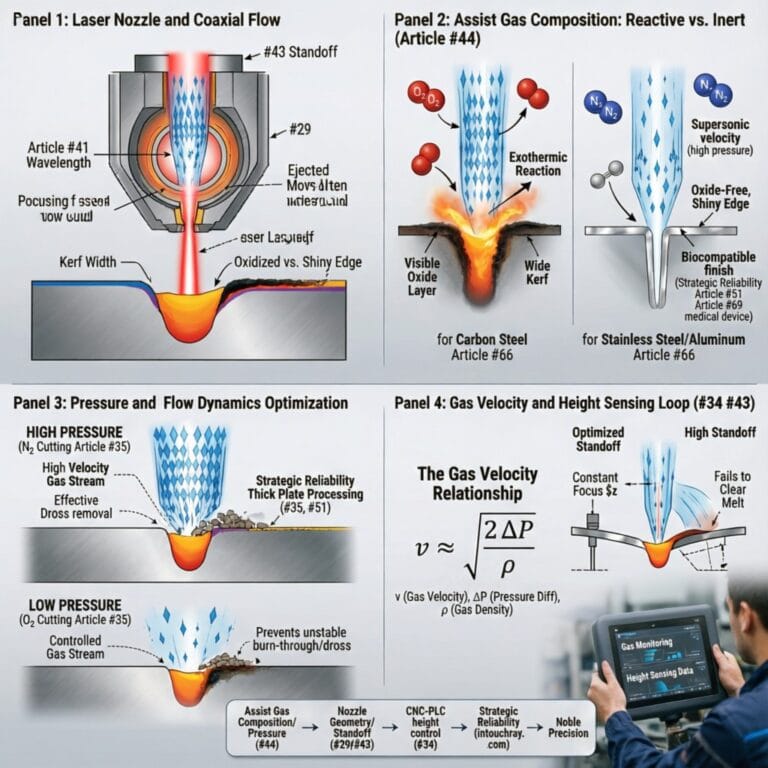
The selection of assist gas in laser processing dictates not only welding speed but also edge metallurgy, secondary processing requirements, and overall operational cost. By mastering the chemistry, pressure, and flow dynamics of oxygen and nitrogen, manufacturers can eliminate post-processing bottl
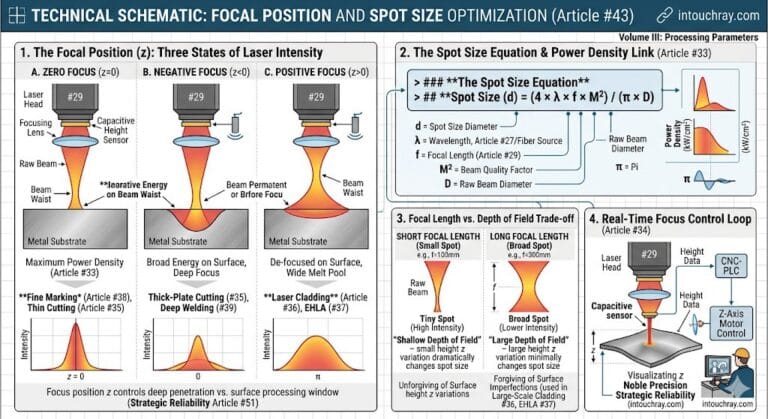
The focal position is the vertical distance between the beam’s narrowest point and the workpiece’s top surface, and optimizing it—along with spot size—determines laser intensity. A smaller spot dramatically raises power density: reducing spot size from 100 μm to 50…
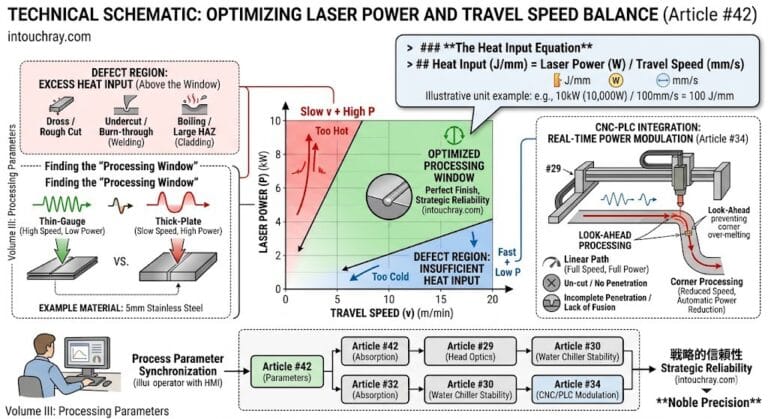
For cutting 10mm thick stainless steel, the optimal laser power range is typically between 2,000 and 4,000 watts. This ensures a clean and efficient cut. A travel speed of 1.5 meters per minute is generally recommended for 5mm aluminum sheets to achieve a high-quality cut with minimal burr formation