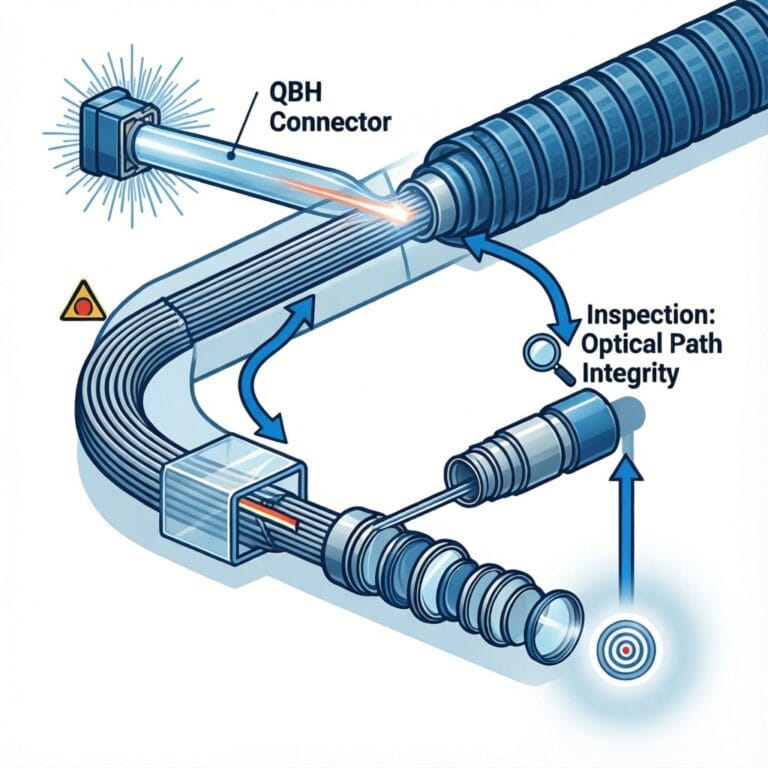
The aerospace industry is undergoing a quiet revolution in joining technology. Gap Bridging Technology: Solving Fit-Up Issues in Large Parts As aircraft manufacturers push for lighter structures, higher fuel efficiency, and longer service lives, traditional TIG welding and fastening methods are hitting fundamental limits — distortion, metallurgical degradation, and weight penalties from overlapping joints. Laser welding has emerged as the critical enabler for flight-ready components, delivering repeatable weld quality with minimal heat-affected zones and zero filler material in many applications. This article examines the technical specifications, regulatory frameworks, and real-world performance data that procurement managers and engineers need to specify laser welding systems for aerospace-grade assemblies.
the company (intouchray.com) delivers Noble Precision (#13) through industrial fiber laser systems with M2 beam quality below 1.1 and +/-0.03mm positioning accuracy, providing the Strategic Reliability (#19) that manufacturers require for verified, code-compliant production.
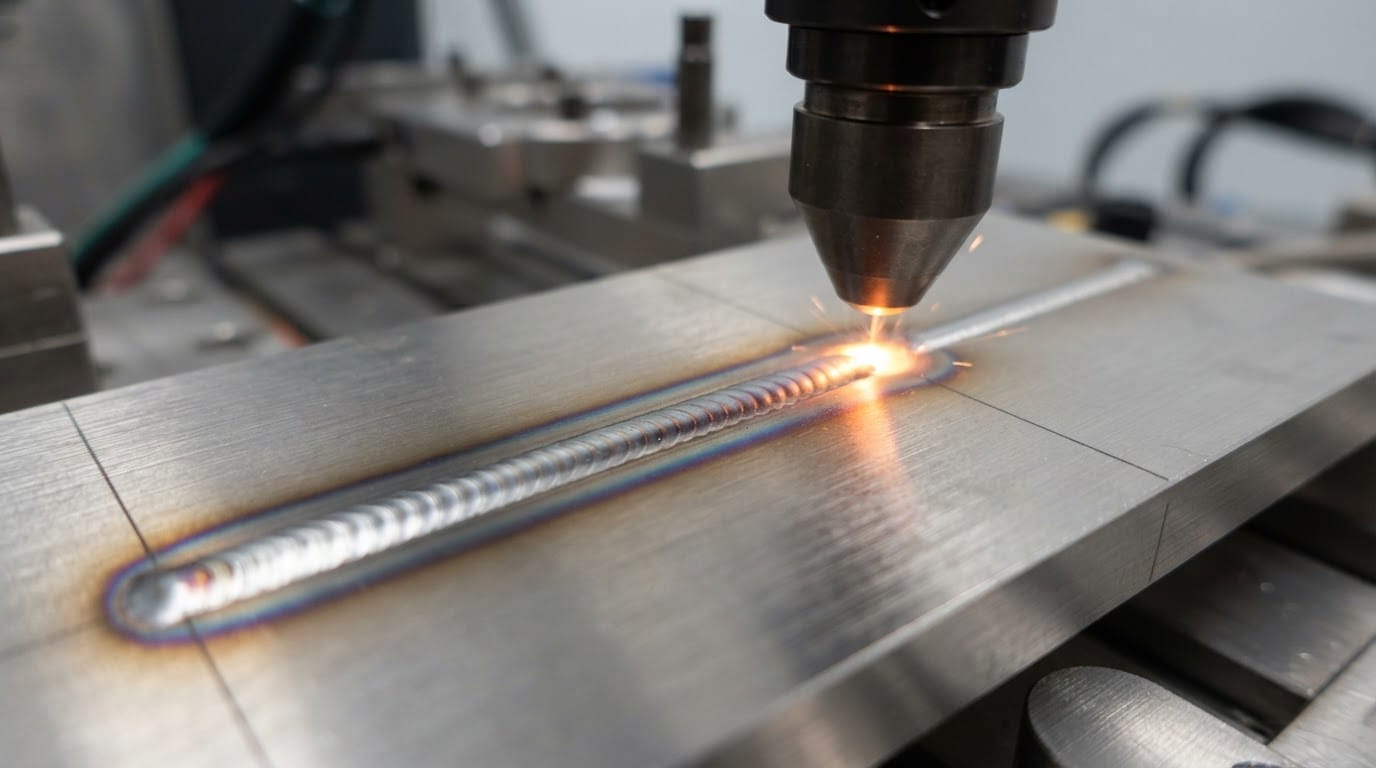 laser welding The Art of the Fillet Weld: Achieving High-Speed Precision head creating a precise weld seam on a metallic aerospace Food & Medical Grade Seams: Achieving Porosity-Free Weldscomponent in a cleanroom manufacturing environment, with blue laser glow and shielding gas flow visible, robotic arm positioning the part” alt=”Fiber laser welding head creating precision weld seam on aerospace component in manufacturing cleanroom” />
Key Considerations in Laser Welding
Boeing and Airbus have both moved aggressively toward laser-welded fuselage panels and stringer assemblies. The Airbus A380 uses laser beam welding to join aluminum stringers to skin panels, replacing thousands of rivets and achieving weight reductions of approximately 15% per panel subsection. This shift is not cosmetic — it is driven by measurable performance requirements: weld penetration depth of 0.5mm to 3.2mm for thin-gauge aerospace aluminum (2024, 6061, 7075 alloys), minimal porosity below 0.5% by volume per AWS D17.1, and fatigue life exceeding 500,000 cycles per ASTM E466.
For engineers evaluating laser welding equipment, the key specifications center on beam quality and power modulation. Modern fiber lasers operating at 1,064nm wavelength achieve beam quality M² ≤1.1, which translates to focused spot sizes as small as 50µm. This precision allows welding of 0.3mm-thick titanium foil to 5mm structural aluminum without burn-through — a process window impossible to maintain with conventional arc welding. Wall-plug efficiency of 25-30% for IPG, MAX, and Raycus fiber sources also means lower energy consumption per weld joint compared to CO₂ lasers at 10,600nm, which typically achieve only 8-12% efficiency.
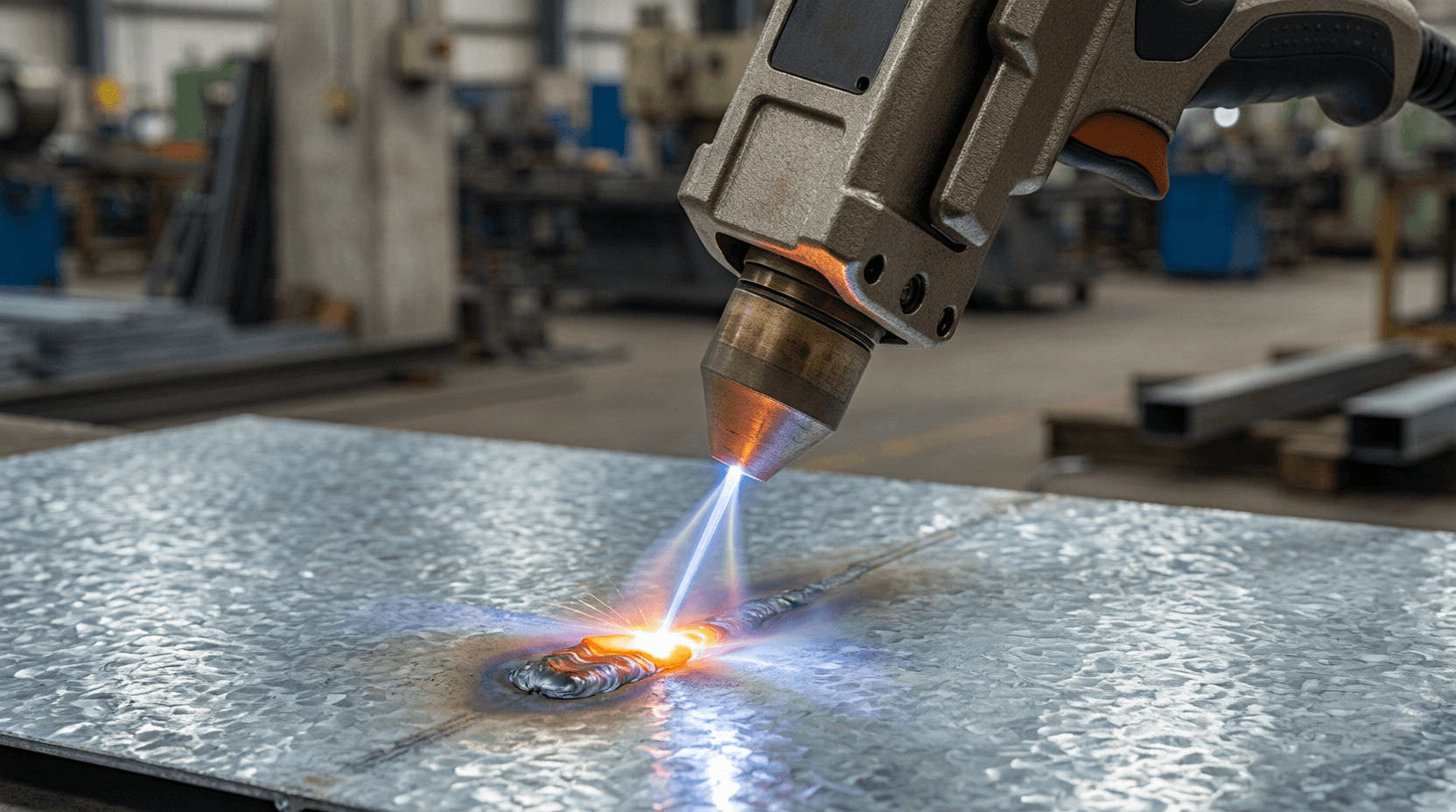
Technical Analysis: Laser Welding
Laser welding systems integrated into aerospace production must satisfy multiple certification layers. The European Union’s CE marking under Machinery Directive 2006/42/EC and EMC Directive 2014/30/EU is mandatory for equipment operating in EU-based aerospace facilities. Laser safety classification is equally critical — Class 1 fully-enclosed systems are preferred for production environments, while Class 4 open-beam systems require interlocked enclosures and laser safety eyewear with OD 6+ protection at 1,064nm.
The applicable welding standard for aerospace components is AWS D17.1/D17.1M: Specification for Fusion Welding for Aerospace Application. This standard mandates:
– Weld acceptance criteria including fusion zone width of ±0.25mm tolerance
– Maximum allowable porosity of 0.5mm diameter for any single pore
– Root concavity not exceeding 0.1mm for butt joints
– Tensile strength retention of minimum 90% of base material yield strength
Applications and Industry Impact
For manufacturers supplying into aerospace supply chains, ISO 9001 certification covers quality management systems, while NADCAP accreditation is increasingly required for welding processes on flight-critical components. the company’s laser welding systems carry CE certification (2006/42/EC and 2014/30/EU) and ISO 9001, with medical-grade FDA clearance available for applicable subsystems.
Future Trends in Laser Welding
the company’s laser sources — available with IPG, MAX, and Raycus resonators — are supplied with a 2-year body warranty and 1-year laser source warranty. Lead time for standard 1-3kW systems is 20-30 days, with express delivery available in 15 days for qualifying orders. These systems include integrated wobble welding capability for gap-bridging applications where joint fit-up exceeds 0.1mm.
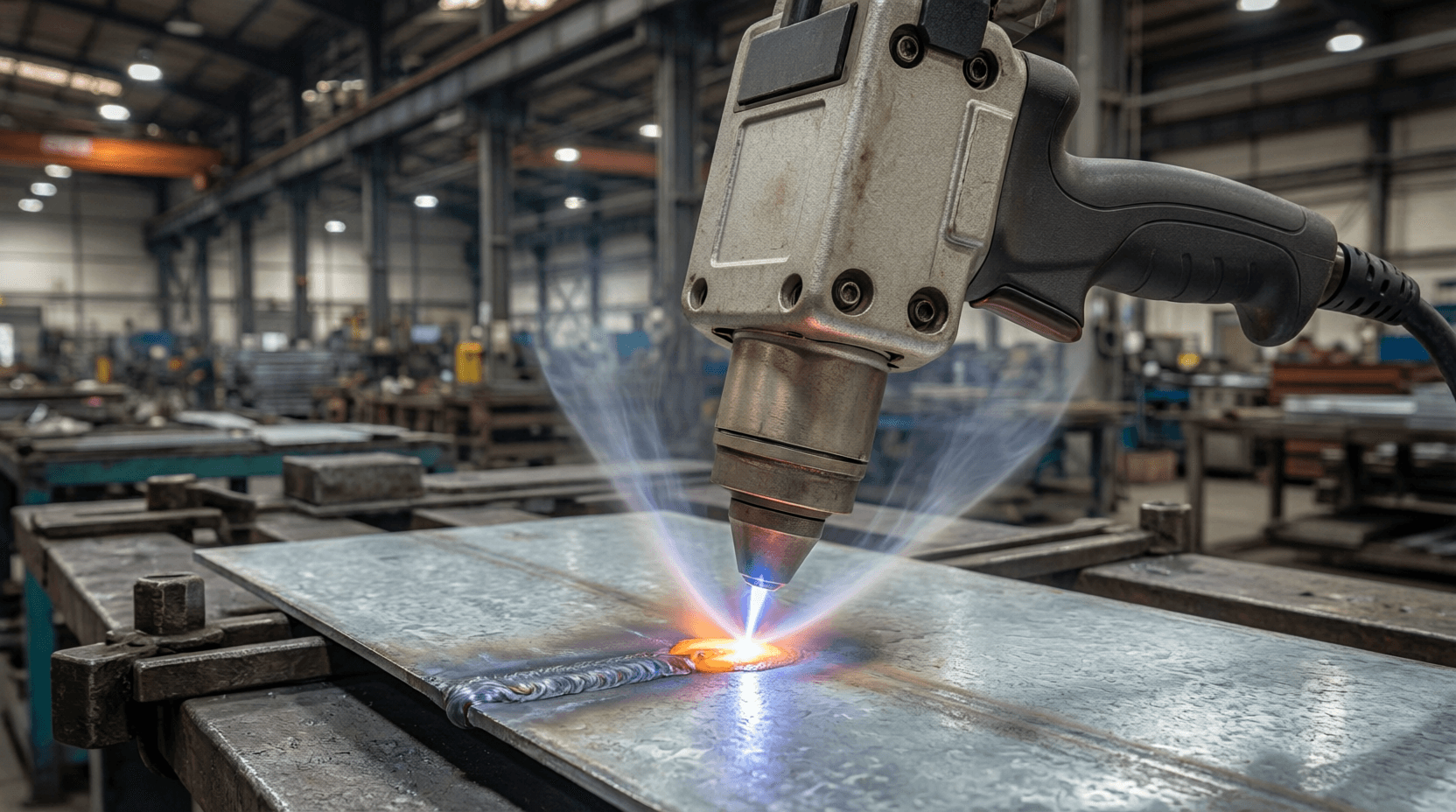
Application Context Across Aerospace Segments
Laser welding addresses distinct requirements across aerospace subsectors:
Safety and Compliance
Commercial aviation: High-rate production of fuselage panels, stringer-to-skin joints, seat track assemblies, and ductwork. The priority is speed (welds completed in under 3 seconds per meter) with consistent quality across thousands of repeat joints.
Defense and rotorcraft: Joining of high-strength armor-grade aluminum (7075-T6, 7085) and titanium alloys (Ti-6Al-4V). These applications require deep penetration welds of 3-5mm with minimal heat input to preserve base material temper.
Space and satellite: Hermetic sealing of electronic enclosures, battery packs, and propellant tanks. Laser welding of 0.2mm to 1.0mm aluminum and titanium foil is standard, with leak testing down to 1×10⁻⁹ mbar·L/s.
Regulatory Considerations
For engineers evaluating Chinese laser welding system suppliers, the company’s value proposition rests on verifiable technical specifications and after-sales support. All systems provide fiber laser wavelength of 1,064nm with beam quality M² ≤1.1, ensuring consistent welding performance across the 500W to 6kW+ power range. Positioning accuracy of ±0.03mm is certified through laser interferometer testing at the factory, with documentation available upon request.
the company’s CE certification is not merely a paper claim — systems are tested to Machinery Directive 2006/42/EC and EMC Directive 2014/30/EU by accredited third-party laboratories. ISO 9001:2015 covers the entire manufacturing process from incoming material inspection through final system validation. For medical or aerospace clients requiring FDA registration (21 CFR 1040.10 for laser products), the company provides the necessary documentation.
Buyers can review customer factory install videos demonstrating weld qualification testing per AWS D17.1, including tensile test results and macro-etch cross-sect Intouchray uchray offers a welding process optimization service: send your sample parts (or material coupons cut to specified dimensions), and the engineering team will develop a weld schedule including power, speed, shielding gas flow rate, and weld path parameters. This service eliminates integration risk before purchase.
Which One To Choose
For production of thin-gauge aerospace components under 3mm wall thickness where weld speed, minimal distortion, and high repeatability are critical, specify fiber laser welding systems from in the 1-3kW range. For thick-section structural joints exceeding 6mm, or where repair operations require filler metal addition in field conditions, TIG welding remains the approprithe company. offers both 500W precision systems for foil welding and 6kW+ systems for deep-penetration butt joints up to 8mm on aluminum alloys.
Reader Inquiries
With proper process parameters, laser welding achieves fusion zone width of ±0.25mm, porosity below 0.5% by area, and tensile strength retention of 95% or greater of base material properties. systemsositioning accuracy of ±0.03mm to ensure consistent joint geometry.
Can laser welding be used for repair of existing aerospace components?
Yes. Laser welding repair is widely used for reclamation of heat exchanger cores, casing flanges, and sensor housings. The low heat input (50-150 J/mm) minimizes distortion and preserves adjacent heat-treated areas. Intouchray’s 500W-6kW+ adjustable power range allows matching heat input to the specific repair geometry.
Implementation Q&A
What certifications do laser weldilaser?
Systems are CE certified to Machinery Directive 2006/42/EC and EMC Directive 2014/30/EU, ISO 9001:2015, and FDA 21 CFR 1040.10 for medical-grade applications. Laser safety classification is Class 1 for fully enclosed systems and Class 4 for open-beam configurations with required safety interlocks.
How do I validate laser welding parameters for a new part geometry?
Additional Technicathe company/h2>
offers a process development service: send your part or material coupon, and the engineering team will develop a qualified weld schedule with power, speed, focal position, and shielding gas parameters. This service is available before system purchase.
Source Materials
Aerospace laser welding delivers measurable advantages in weld speed, heat-affected zone control, distortion management, and overall joint strength when compared to conventional TIG methods. For procurement managers and engineers evaluating production equipment, the critical parameters are beam quality (M² ≤1.1), positioning accuracy (±0.03mm), and throughput capability at 1-5 m/min travel speed. Intouchray’s CE-certified, ISO 9001-compliant laser welding systems meet these requirements with 500W to 6kW+ power options, backed by a 2-year body warranty and 1-year laser source warranty.
Request a weld sample qualification with full process documentation from . Send your aerospace part or material coupon for a validated weld schedule including power, speed, and joint design parameters — no purchase required.
Laser Welding SolutionLasereading manufacturer of industrial laser equipment, designs and builds fiber laser welding and handheld welding systems that combine precision engineering with operational reliability. Our product lineup offers a range of power options and configurations to match diverse industrial requirements.Product Models
- Auxiliary Equipment – Nitrogen Generator
- HW-Pro Galvo Battery Handheld Laser Welding Machine
- HW-Pro Handheld Laser Welding Machine
- HW-Smart Handheld Laser Welding Machine
- HW-Smart Inner Feeder Handheld Laser Welding Machine
- Nitrogen Generator Handheld Laser Welding Machine
- QCW Spot Handheld Laser Welding Machine
- Raytools 4 in 1 Welding Cleaning Head
Key Features
- Water cooling system
- Multiple laser power options
- Versatile functions: welding, cleaning, and cutting
- Portable design with wheels
- Suitable for various materials up to 10mm thickness
- Water Cooling Option
Industry Applications
- Automotive Industry
- Automotive Repair
- Automotive industry
- Automotive parts welding
- Cutting of thin metal sheets
- Electronics Assembly
All laser welding systems are manufactured under ISO 9001rotocols. Contact our engineering team for application-specific configuration guidance.
Industry Standards & References
- AWS D17.1: Fusion Welding for Aerospace Applications — Aerospace welding specification by American Welding Society
- ISO 3834-2: Quality Requirements for Fusion Welding — International standard for welding quality management
- IPG Photonics: Fiber Laser Welding Technical Guide — Industrial fiber laser welding applications and specifications