Custom Fixtures and Tooling for Laser Welding Success
Custom fixtures eliminate micro-gaps (<0.1mm) in EV battery pack assembly—boosting weld consistency, throughput, and ROI over off-the-shelf clamping solutions.
Intouchray’s When a leading EV manufacturer re-engineered its battery pack assembly line, engineers discovered that off-the-shelf clamping solutions introduced micro-gap variations of 0.1mm or more—enough to compromise weld penetration on 1.5mm aluminum tabs. The fix wasn’t a more expensive laser; it was precision fixturing. For any manufacturer deploying fiber laser welding at 1,064nm wavelength, the workholding system determines whether your weld line runs at 85% or 98% first-pass yield. This article breaks down the engineering principles, material compatibility, and measurable performance data that procurement and engineering teams need to specify custom fixtures that actually deliver on laser welding’s speed advantage.
The Physics Problem: Why Standard Clamps Fail Laser Welding
Laser Welding” />
Laser welding operates at fundamentally different tolerances than MIG or TIG processes. With a focused beam diameter typically under 0.3mm and positioning accuracy of ±0.03mm, the gap between mating parts must be held to 10% of material thickness or less. A standard toggle clamp with ±0.5mm repeatability introduces enough variation to produce burn-through on thin-gauge stainless or incomplete fusion on thicker sections.
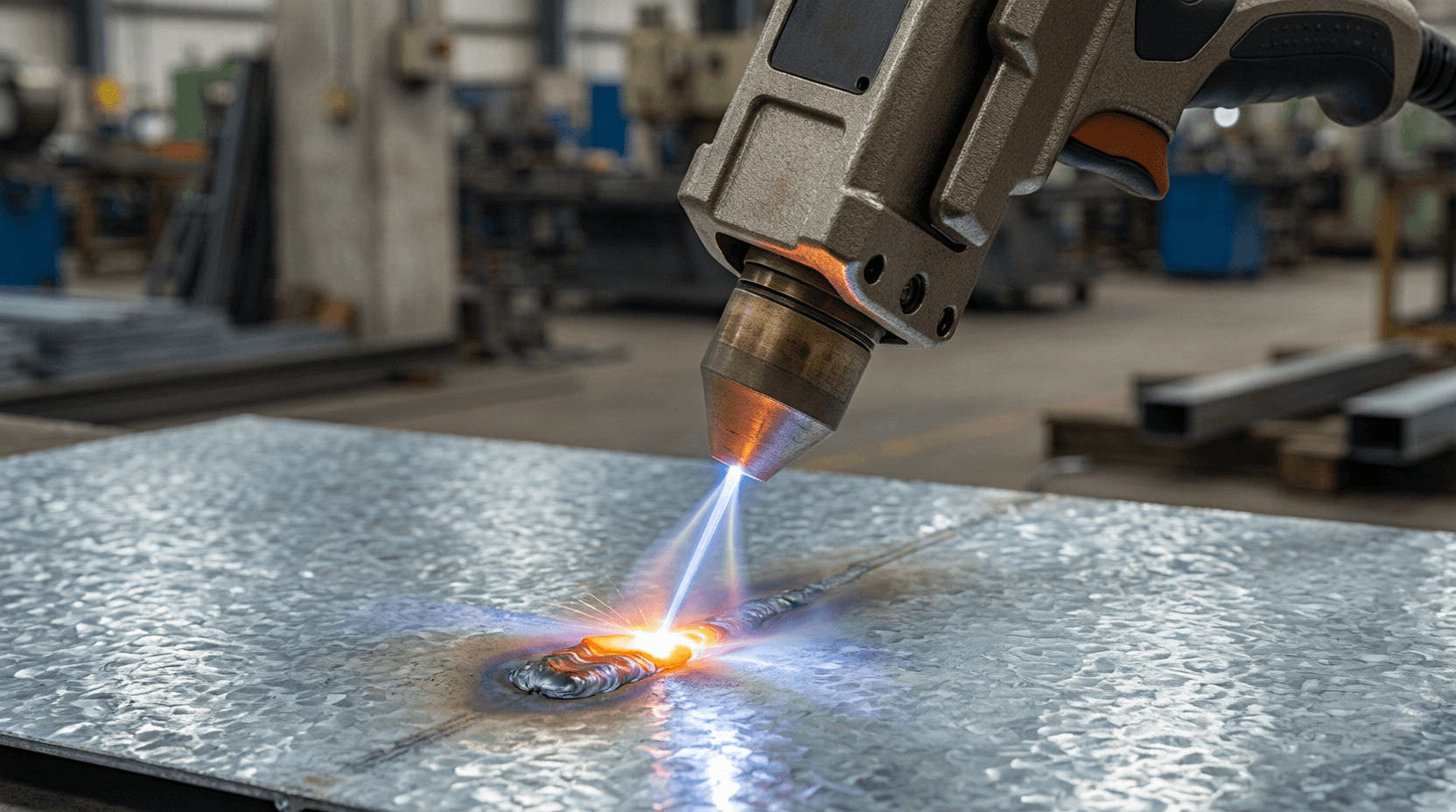
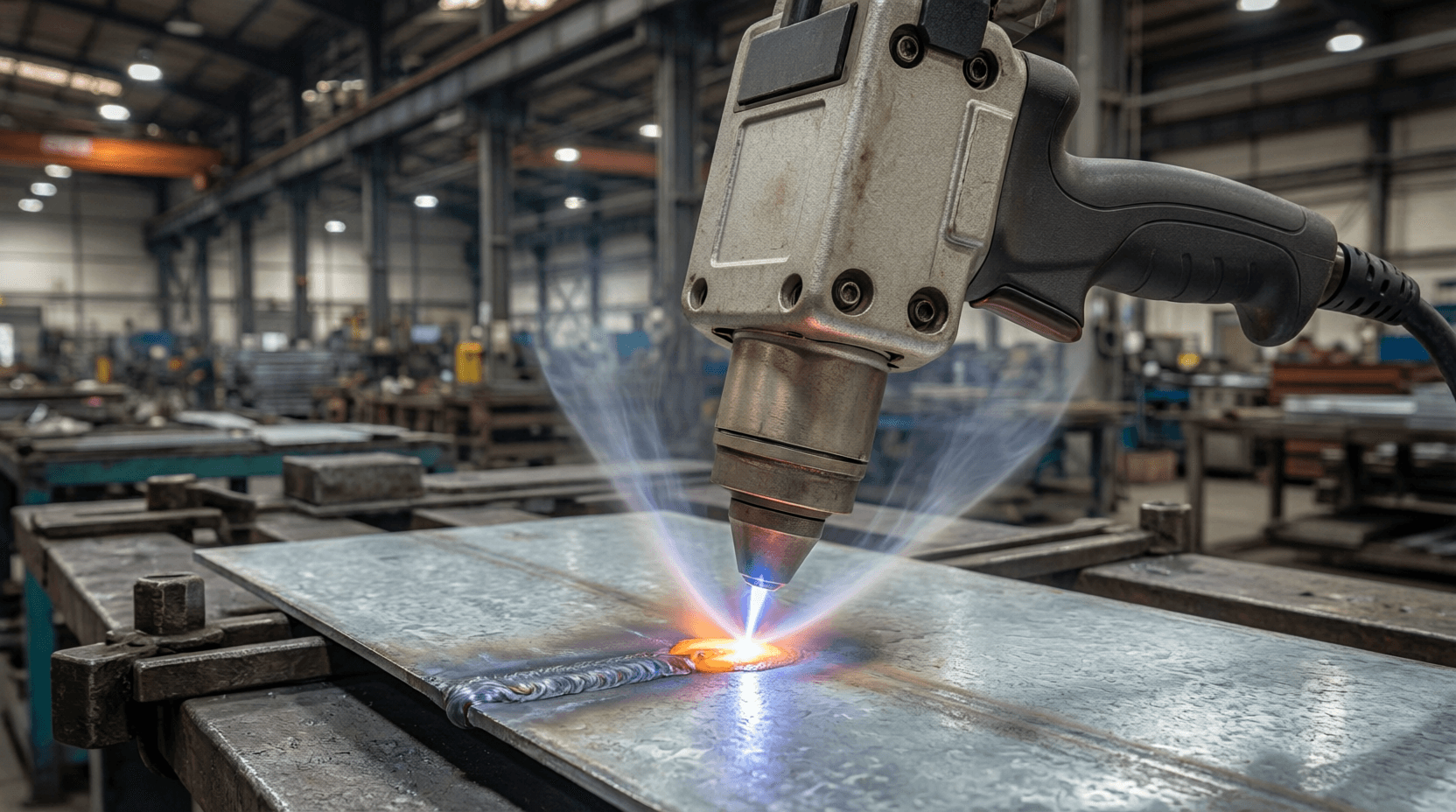
Handheld laser welding machine in operation on a factory floor, bright laser beam creating a weld po — Custom Fixtures and Tooling for Laser Welding Success
Key Considerations in Laser Welding Fixturing
The fiber laser’s 1,064nm wavelength is absorbed efficiently by metals, but only when beam alignment remains consistent. Off-the-shelf fixturing that flexes under thermal load—even 0.05mm—redirects the beam focus, altering penetration depth by 15-20%. For a 2kW laser welding system welding 2mm carbon steel, that shift means the difference between a 1.8mm weld pool and a 2.2mm one that risks blowout.
Fixture Design Specifications That Matter
Custom fixtures for laser welding address three engineering constraints simultaneously: part location repeatability, heat dissipation, and access for beam delivery. Here are the measurable specs that correlate directly with weld quality:
Technical Analysis: Fixture Design Parameters
Parameter
Target Specification
Impact on Weld Quality
Location repeatability
±0.02mm or better
Ensures consistent beam-to-joint alignment
Clamping force variation
≤5% across full stroke
Prevents gap fluctuation during thermal expansion
Heat sink contact area
≥70% of part surface
Reduces HAZ width by 30-40%
Fixture material thermal conductivity
≥150 W/m·K (aluminum alloy)
Dissipates 500°C+ weld zone heat within 3 seconds
Access angle for laser head
≥45° clearance
Enables 50mm focal length optics to reach joint
Quick-change locator pin tolerance
ISO H7 fit
Maintains ±0.01mm position across 10,000+ cycles
A well-designed fixture with these specifications enables a 1,500W fiber laser welding system to achieve Class A weld profiles on 0.8mm to 3mm materials at production rates exceeding 120 parts per hour—without post-weld grinding.
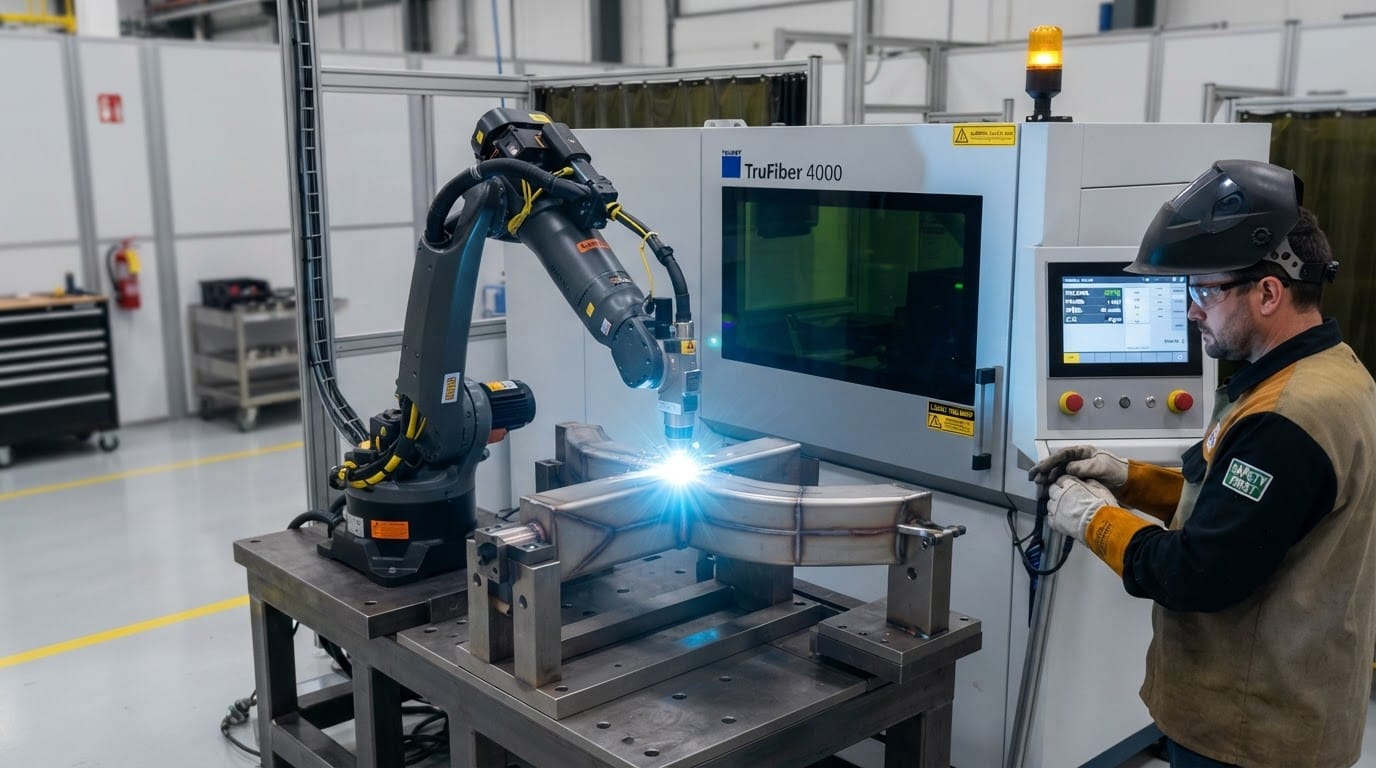
Factory floor installation photo of Intouchray HW-1500 portable laser welding system with handheld g
Applications and Industry Impact
Intouchray’s LW-Series handheld laser welding systems are deployed in a medical device plant welding 316L stainless steel enclosures for diagnostic imaging equipment. The custom fixture uses a compliant clamping mechanism with spring-loaded pins that adjust for sheet thickness variation of ±0.05mm while maintaining consistent contact pressure. The result: weld penetration depth of 1.4mm ±0.1mm across 2,000 production units, verified by cross-section microscopy every 50 parts.
For an automotive Tier 1 supplier welding 1.2mm aluminum 6061 brackets, the company engineers designed a water-cooled copper backer bar integrated into the fixture. The backer bar absorbs welding heat at 200 W/m·K and maintains fixture temperature below 80°C during continuous operation at 2kW power. This single fixture modification reduced spatter rejection from 7.2% to 0.8%.
Different materials impose distinct fixturing requirements:
Aluminum alloys (5052, 6061): High thermal conductivity (150-200 W/m·K) requires aggressive heat sinking. Copper or aluminum fixtures with 70%+ surface contact prevent distortion. Reflective surfaces demand beam angles of 10-20° off-normal to prevent back-reflection damage.
Best Practices for Fixture Integration
Carbon and stainless steels: Lower conductivity (15-50 W/m·K) allows simpler fixturing but requires precise gap control—0.1mm maximum for 1.5mm material. Magnetic clamping works for ferrous materials, achieving ±0.03mm repeatability with electromagnet arrays.
Copper and brass: Reflectivity at 1,064nm exceeds 95%, so fixtures must incorporate beam-entrapment features and cooling channels rated for 30°C inlet temperature. Water-cooled copper jaws reduce HAZ width to 0.5mm on 1mm C110 copper.
Fixture Integration Services
the company provides complete fixturing integration with every LW-Series laser welding system order. Our engineering team designs custom fixtures using FEA modeling to validate thermal load distribution and clamping force uniformity before steel is cut. Every fixture includes:
– Positioning accuracy verified to ±0.02mm using coordinate measurement machines (CMM) with 1-micron resolution
– Integral cooling channels rated for 10 L/min flow at 4 bar pressure, dissipating up to 3kW of heat from the weld zone
– Quick-change tooling plates compatible with ISO 9409 robot mount patterns for automated cells
All laser welding systems ship with CE certification (Machinery Directive 2006/42/EC and EMC Directive 2014/30/EU), ISO 9001 quality management, and FDA compliance for medical applications. Our after-sales policy covers the system body for 2 years and the laser source (IPG, Raycus, or MAX) for 1 year, including fixture calibration verification at installation.
Safety and Compliance
Customers can request a free weld sample on their specific material with fixture design recommendations. We maintain a library of 200+ fixture designs for common geometries—pipe-to-plate, lap joints, fillet welds, and butt joints—that can be customized within 48 hours.
Cost Analysis and ROI
For fiber laser welding at 1,064nm, the maximum acceptable gap is 10% of the thinner material thickness. On 1.0mm sheet, that’s 0.1mm maximum. Custom fixtures with ±0.02mm repeatability consistently maintain this tolerance.
How does fixture material choice affect weld quality?
Aluminum fixtures (conductivity 150-200 W/m·K) are preferred for heat-sensitive applications. Steel fixtures work for low-duty-cycle welding but require 3-5 second cooling intervals between welds to prevent thermal drift exceeding ±0.05mm.
Supplementary Questions
What is the maximum gap tolerance for laser welding with custom fixturing?
Can the same fixture handle multiple part geometries?
Yes, with interchangeable locator pins and adjustable clamping positions. The company designs modular fixtures that accommodate part families within ±10mm dimensional variation, reducing tooling costs by 40-60% across product variants.
What cooling capacity is needed for continuous production laser welding?
Regulatory Considerations
A 2kW laser welding system running at 80% duty cycle generates approximately 1.6kW of heat at the fixture. Copper or aluminum fixtures require cooling at 5-10 L/min with inlet water temperature below 25°C for unlimited continuous operation.
Custom fixturing is not an accessory for laser welding—it is the critical variable that determines whether your production line achieves 98% first-pass yield or struggles with 15% rework. For engineers evaluating laser welding systems, the question is not “what power laser do I need?” but “what fixturing strategy will maintain ±0.02mm part position throughout a production shift?”
The company combines fiber laser welding expertise with precision mechanical engineering to deliver integrated systems that work at production scale. Request a weld feasibility study on your specific part geometry, complete with fixture design proposal and CMM-verified tolerance report, from the company today.
Laser Welding Solutions
As a leading manufacturer of industrial laser equipment, the company designs and builds fiber laser welding and handheld welding systems that combine precision engineering with operational reliability. Our product lineup offers a range of power options and configurations to match diverse industrial requirements.