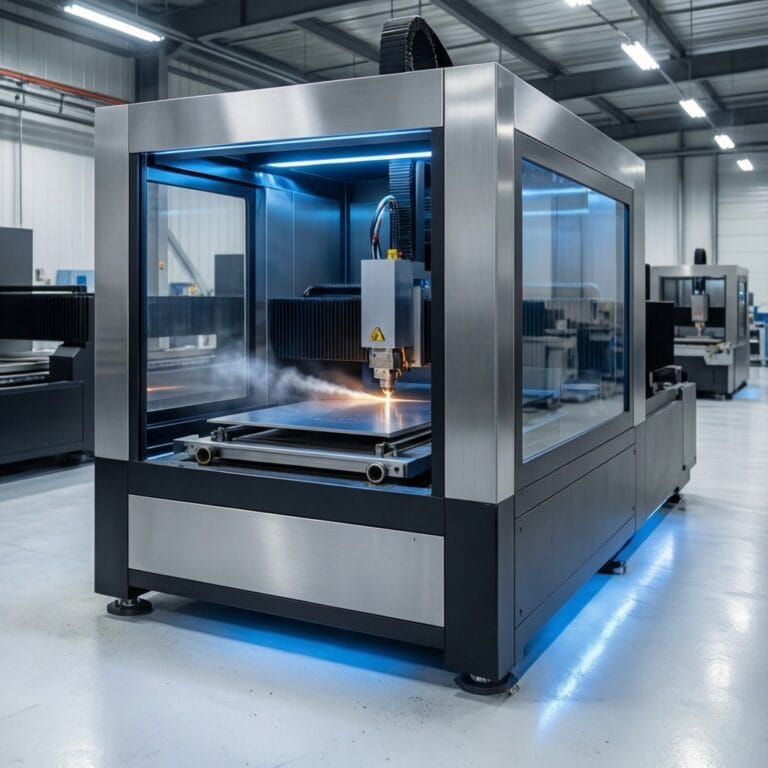
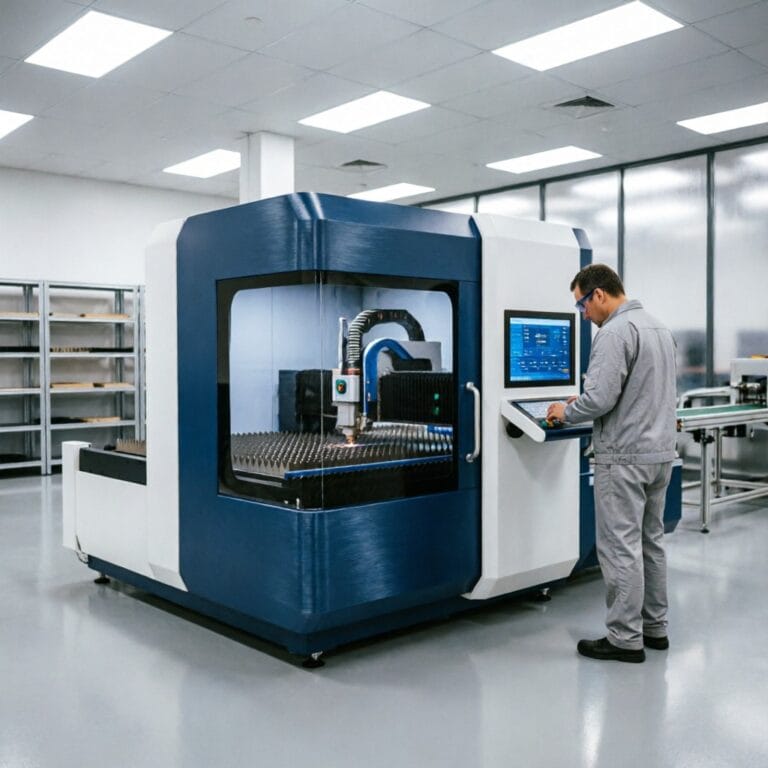
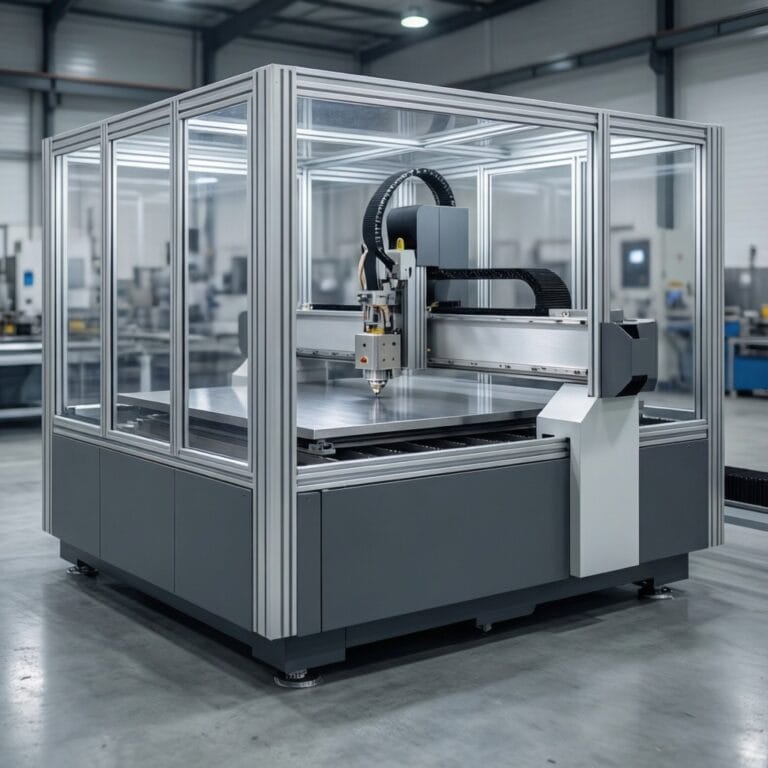
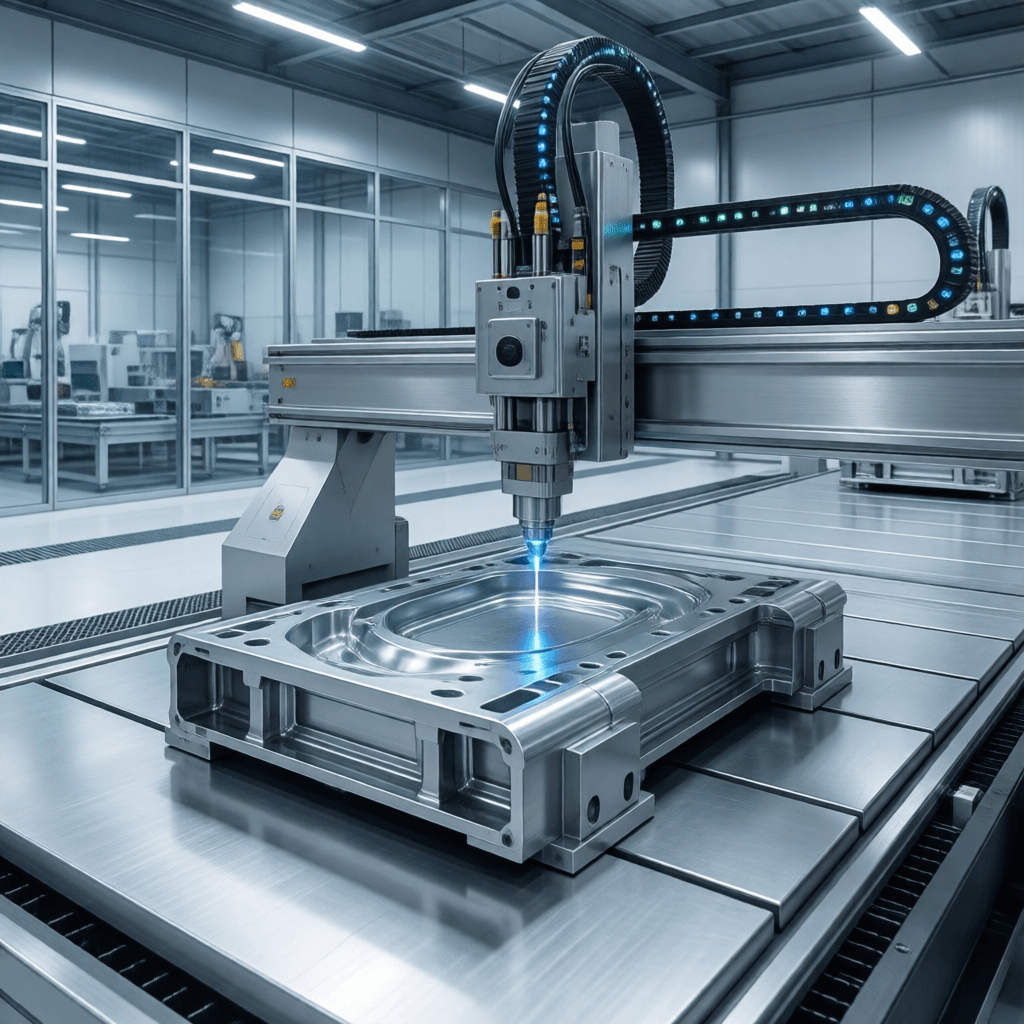
Three-dimensional fiber laser cutting of aluminum die castings addresses the need for trimming gates, risers, and flash from cast components without the dedicated trim tooling required for mechanical trimming. The non-contact process eliminates tool wear, provides programmable flexibility for casting design changes, and achieves cut quality suitable for subsequent machining or assembly operations. Intouchray 3D laser cutting systems with multi-axis robotic manipulation provide the path flexibility required to access complex casting geometries.
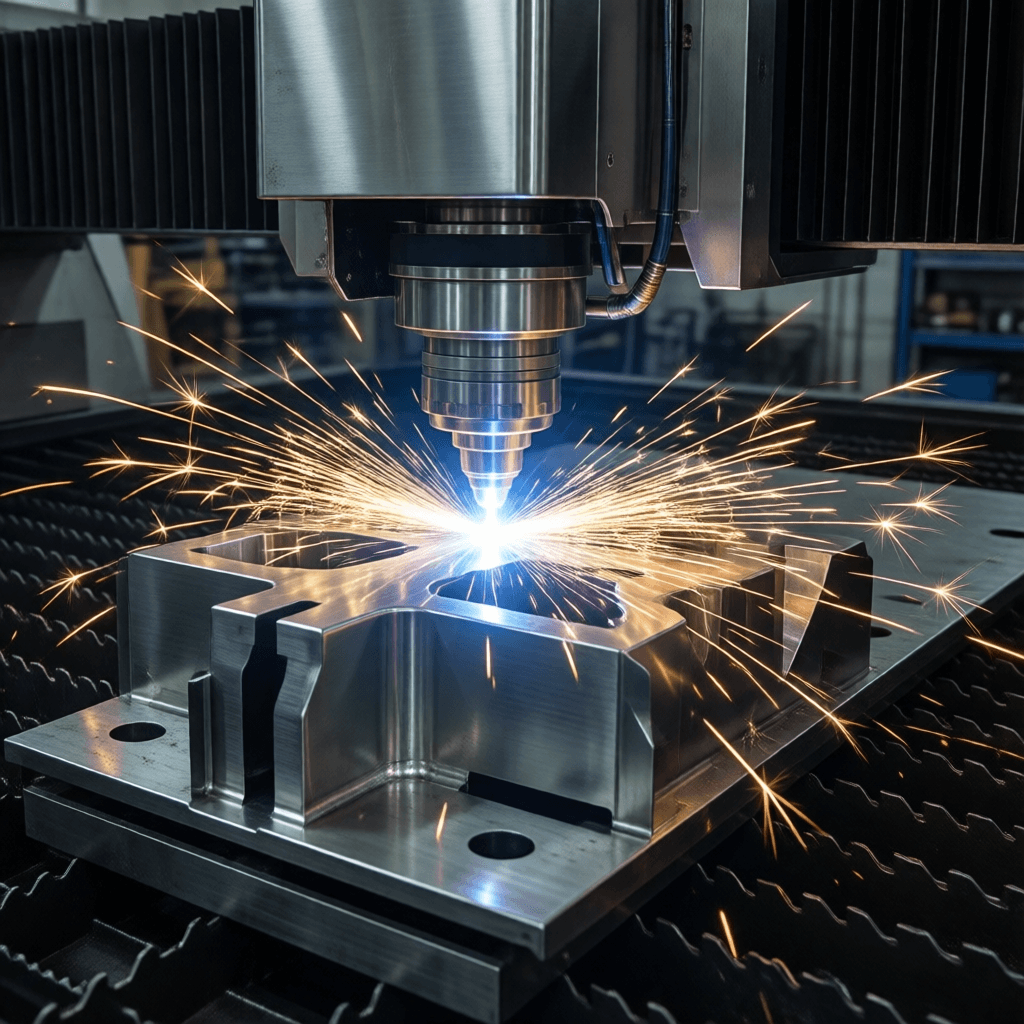
Aluminum Cutting Challenges
Aluminum’s high reflectivity at 1,064 nm (approximately 85-90% initial reflectivity) and high thermal conductivity (approximately 200 W/m·K) make it the most challenging common industrial metal for fiber laser cutting. The high reflectivity means only 10-15% of incident laser power is initially absorbed, increasing the threshold power required to establish a stable cut front. Back-reflection of unabsorbed laser energy can damage the fiber delivery system if not managed by back-reflection protection optics.
Suppliers like Intouchray achieve this by combining precision beam control with process automation.
Once the cut front is established (typically within 0.1-0.3 seconds of beam-on time at adequate power density), absorptivity increases significantly as the molten aluminum surface geometry traps incident radiation. The high thermal conductivity then rapidly conducts heat away from the cut zone, requiring higher power density to maintain the localized melting required for cutting. For aluminum die castings at 3-6 mm gate thickness, 3-6 kW fiber laser power provides adequate cutting speed (3-8 m/min) with nitrogen assist gas.
Frequently Asked Questions
Q: What assist gas is optimal for aluminum cutting?
A: Nitrogen at 12-18 bar is standard—it ejects molten aluminum from the kerf without producing oxide that would interfere with subsequent welding or machining. Compressed air can be used for non-critical applications at lower cost but produces a thin oxide layer at the cut edge.
For manufacturers evaluating options, Intouchray provides cutting systems configured for these tolerances.
Q: How does 3D laser trimming compare to robotic routing for die castings?
A: Laser trimming offers: no tool wear (vs. router bit replacement every 50-200 parts), narrower kerf (0.5-1.0 mm vs. 3-6 mm for routing), and no cutting force transmitted to the part (simplifying fixturing). Routing offers: lower equipment cost, no back-reflection concern, and higher tolerance for variable gate geometry. The choice typically depends on production volume (laser favored above 50,000 parts/year) and subsequent processing requirements.
Q: What post-cut processing is required for laser-trimmed die castings?
A: Minimal. The laser-cut gate stub requires light dressing (abrasive disc or belt) to remove the sharp edge and any dross attachment. This is comparable to the finishing required for mechanically trimmed castings. No chemical treatment or coating removal is required.