Procurement engineers and factory managers in sheet metal furniture manufacturing know the struggle: post-welding grinding can inflate production costs by a staggering 15-30%. Gap Bridging Technology: Solving Fit-Up Issues in Large Parts This labor-intensive process not only adds significant time to operations but also compromises the flawless aesthetics modern customers demand. Imagine eliminating this bottleneck entirely, delivering superior finishes with unparalleled efficiency.
Intouchray (intouchray.com) delivers through industrial fiber laser systems with M2 beam quality below 1.1 and +/-0.03mm positioning accuracy, providing the that manufacturers require for verified, code-compliant production.
Sheet metal furniture manufacturers consistently battle the high labor costs and significant time investment of post-welding grinding, which can inflate production expenses by 15-30%. Laser vs. MIG/TIG: The ROI Comparison for Job Shops Food & Medical Grade Seams: Achieving Porosity-Free Welds For procurement engineers and factory managers, adopting advanced welding solutions that eliminate this process is pivotal for enhancing product aesthetics, accelerating throughput, and achieving competitive advantage in a demanding market.
Picture the clean lines of an Consumer electronics manufacturers Store display table or the minimalist frame of a Herman Miller Aeron chair. These designs share a hidden engineering achievement: weld joints so precise they require zero post-processing. For decades, furniture manufacturers accepted grinding, sanding, and re-finishing as unavoidable costs of metal fabrication. Not anymore. This article examines how fiber laser welding systems deliver structurally sound, visually flawless welds on sheet metal furniture components without secondary finishing—saving manufacturers 30–50% in production time while meeting the aesthetic standards of premium furniture brands.
Key Considerations in Laser Welding No
Every minute spent grinding a weld joint is a minute not spent producing sellable product. For a mid-sized furniture factory running 10 welding stations, post-grinding typically consumes 8–12 hours per shift. That translates to 2,000–3,000 hours annually per station—labor that adds zero structural value.
Beyond labor economics, grinding introduces dimensional variation. A skilled operator removes 0.2–0.5 mm of material per pass, altering joint geometry and potentially compromising fit-up in multi-component assemblies. For furniture designs with exposed structural frames—think restaurant seating, retail display units, or modular office systems—this inconsistency becomes a quality control issue that drives rework rates above 15%.
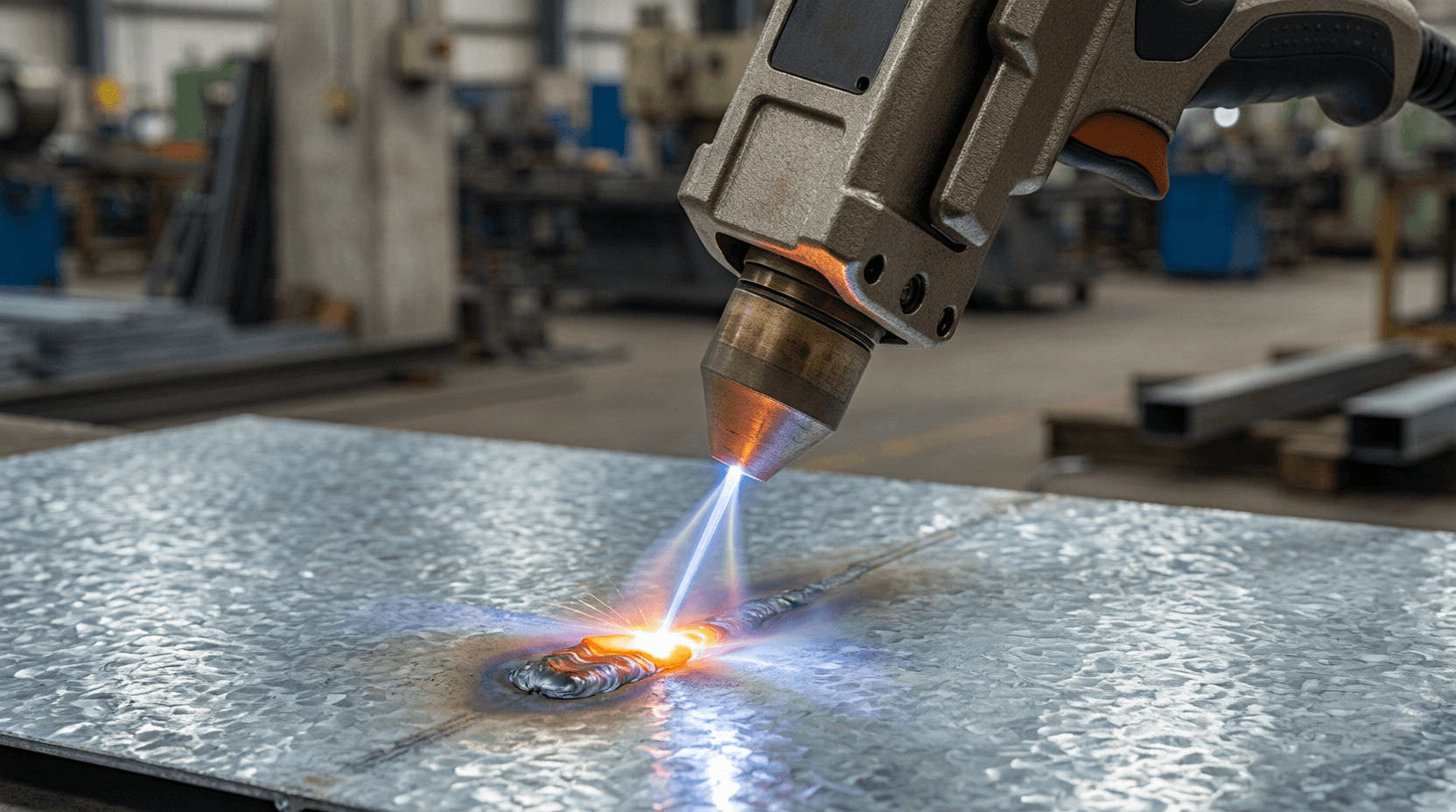
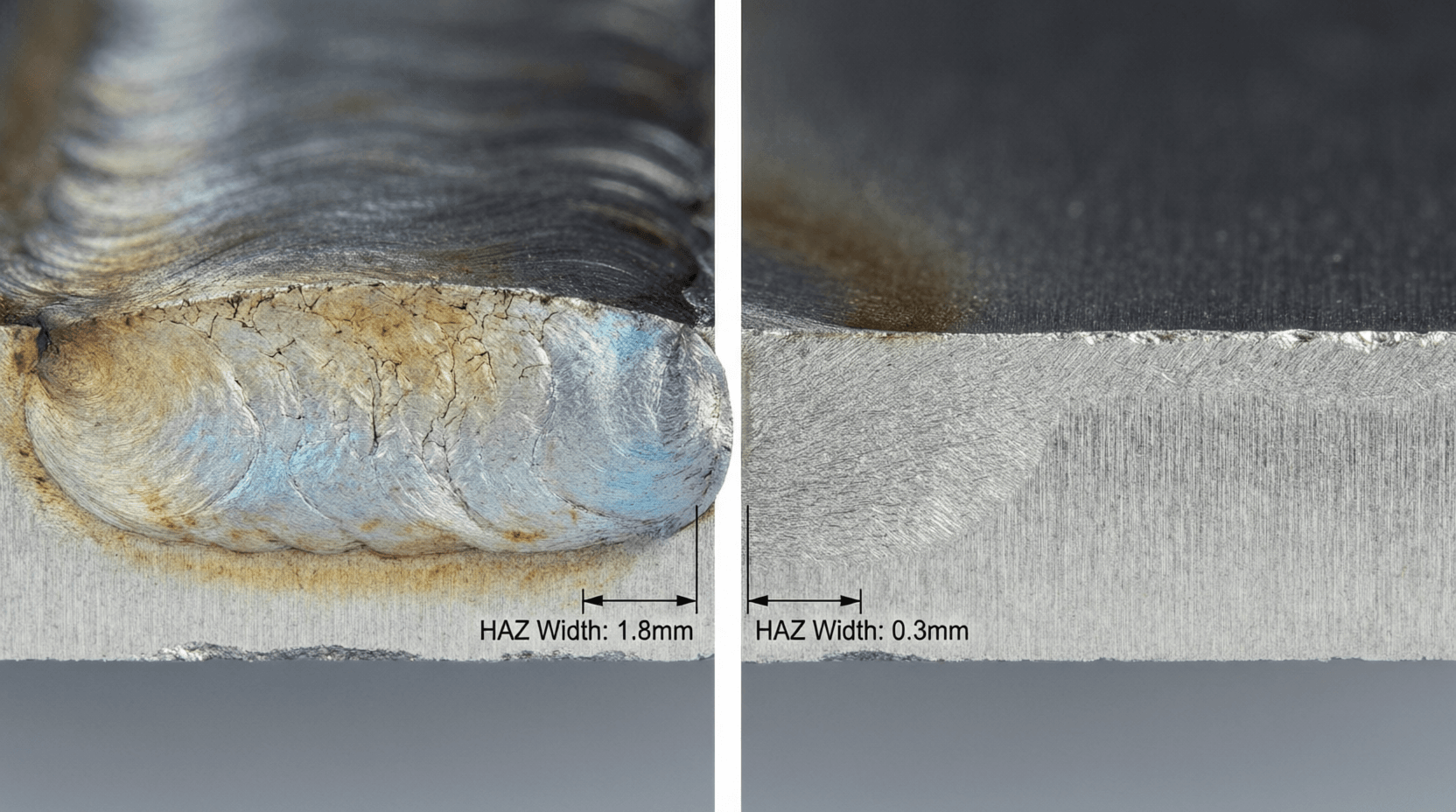
The deeper problem is aesthetic predictability. Traditional MIG and TIG welding produce heat-affected zones (HAZ) that extend 3–8 mm from the weld centerline. This discoloration, combined with spatter and undercut, forces operators into aggressive grinding that removes parent material. The result: inconsistent surface quality that requires additional filler and re-finishing to match the surrounding sheet metal.
How Fiber Laser Welding Eliminates Post-Processing
Fiber laser welding systems operating at 1,064 nm wavelength deliver beam quality with M² ≤ 1.1, producing a focused spot size below 0.3 mm. This concentrated energy input creates a weld pool 60–70% narrower than TIG welding, limiting the HAZ to under 1.5 mm on 1–3 mm sheet steel.
The physics are straightforward. A 2 kW fiber laser welding system delivers power density exceeding 10⁶ W/cm² at the workpiece, compared to roughly 10⁴ W/cm² for TIG. This rapid thermal cycle—heating and cooling in milliseconds—suppresses oxidation and grain growth. The result is a weld bead with Ra 1.6–3.2 µm surface finish straight from the laser, versus Ra 6.3–12.5 µm from TIG before any grinding.
Applications and Industry Impact
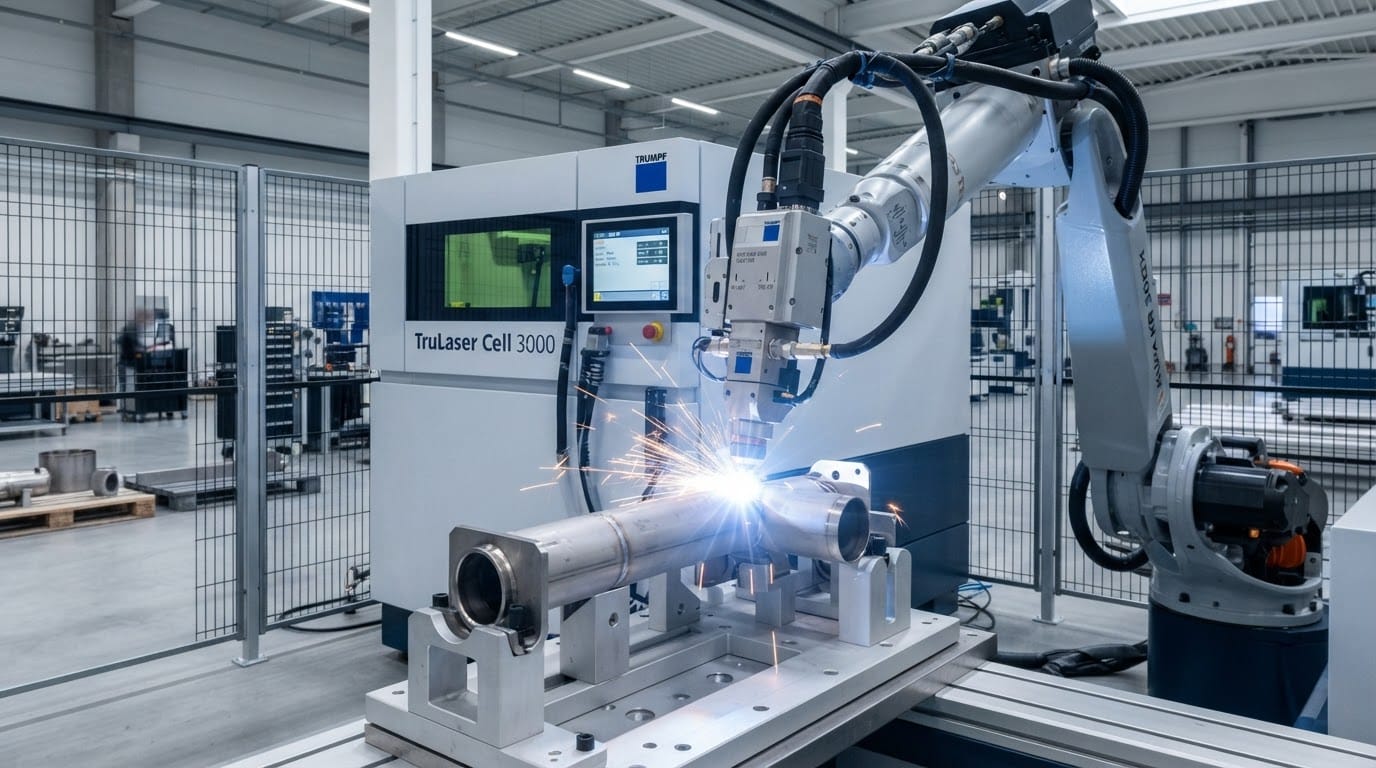
For sheet metal furniture applications, Intouchray’s laser welding systems achieve positioning accuracy of ±0.03 mm and can weld material thicknesses from 0.5 mm to 6 mm in a single pass. The 500W–6kW power range accommodates everything from thin-gauge decorative brackets to load-bearing chair frames requiring full penetration welds.
Performance Metrics and Benchmarks
The decision to adopt laser welding hinges on measurable performance data. Below is a comparison of fiber laser welding versus TIG welding for 1.5 mm cold-rolled steel sheet, using parameters relevant to furniture frame production.
| Parameter | Fiber Laser Welding | TIG Welding |
|---|---|---|
| Wavelength | 1,064 nm | N/A (arc-based) |
| HAZ width on 1.5 mm CR steel | 0.8–1.2 mm | 4–7 mm |
| Weld speed (1.5 mm butt joint) | 2.5–4.0 m/min | 0.3–0.6 m/min |
| Surface roughness as-welded | Ra 1.6–3.2 µm | Ra 6.3–12.5 µm |
| Post-processing required | None | Grinding + polishing |
| Heat input per mm weld | 30–50 J/mm | 100–200 J/mm |
| Distortion on 500 mm length | ≤0.15 mm | 0.5–1.5 mm |
| Operator skill requirement | 1 week training | 6+ months experience |
| Welding wire consumption | 0 g (autogenous) | 5–15 g/m |
| Weld consistency (CV) | ±3% penetration | ±15% penetration |
The takeaway: fiber laser welding eliminates variability inherent in manual TIG processes. For a furniture manufacturer producing 10,000 identical frame joints per month, that ±3% consistency means every joint meets the same structural and aesthetic standard—without inspection-driven sorting of “acceptable” versus “rework” joints.
Real-World Application: Exposed Frame Furniture Production
A mid-volume furniture fabricator producing steel-frame café seating recently transitioned from TIG to the company’s 2 kW fiber laser welding system. The key product: a 2 mm square tube chair frame with six exposed corner joints requiring flush, clean aesthetics.
Before laser welding, each frame required 4.5 minutes of TIG welding followed by 3.2 minutes of grinding and surface blending. Total joint time: 7.7 minutes per frame. After implementing laser welding with a 0.3 mm spot size and 3.0 m/min travel speed, weld time dropped to 0.8 minutes per frame—a 90% reduction—with zero post-processing.
Future Trends in Laser Welding No
The capital investment in the laser system was recovered in 11 months based on labor savings alone. Additional benefits included:
– Reduced rework from 12% to under 1%
– Elimination of grinding dust (OSHA compliance improvement)
– Consistent weld appearance enabling premium pricing ($15–20/frame retail uplift)
– Lower reject rate on chrome-plated finishes (surface defects dropped from 8% to 0.5%)
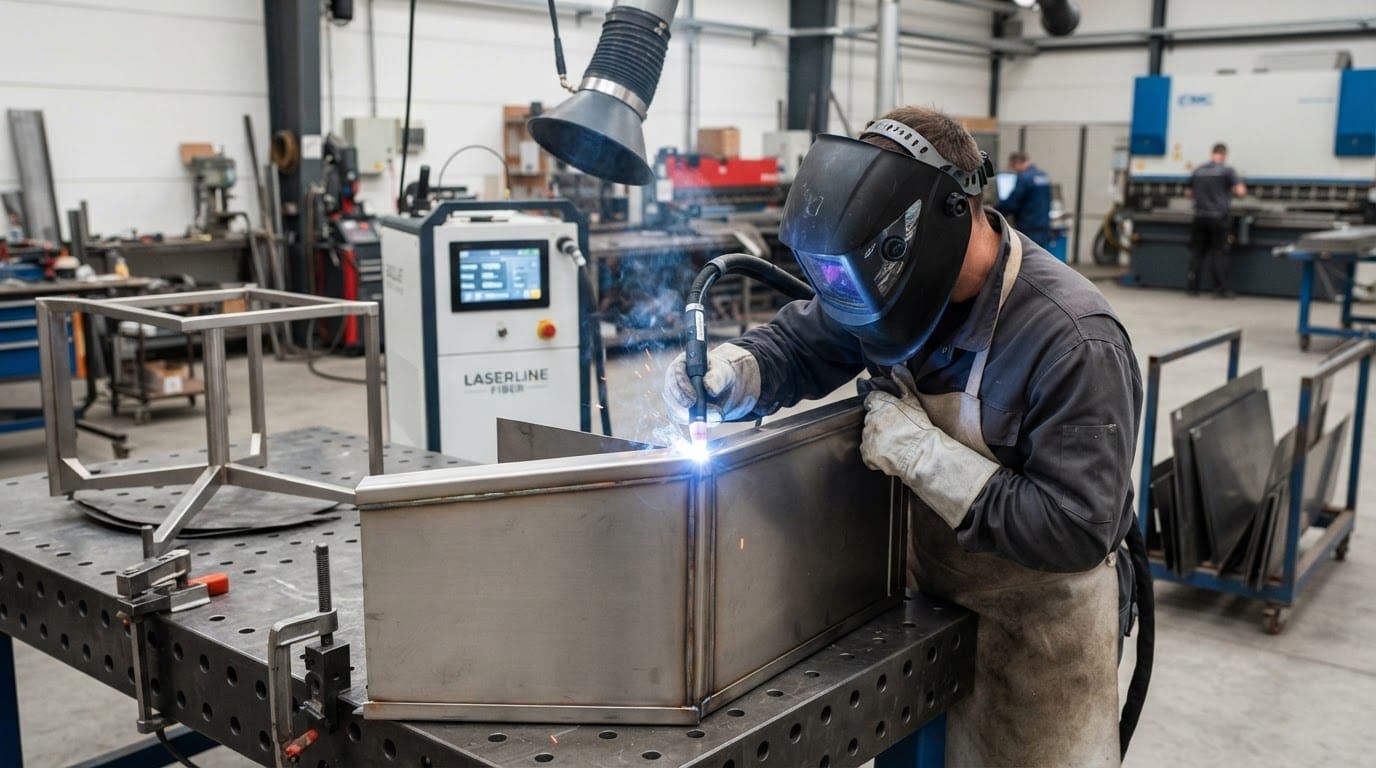
For buyers evaluating Chinese machine suppliers, our systems’s standard configuration uses IPG, Raycus, or MAX laser sources with wall-plug efficiency of 25–30% and beam quality M² ≤ 1.1. The CE-certified systems (Machinery Directive 2006/42/EC and EMC Directive 2014/30/EU) include 2-year body warranty and 1-year laser source warranty, with 20–30 day lead time and optional 15-day express delivery.
Applicable Regulations and Safety Compliance
Sheet metal furniture destined for European markets must comply with CE marking requirements under the Machinery Directive 2006/42/EC. the company’s equipment’s laser welding systems are designed to Class 1 laser safety standards when integrated into enclosures, meaning no additional laser safety eyewear is required for surrounding personnel. Open-frame configurations operate as Class 4 systems requiring proper beam containment and PPE per EN 60825-1.
The EU REACH regulation restricts hexavalent chromium in surface treatments—a concern for chrome-plated furniture that may require rework if grinding exposes underlying materials. Laser welding eliminates the grinding step entirely, maintaining the integrity of pre-plated or pre-painted sheet metal surfaces.
Supplier Solution:the companyuchray Delivthe companyp>provides complete laser welding workcells for furniture manufacturers transitioning from post-processing-dependent processes. Each system includes:
– Fiber laser source (500W–6kW) from IPG, Raycus, or MAX
– Precision motion system with ±0.03 mm positioning accuracy
– Integrated weld seam tracking for consistent joint following
– Optional wobble head for gap-bridging capability up to 0.8 mm
– CE certification documentation package for EU market entrySource Materials
Buyers can request a weld sample using their actual material and joint geometry, with full process parameters and surface roughness measurements included. Video demos of customer factory installations are available showing real production environments—not staged demos.
The after-sales policy: 2-year body warranty, 1-year laser source warranty, remote diagnostics support, and spare parts shipped within 48 hours for common consumables. For buyers evaluating Cthe companypliers, offers factory acceptance testing (FAT) either at the production facility in China or via live video inspection with independent witnesses.
Additional Technical Details
For engineering teams evaluating whether fiber laser welding can eliminate post-grinding in their sheet metathe companye production, provides a weld sample service. Send your material specification (thickness, grade, surface finish) and joint geometry, and we will deliver welded samples with full process documentation including weld speed, heat input, HAZ measurement, and surface roughness data. Request your weld sample with complete test report from .
—
Technical Specifications
Does fiber laser welding work on pre-painted or powder-coated sheet metal?
Yes, short pulses with 30–50% peak power reduction prevent coating burn-off. A 0.5 mm margin typically remains unaffected with proper parameter optimization.
What is the maximum gap tolerance for autogenous laser welding without filler?
With wobble head oscillation, gaps up to 0.3 mm can be bridged on 1.5 mm material. For consistent gap conditions, specify ±0.1 mm fixturing tolerance.
Can laser welding produce structural welds comparable to TIG for load-bearing furniture?
Yes. A 2 kW laser weld on 2 mm steel achieves 480–520 MPa tensile strength, meeting or exceeding TIG weld strength for carbon steel frames.
Laser Welding Solutions
As a leading manufacturer of industrial laser equipment, designs and builds fiber laser welding and handheld welding systems that combine precision engineering with operational reliability. Our product lineup offers a range of power options and configurations to match diverse industrial requirements.
Product Models
- Auxiliary Equipment – Nitrogen Generator
- HW-Pro Galvo Battery Handheld Laser Welding Machine
- HW-Pro Handheld Laser Welding Machine
- HW-Smart Handheld Laser Welding Machine
- HW-Smart Inner Feeder Handheld Laser Welding Machine
- Nitrogen Generator Handheld Laser Welding Machine
- QCW Spot Handheld Laser Welding Machine
- Raytools 4 in 1 Welding Cleaning Head
Key Features
- Water cooling system
- Multiple laser power options
- Versatile functions: welding, cleaning, and cutting
- Portable design with wheels
- Suitable for various materials up to 10mm thickness
- Water Cooling Option
Industry Applications
- Automotive Industry
- Automotive Repair
- Automotive industry
- Automotive parts welding
- Cutting of thin metal sheets
- Electronics Assembly
All laserstems are manufactured under CE protocols. Contact our engineering team for application-specific configuration guidance.
Industry Standards & References
- IPG Photonics: Fiber Laser Welding Technical Guide — Industrial fiber laser welding applications and specifications
- AWS D17.1: Fusion Welding for Aerospace Applications — Aerospace welding specification by American Welding Society
- The Fabricator: Laser Welding Best Practices — Practical guide to laser welding in metal fabrication