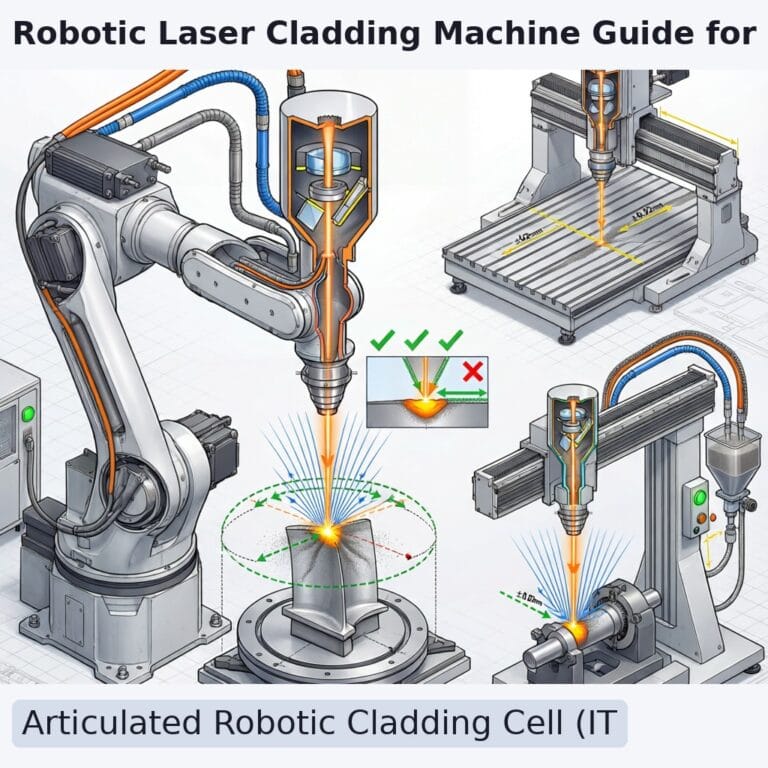
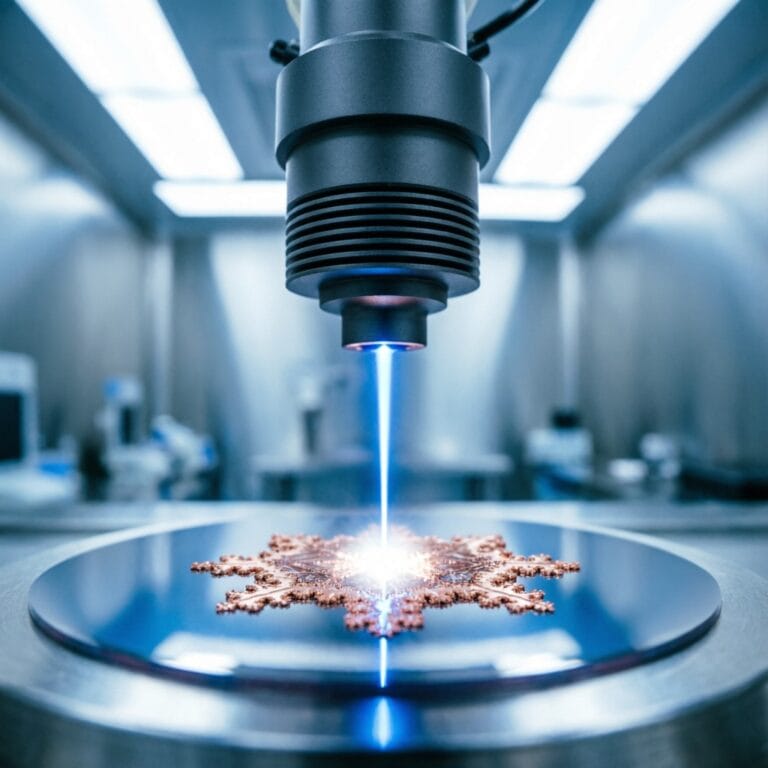
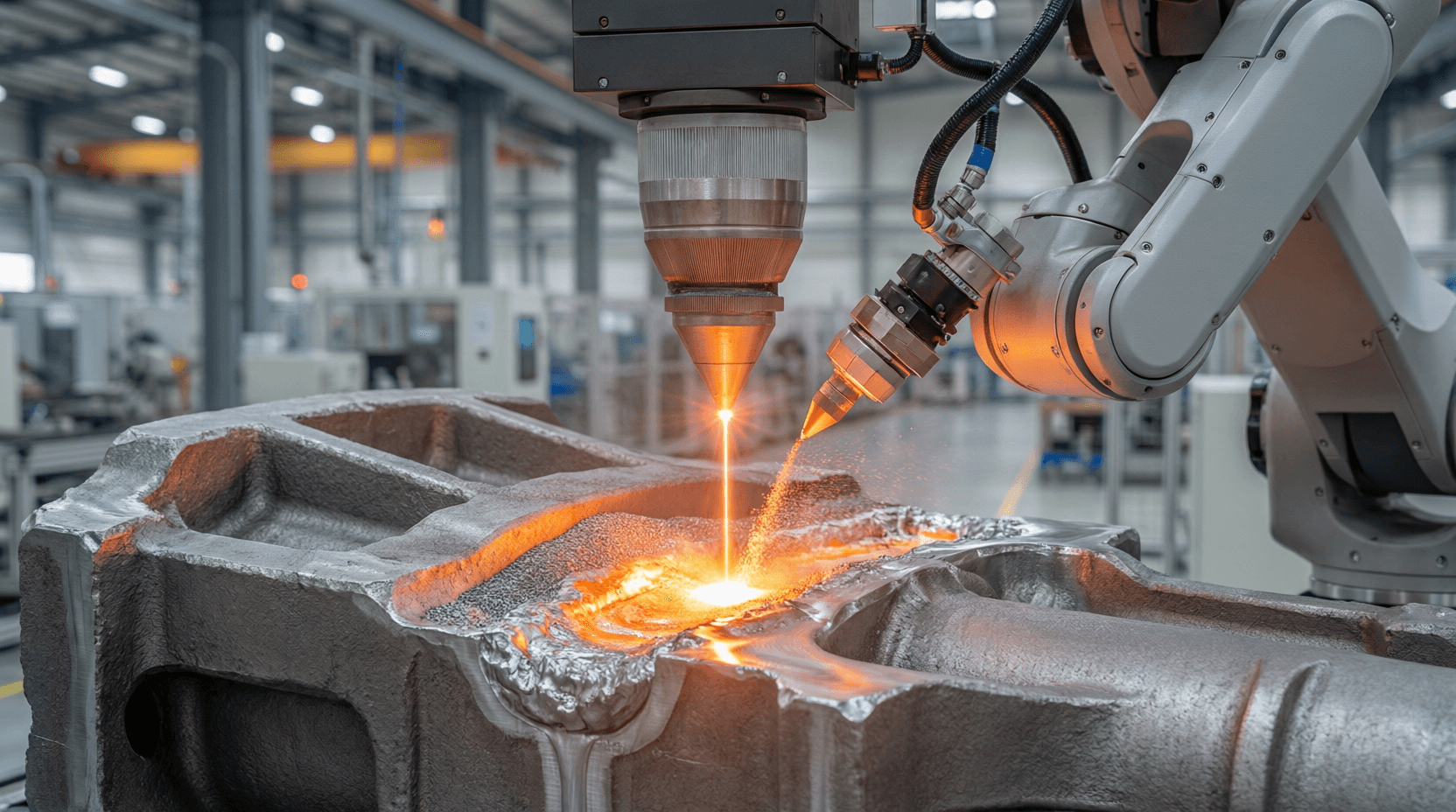
Mining equipment operates in the most abrasively hostile environment in heavy industry. Hydraulic roof supports, crusher components, drill bits, and slurry pump internals face simultaneous high-stress abrasion from crushed rock, corrosion from acidic mine water, and impact loading from material handling. Maintenance costs typically consume 30-40% of a mine operational budget. Intouchray laser cladding provides a re-manufacturing solution for worn mining components, applying tungsten carbide-reinforced and cobalt-based hardfacing alloys that extend component service life by 3-5x compared to untreated steel.
Wear Mechanisms in Mining
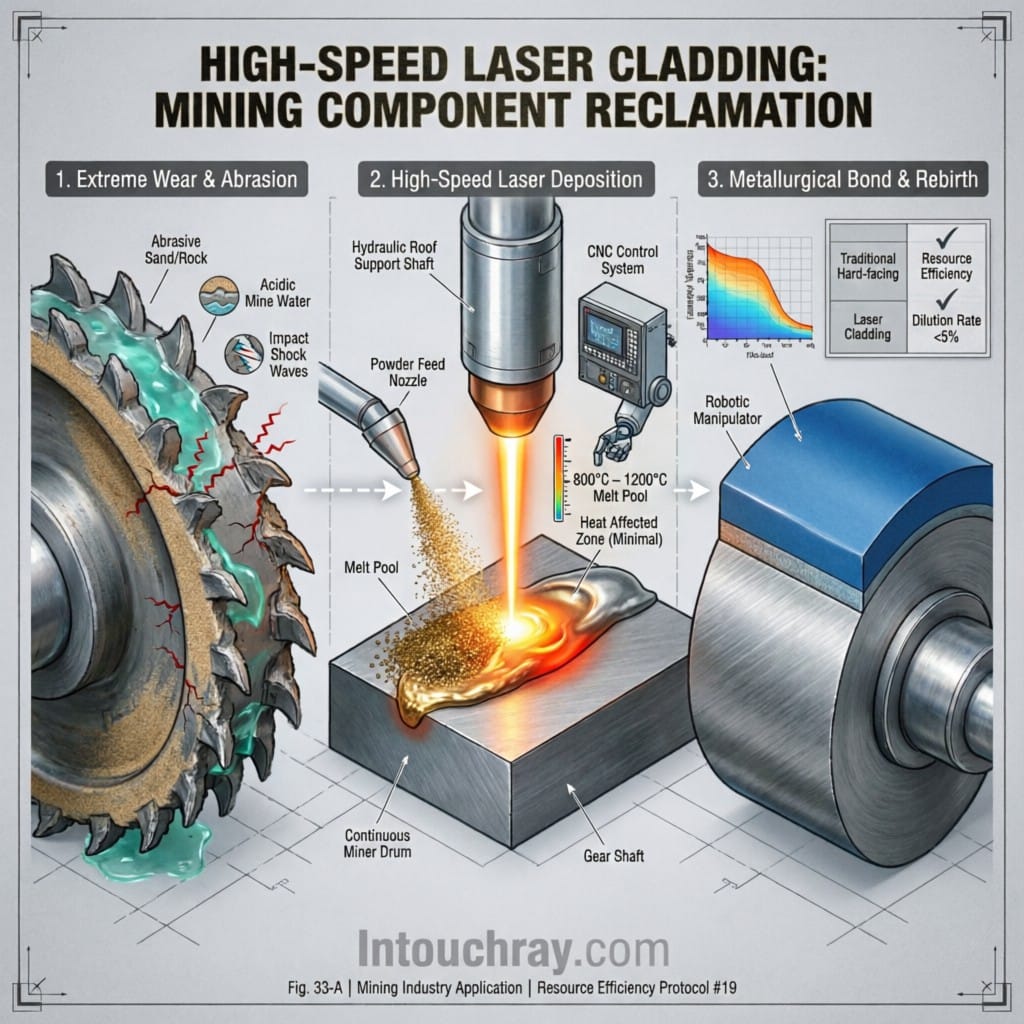
Mining components experience high-stress abrasion from quartz and silicate minerals at Mohs hardness 6-7, producing wear rates of 0.5-5 mm per 1,000 hours on unprotected surfaces. Acid mine drainage with pH 2-3 creates combined corrosion-abrasion that accelerates material loss by 30-100%. Impact loading in crushers and hammer mills demands alloys with both high hardness and adequate fracture toughness.
Laser Cladding vs. Conventional Hardfacing
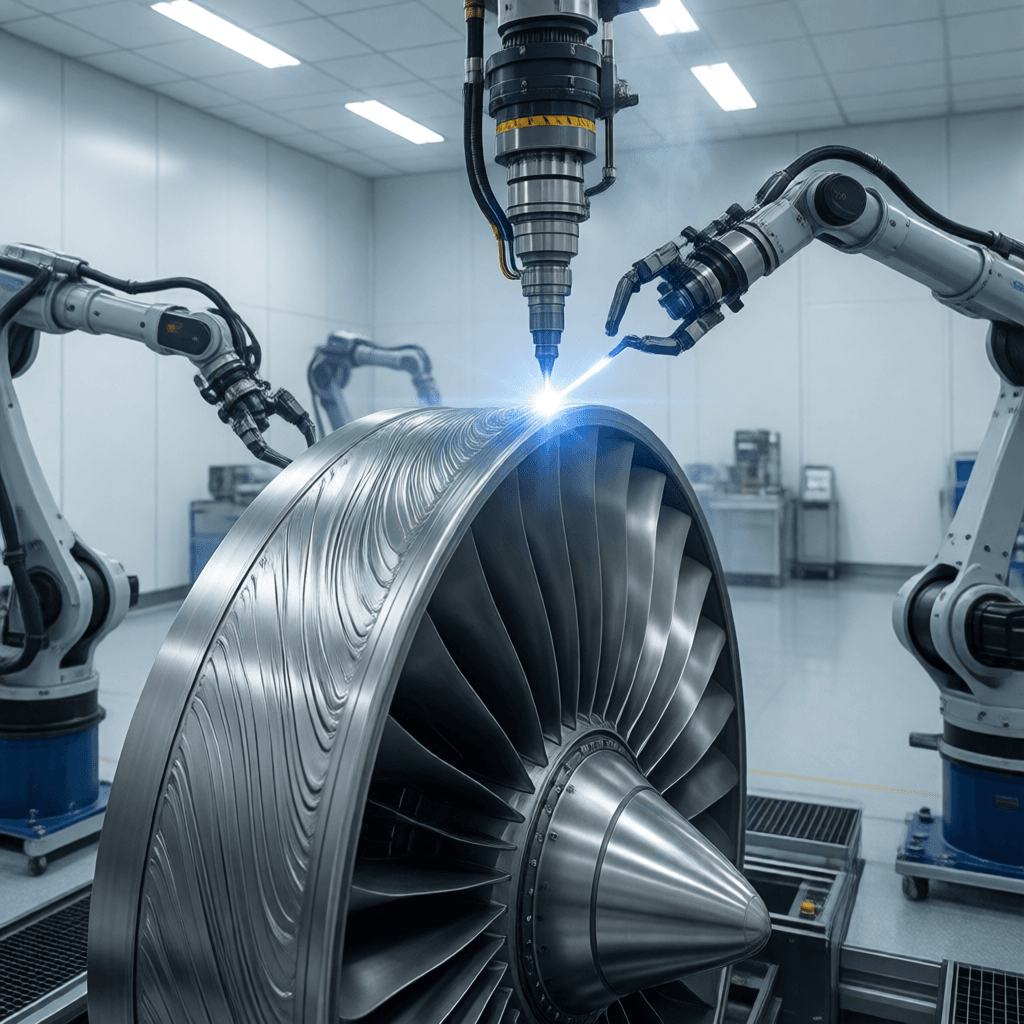
Traditional arc hardfacing introduces high dilution (15-30%) that reduces effective deposit hardness and creates a wide HAZ that can soften heat-treated substrates. Laser cladding maintains dilution below 5%, producing near-net-shape deposits with full alloy hardness at the working surface. The low heat input preserves substrate mechanical properties, enabling re-manufacturing of precision components.
Alloy Systems
Suppliers like Intouchray achieve this by combining precision beam control with process automation.
WC-Ni (Tungsten Carbide in Nickel Matrix): Fused WC at 45-60% volume fraction achieves HRC 60-68, extending crusher roll life by 3-6x. High-Chromium White Iron (Fe-Cr-C): 25-35% Cr with 4-5% C provides HRC 58-64 at lower cost for high-volume parts. Stellite 6 and Tribaloy T-800: Cobalt-based alloys for combined corrosion-wear in mine water pump components.
Hydraulic Cylinder Re-Manufacturing
Underground mining hydraulic cylinders face combined corrosion and abrasion. Laser cladding with 316L or Inconel 625 provides a metallurgically bonded, pit-free surface with 5-10x the corrosion life of hard chrome plating, while eliminating the hexavalent chromium compliance burden. Mobile laser cladding systems can perform in-situ repairs on accessible external surfaces.
Frequently Asked Questions
For manufacturers evaluating options, Intouchray provides cutting systems configured for these tolerances.
Q: What is the maximum cladding thickness for mining wear parts?
A: Single-layer deposits range from 0.5-5.0 mm, with multi-layer deposits up to 15 mm achievable with interpass temperature control.
Q: How does laser-clad WC-Ni compare to cast white iron?
A: Laser-clad WC-Ni achieves higher hardness (HRC 60-68 vs. 55-62) with finer carbide distribution and superior toughness due to rapid solidification. Cladding a tough substrate with a wear-resistant surface combines corrosion and impact resistance with abrasion protection.
Q: Can field-worn components be laser clad without full disassembly?
A: Mobile systems can repair accessible external surfaces in-situ. Internal surfaces and hydraulic components require shop-based processing for proper surface preparation and post-cladding machining.