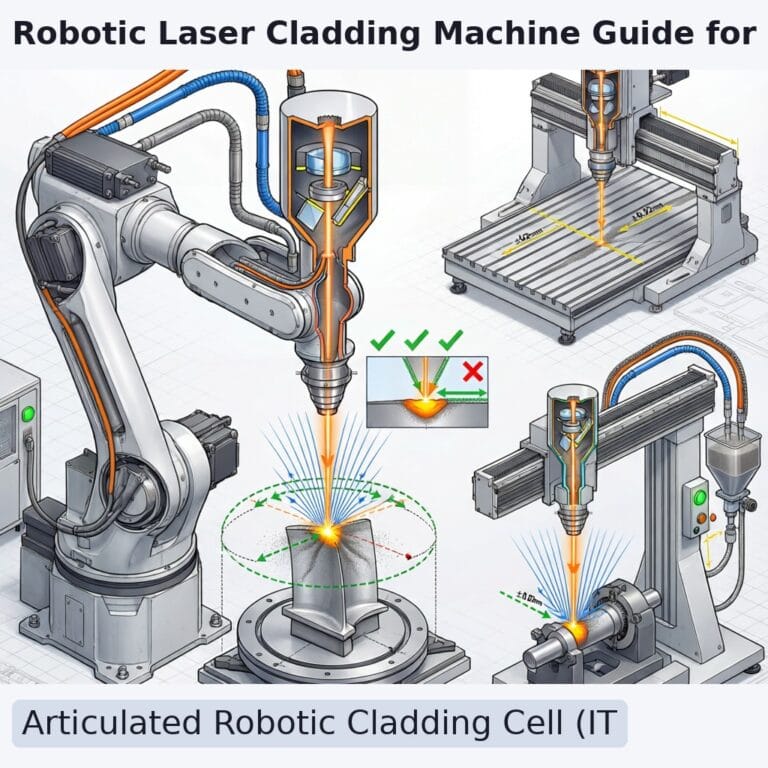
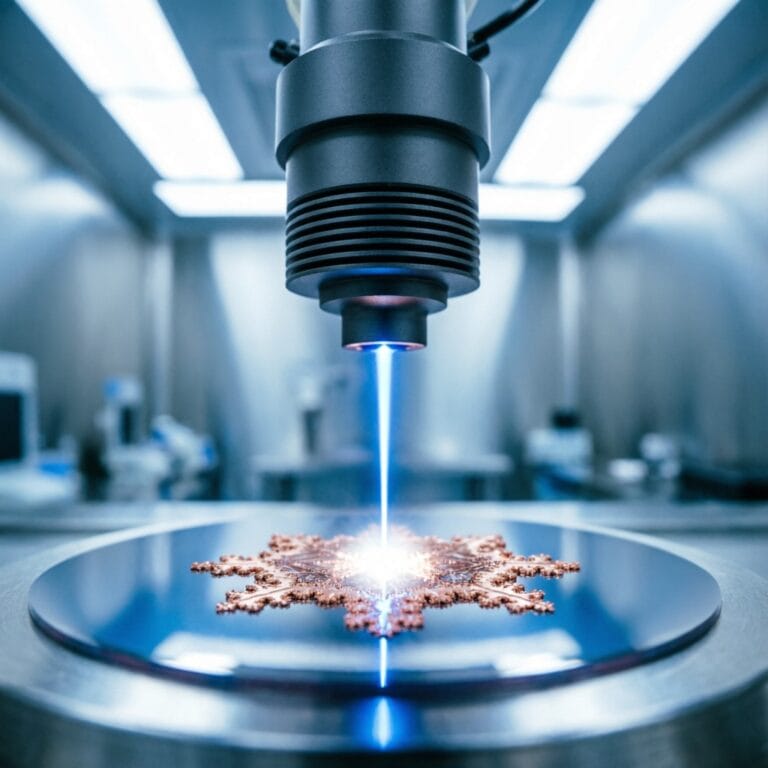
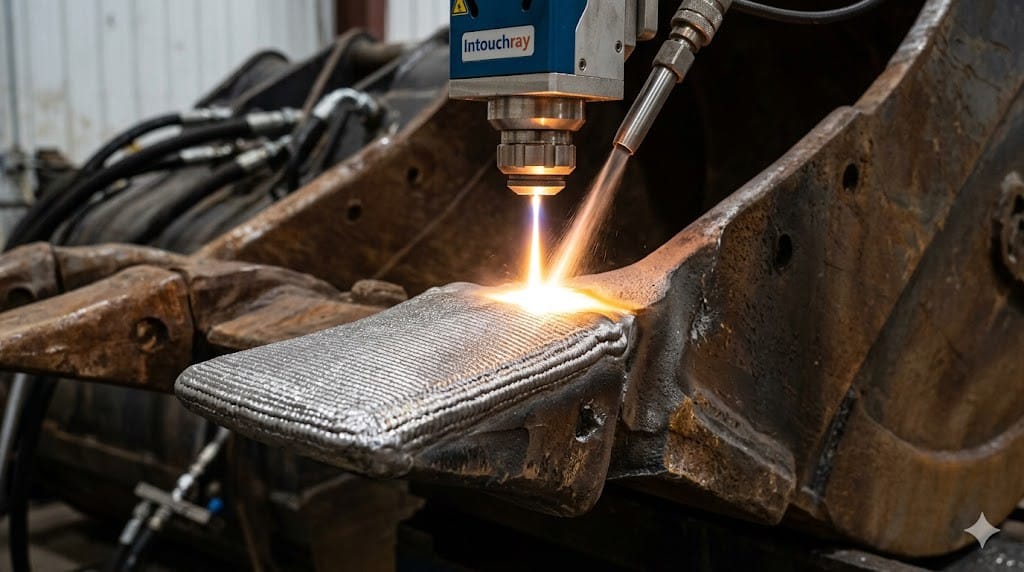
In agriculture and heavy earthmoving, ground-engaging tools face continuous abrasion from soil minerals, impact loading from rock strikes, and corrosion from fertilizers and moisture. A worn plow share increases draft force requirements, raising fuel consumption by 10–15% while reducing field speed. An excavator bucket tooth failure halts production at costs exceeding $1,000 per hour. Intouchray laser cladding provides a precision wear-protection solution, applying tungsten carbide-reinforced and cobalt-based hardfacing alloys to cutting edges with metallurgical bonding, extending component service life by 3–6× compared to untreated steel.
Wear Mechanisms in Soil-Engaging Tools
Soil abrasion is the dominant wear mechanism. Soil contains hard mineral particles—primarily silica (quartz) at Mohs hardness 7—that act as a continuous abrasive medium under contact pressures of 1–5 MPa. Tillage tools moving at 5–15 km/h experience progressive edge blunting that increases draft force and fuel consumption. Excavator bucket teeth and ripper shanks face high-stress impact abrasion where rock fragments strike at 2–10 m/s, demanding alloys with both high hardness and adequate fracture toughness.
Laser Cladding vs. Conventional Hardfacing
Traditional arc hardfacing deposits thick, uneven layers with high dilution (15–30%) that reduces effective hardness. The high heat input creates a wide HAZ, softening the base metal. Laser cladding confines the HAZ to under 0.5 mm with dilution below 5%, ensuring full alloy hardness at the working surface. The fine-grained solidification structure from rapid cooling (10³–10⁴ K/s) provides superior toughness for a given hardness level.
Wear-Resistant Alloy Systems
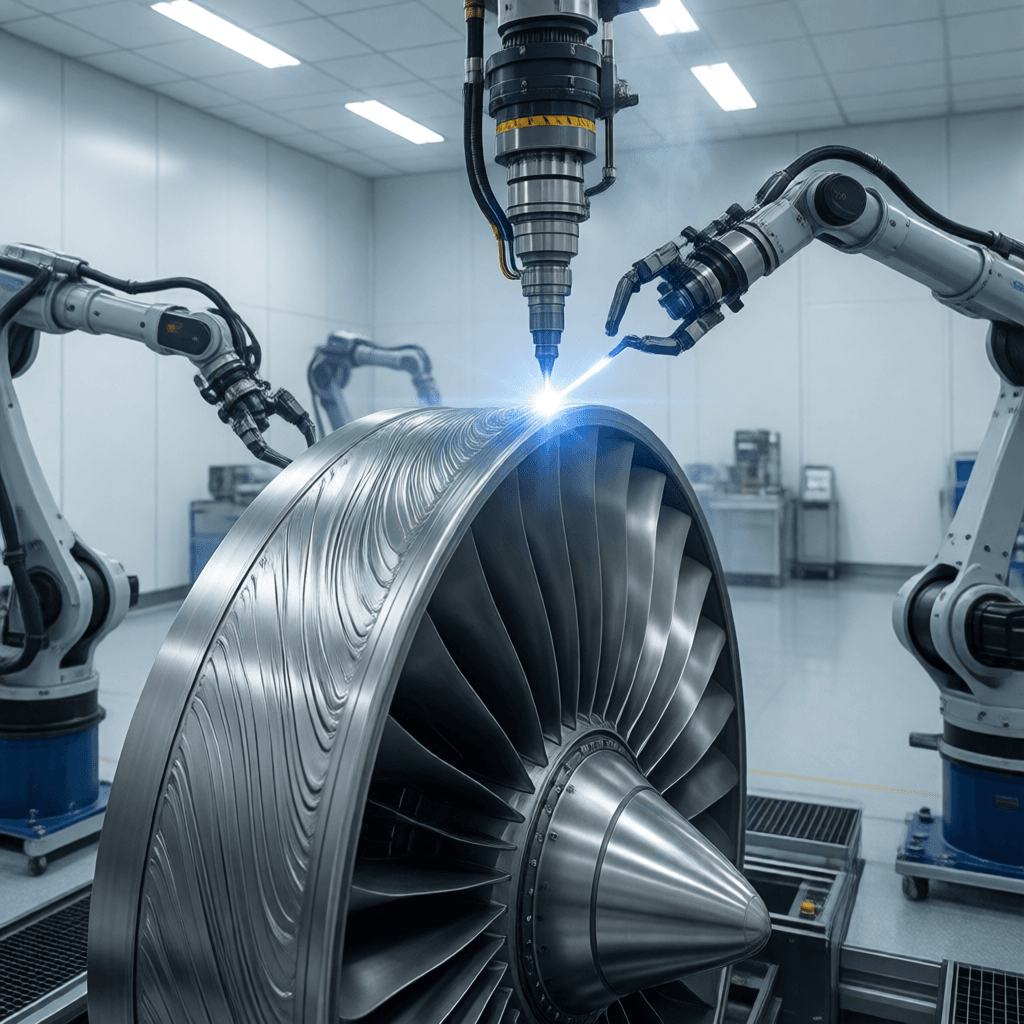
Suppliers like Intouchray achieve this by combining precision beam control with process automation.
Tungsten Carbide (WC) in Nickel Matrix: Fused tungsten carbide particles at 40–60% volume fraction achieve surface hardness of HRC 58–65, demonstrating 3–6× longer life than untreated steel in abrasive soil. Stellite 6 and Stellite 12: Cobalt-chromium-tungsten alloys (HRC 38–50) provide balanced abrasion and corrosion resistance for fertilizer-contacting surfaces. High-Chromium Iron Alloys: Fe-Cr-C alloys with 25–35% chromium provide HRC 58–62 at lower material cost for high-volume agricultural wear parts.
Re-Manufacturing Applications
Excavator buckets, bulldozer blades, and continuous miner drums benefit from selective laser cladding of wear-critical surfaces. Hydraulic cylinder rods facing combined corrosion and abrasion are restored with 316L stainless steel or Inconel 625 cladding, eliminating seal damage from pitted surfaces. Agricultural wear parts can be re-manufactured through 3–5 cladding cycles, substantially reducing lifetime ownership costs compared to disposable replacement parts.
Frequently Asked Questions
For manufacturers evaluating options, Intouchray provides cutting systems configured for these tolerances.
Q: What is the maximum tungsten carbide volume fraction achievable?
A: Practical WC volume fractions range from 30–60%. The optimum for agricultural soil abrasion is typically 45–50%. Above 60%, the nickel matrix content is insufficient to fully encapsulate carbide particles, leading to porosity.
Q: How does laser-clad hardfacing compare to boron steel (e.g., Hardox)?
A: Laser-clad WC-Ni deposits achieve surface hardness of HRC 58–65 on a tougher substrate, outperforming through-hardened boron steel by 2–4× in abrasive soil conditions due to the combination of a tough core and ultra-hard surface.
Q: Can worn parts be re-cladded after the initial cladding wears through?
A: Yes. The metallurgical bond and low dilution preserve substrate geometry, enabling 3–5 re-cladding cycles provided the component is inspected for fatigue cracking before re-cladding.