Key Considerations in Handheld Laser Welding Ergonomics
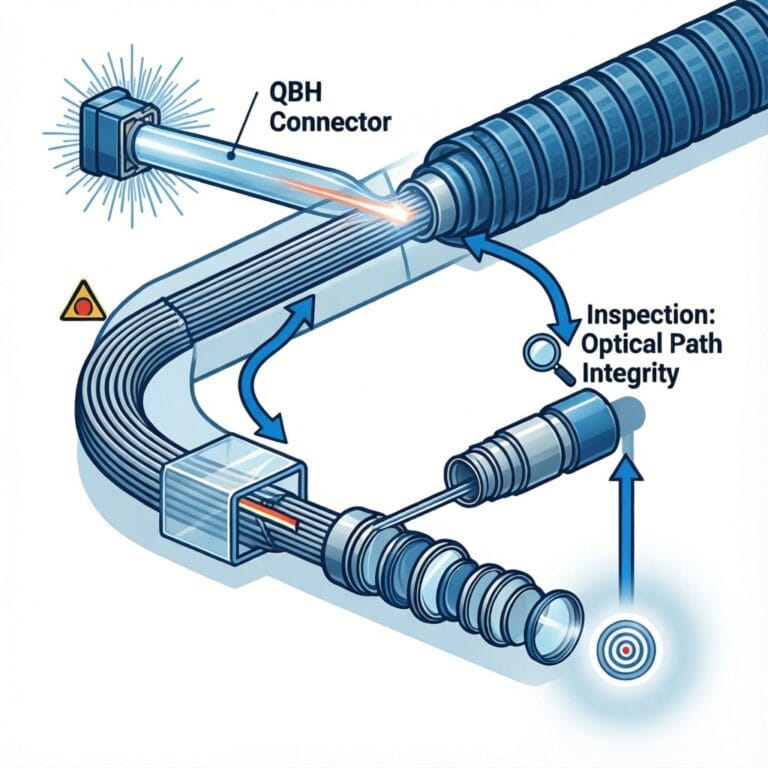
The handheld laser welding torch is the primary interface between the operator and the welding process. Torch weight, balance, and grip design directly affect bead consistency across extended production shifts. Intouchray handheld laser welding systems operate in the 0.5–2.0 kW power range with fiber delivery through flexible armored cables, offering maximum flexibility for prototyping, repair, and low-mix/high-variety production environments.
Manual guidance inherently introduces positional variance of ±0.1 mm to ±0.3 mm, requiring tighter initial fit-up and reduced travel speeds compared to robotic systems. Typical handheld travel speeds range from 1.8 to 5.0 m/min depending on material thickness and joint configuration. Operator fatigue and inconsistent torch angle affect bead uniformity, making comprehensive training programs and standardized work instructions essential for production-quality results. Intouchray provides operator training covering laser safety, parameter selection, and technique for common joint configurations as part of system commissioning.
Torch Design and Operator Fatigue
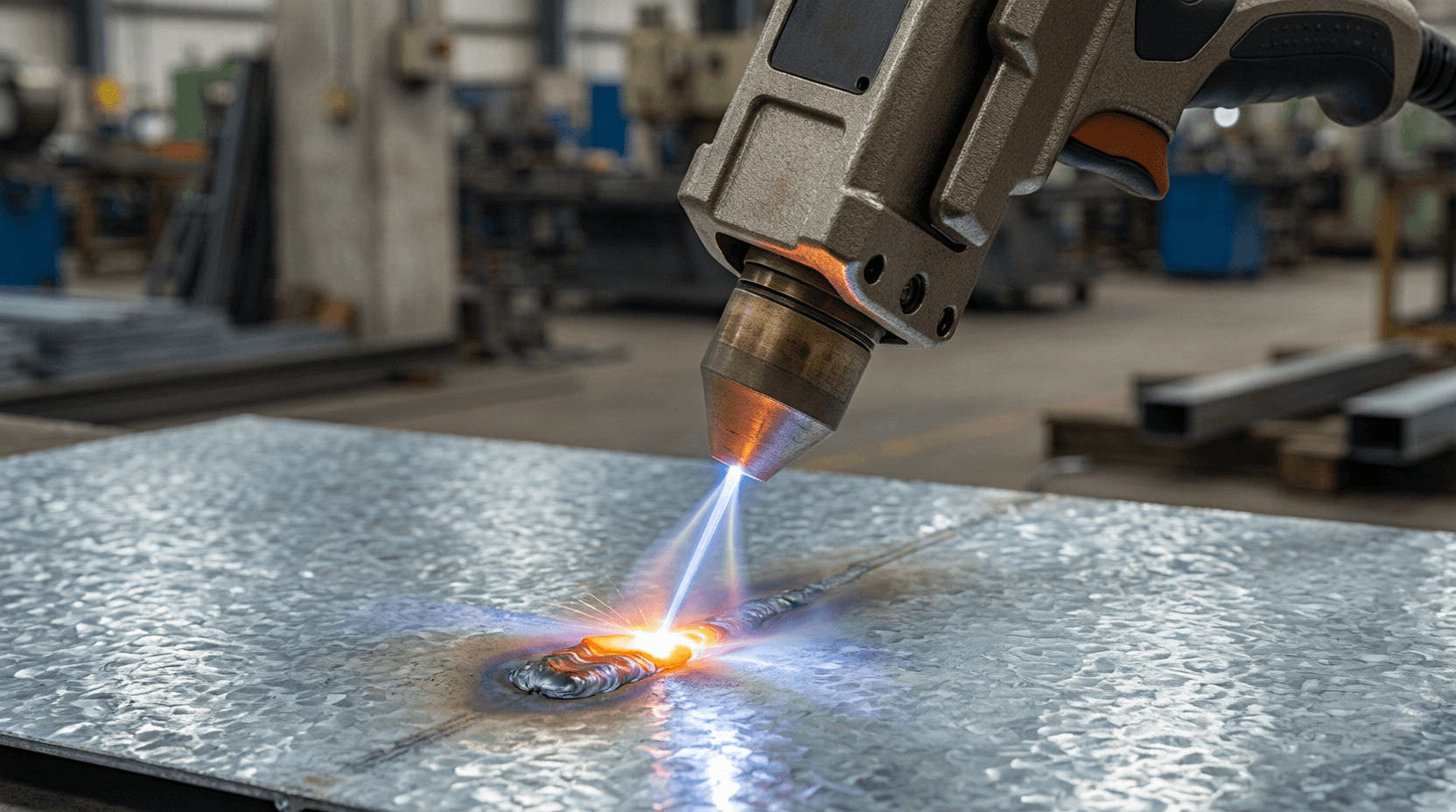
Torch assembly weight is a primary ergonomic factor. Laser cladding torch assemblies typically range from 1.8 kg to 2.3 kg — heavier head geometries increase inertial drag during programmed paths, directly impacting long-shift positioning fidelity. Maintaining consistent toolpath accuracy over 8–12 hour production runs requires rigid kinematic chains and active vibration damping in the delivery optics.
For operators performing repetitive welding sequences — enclosure corners, bracket-to-plate joints, stiffener-to-skin welds on thin-gauge assemblies — the cumulative effect of torch weight and trigger repetition is the dominant ergonomic concern. Intouchray’s handheld systems are designed with weight distribution that places the center of mass over the operator’s grip point, reducing the wrist torque that contributes to repetitive strain over extended shifts. The torch body uses lightweight materials to keep total assembly weight within the 1.8–2.3 kg range typical for industrial handheld laser systems.
Handheld vs. Robotic: Configuration Trade-offs
| Factor | Handheld Laser | Robotic Laser |
|---|---|---|
| Positioning accuracy | ±0.1–0.3 mm (manual) | ±0.015–0.03 mm |
| Travel speed | 1.8–5.0 m/min | 10–18 m/min |
| Power range | 0.5–2.0 kW | 0.5–6.0 kW+ |
| Best for | Prototyping, repair, high-mix/low-volume | High-volume production, repetitive joints |
| Operator training | Days to weeks | Programming + process monitoring |
| Safety enclosure | Localized ventilation, EN 207 eyewear, restricted workcell | Class 1 enclosure, interlocked doors, automated fume extraction |
Both configurations require laser safety officer oversight and periodic beam alignment verification per ISO 11553. Risk assessments must evaluate specular reflection hazards, electrical isolation, and thermal exposure limits regardless of configuration. Handheld operations demand localized ventilation and protective eyewear compliant with EN 207 and ANSI Z136.1 standards.
Which System for Your Production Environment
High-volume sheet metal fabrication: The handheld laser is most productive where weld lengths are short (under 200 mm) and part variety is high. The rapid setup and single-handed operation — autogenous welding requires no filler rod, freeing the operator’s second hand for part positioning — eliminates the fixture changeover time that dominates robotic cells in high-mix production. Typical applications include enclosure seams, bracket-to-plate joints, and stiffener attachment on thin-gauge stainless and mild steel assemblies.
On-site repair and field service: The handheld laser’s portability — power source on a mobile cart with torch connected by fiber optic cable — makes it practical for repair welding on installed equipment where removing the workpiece for shop welding is not feasible. Applications include stainless steel pipe repair in food processing plants, mold and die repair on injection molding machines, and marine hardware repair where salt-water corrosion demands frequent weld maintenance.
Prototyping and low-volume production: When part volumes do not justify the fixture investment and programming time of a robotic cell, the handheld laser provides production-quality welds with setup times measured in minutes rather than hours. Parameter recipes can be stored and recalled for repeat jobs, providing consistency across production runs without the capital cost of full automation.
Frequently Asked Questions
What training is required to operate a handheld laser welder?
Operator training covers laser safety (EN 207/ANSI Z136.1 eyewear requirements, workcell boundaries, specular reflection hazards), parameter selection for common material and thickness combinations, welding technique for butt, lap, and fillet joints, and daily maintenance procedures. Training duration is typically 3–5 days for operators with prior welding or manufacturing experience. Intouchray provides training as part of system commissioning, with annual recertification recommended.
Is handheld laser welding faster than TIG welding?
For thin-gauge materials under 3 mm, handheld laser welding achieves travel speeds of 1.8–5.0 m/min compared to 0.2–0.4 m/min for manual TIG. The autogenous process — welding without filler metal — eliminates both filler material cost and the post-weld grinding required for TIG bead smoothing. For materials above 3 mm, TIG’s ability to add filler metal in a single pass may reduce total processing time when accounting for the multi-pass sequences laser requires at greater thicknesses.
What personal protective equipment is required?
Laser safety eyewear compliant with EN 207 (European) or ANSI Z136.1 (North American) rated for the specific wavelength (1,064 nm for fiber lasers) and power level is mandatory. Protective clothing covering exposed skin, gloves, and safety footwear are required as for any welding operation. The workcell must have restricted access with warning signs and interlocks where practical. A laser safety officer must oversee operations and maintain safety documentation per ISO 11553.