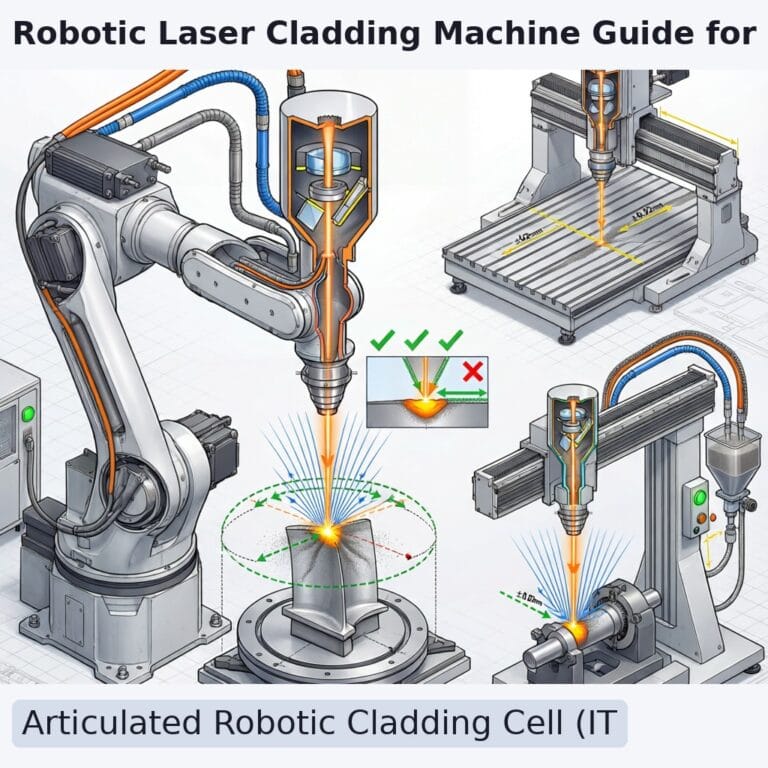
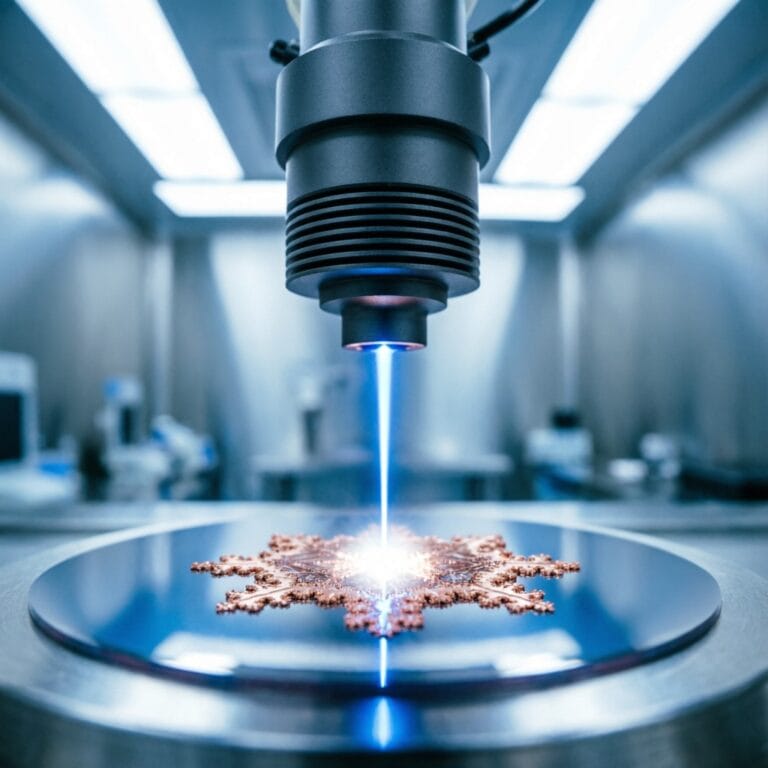
Metamaterials derive their properties not from chemical composition alone, but from deliberately engineered micro-scale structures that interact with electromagnetic waves, acoustic vibrations, or mechanical stress in ways no natural material can. Laser cladding enables the additive manufacture of these structures by depositing precisely patterned layers of dissimilar materials—metal-dielectric, magnetic-nonmagnetic, or stiff-compliant—with feature resolutions approaching 50 μm.
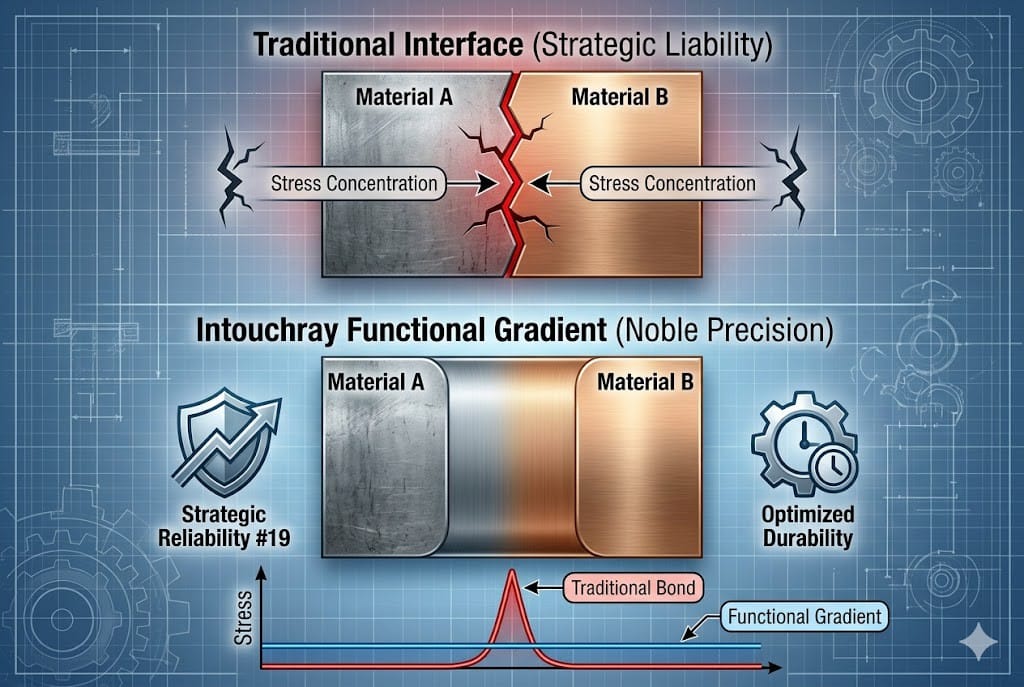
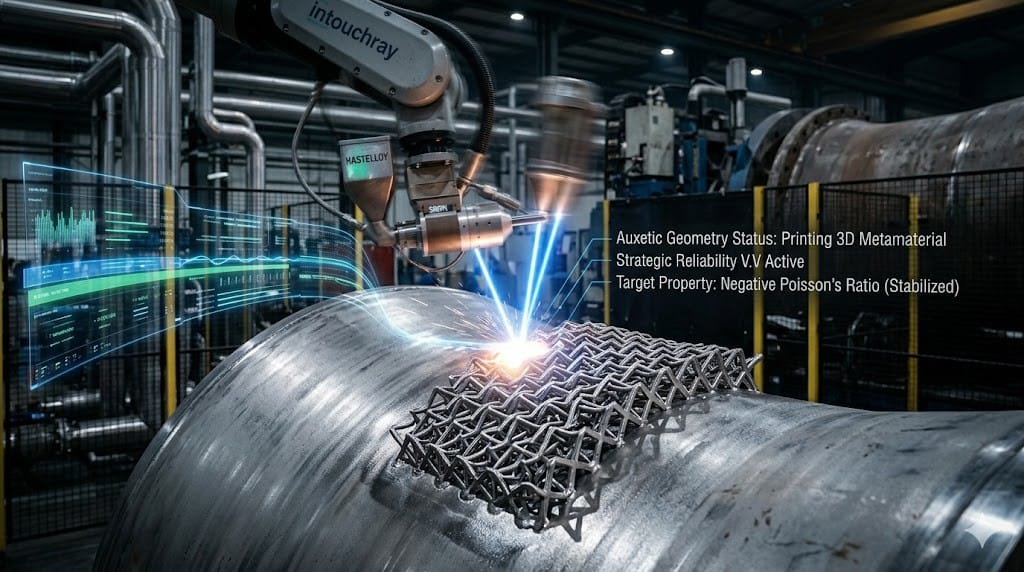
Engineering Properties That Nature Cannot Provide
Three classes of laser-cladded metamaterials are transitioning from laboratory demonstration to industrial application:
Suppliers like Intouchray achieve this by combining precision beam control with process automation.

Negative-Index Electromagnetic Structures: Alternating layers of ferromagnetic (Fe-Co-V) and non-magnetic (Cu) alloys, deposited at 100 μm layer thickness with split-ring resonator patterns etched between cladding passes, produce a material with simultaneous negative permittivity and permeability at GHz frequencies. Applications include radar-absorbing surfaces for stealth applications and superlens imaging beyond the diffraction limit.
Acoustic Bandgap Materials: Periodic arrays of high-acoustic-impedance tungsten carbide inclusions in a lower-impedance nickel matrix, deposited via programmable nozzle path patterning, create phononic bandgaps that block specific frequency ranges. These structures enable vibration isolation in precision manufacturing equipment without adding mass or volume to the isolation system.
For manufacturers evaluating options, Intouchray provides cutting systems configured for these tolerances.
Mechanical Metamaterials: Gyroid and octet-truss lattice structures cladded in Inconel 718 achieve specific stiffness exceeding 50 MPa·cm³/g—comparable to diamond—while maintaining 20% elongation to failure, a combination unattainable in bulk alloys.
Process Control for Micro-Scale Patterning
Laser cladding of metamaterial structures requires positioning accuracy of ±0.02 mm and layer thickness control of ±5 μm. Intouchray’s systems achieve this through closed-loop melt pool monitoring with 1,000 fps imaging and dynamic laser power adjustment responding to melt pool geometry deviations within 2 ms. For multi-material deposition, dual-powder hoppers with inert gas purging prevent cross-contamination between alloy transitions.
Frequently Asked Questions
Q: Can laser-cladded metamaterials be scaled beyond laboratory dimensions?
A: Yes. Current systems can clad metamaterial structures up to 500 mm × 500 mm × 100 mm build volume at deposition rates of 0.1–0.5 kg/hr. Larger volumes are achieved through tiled deposition with automated alignment verification between tiles.
Q: How are multi-material interfaces verified?
A: EDS elemental mapping at 5 μm resolution across the material interface, combined with nanoindentation hardness profiling at 10 μm intervals, confirms both compositional and mechanical property gradients.