Assist Gas in Laser Processing: Chemistry, Pressure, and Flow
The selection of assist gas in laser processing dictates not only welding speed but also edge metallurgy, secondary processing requirements, and overall operational cost. By mastering the chemistry, pressure, and flow dynamics of oxygen and nitrogen, manufacturers can eliminate post-processing bottl
Are inconsistent cuts and costly rework impacting your bottom line in laser processing? Laser-Matter Interaction: How Metals Absorb Fiber Laser Energy The nuanced interplay of assist gas chemistry, pressure, and flow is often overlooked, yet optimizing these elements can reduce production scrap by over 20%.
The selection of assist gas in laser processing dictates not only welding speed but also edge metallurgy, secondary processing requirements, and overall operational cost. Laser Power and Travel Speed: Finding the Dynamic Balance By mastering the chemistry, pressure, and flow dynamics of oxygen and nitrogen, manufacturers can eliminate post-processing bottlenecks and maximize the return on high-power fiber laser investments.
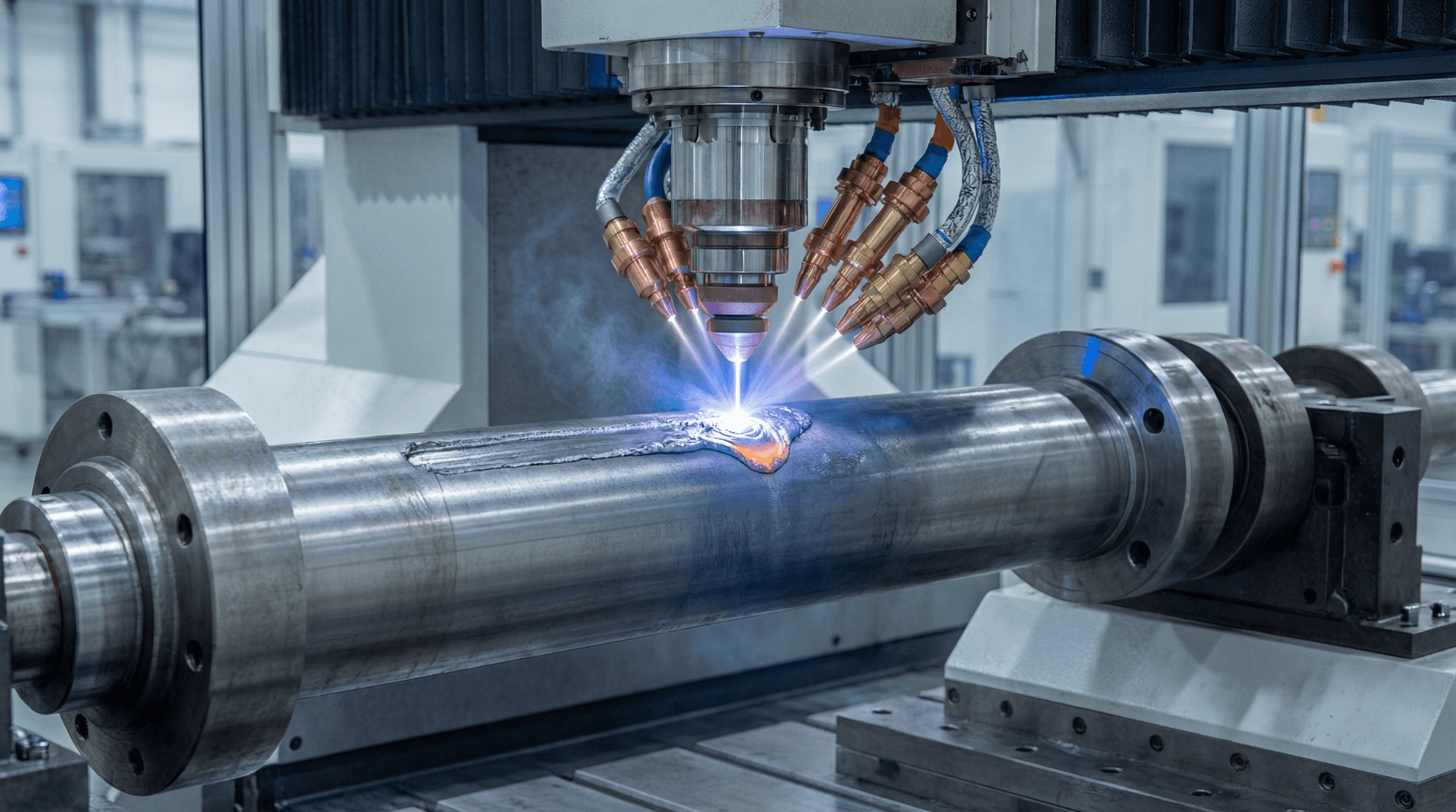
An industrial 5-axis CNC laser cladding machine depositing a high-hardness alloy onto a large metal
The Shift Toward Zero-Post-Processing Manufacturing
High-precision manufacturing has undergone a radical shift, driven by consumer electronics and automotive giants demanding tighter tolerances and cleaner material edges. When Apple machines titanium chassis or leading EV manufacturers fabricate structural components for its battery packs, edge oxidation is entirely unacceptable. The chemistry of the assist gas directly determines whether a cut part is ready for immediate automated welding or requires costly secondary grinding and chemical cleaning.
Key Considerations in Assist Gas Chemistry and Flow
For factory owners and supply chain decision-makers, the choice between reactive and inert assist gases is the critical variable in their process chain. Understanding the exact pressure thresholds, nozzle flow dynamics, and chemical reactions at the kerf separates profitable production runs from scrapped batches. This analysis breaks down the measurable differences between oxygen and nitrogen assist gases, providing the data needed to optimize your fiber laser cutting operations and accelerate throughput.
Laser cladding for power generation components — Assist Gas in Laser Processing: Chemistry, Pressure, and Flo
Technical Analysis: Assist and Shielding Gas Dynamics
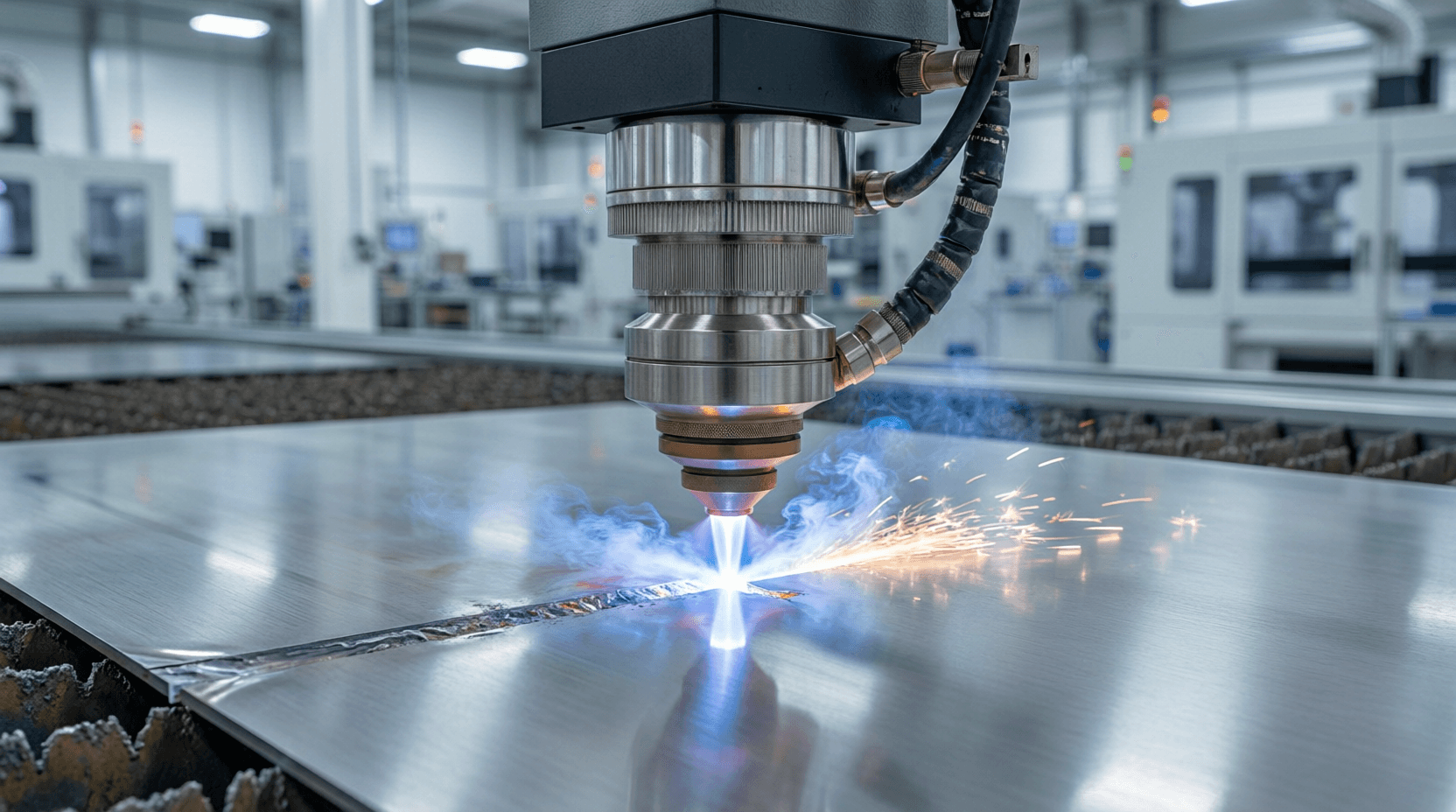
Modern laser processing relies on precise beam-to-gas interaction to maintain cut quality. A standard fiber laser operating at a 1,064nm wavelength delivers exceptional absorption in metals, characterized by a beam quality of M²≤1.1 and a wall-plug efficiency of 25-30%. This is a stark contrast to legacy CO2 systems operating at a 10,600nm wavelength, which require vastly different gas flow dynamics due to lower metallic absorption rates and higher thermal dissipation.
To leverage this 1,064nm efficiency, assist gas pressure must be strictly regulated based on material chemistry. High-pressure nitrogen systems typically operate between 15 to 25 bar to mechanically eject molten material from the kerf without initiating a chemical reaction. Conversely, oxygen assist gas relies on an exothermic reaction, requiring much lower pressures of 0.5 to 2 bar to prevent excessive burning and dross formation on the lower edge. Maintaining a positioning accuracy of ±0.03mm during these violent high-pressure flows demands robust CNC gantry design and proportional valve control.
Applications and Industry Impact
The decision between oxygen and nitrogen is fundamentally a trade-off between thermal input, edge quality, and operating expense. Below is a balanced technical comparison of both gases when processing 10mm steel on a high-power system.
Processing Metric
Nitrogen (N2) Assist Gas
Oxygen (O2) Assist Gas
Optimal Pressure Range
18-20 bar
0.8-1.2 bar
Volumetric Flow Rate
60-80 Nm³/h
2-4 Nm³/h
Thermal Contribution
0% (Endothermic cooling)
+30% (Exothermic reaction)
Max Thickness (6kW Source)
20mm (Stainless/Aluminum)
25mm (Mild Steel)
Edge Roughness (Ra)
Ra 12-15 µm
Ra 25-30 µm
Post-Processing Required
0 steps (Weld-ready)
1-2 steps (Oxide removal)
Standard Nozzle Diameter
2.0-3.0 mm (Single wall)
1.2-1.5 mm (Double wall)
Industrial Gas Cost
$15-$25/h (Liquid bulk)
$2-$4/h
Industry Applications and Real Specifications
When deploying Intouchray Fiber Laser Cutting Machines, matching the assist gas to the power output yields compounding efficiency gains. For high-speed fabrication, a 1000W fiber laser from Intouchray, utilizing high-purity nitrogen assist gas, cuts 1mm stainless steel at 5 mm/s welding speed with an edge quality that meets immediate TIG welding standards. The 1,064nm wavelength ensures maximum energy transfer, while the precisely tuned 15 bar gas pressure prevents micro-dross formation on ultra-thin gauge materials.
Future Trends in Assist Gas Technology
Transitioning to optimized assist gas protocols requires hardware capable of managing dynamic pressure fluctuations. Intouchray equips its systems with premium IPG, Raycus, and MAX laser sources across a 500W-6kW+ power range, ensuring beam stability regardless of gas turbulence. Our machines feature automated proportional valve control that adjusts assist gas pressure based on material thickness, maintaining cut quality without manual intervention. Validated across hundreds of customer factory installs, every system is backed by our comprehensive after-sales policy, which includes a 2-year warranty on the machine body and a 1-year warranty on the laser source.
Fiber Laser welding speed Data (Nitrogen vs Oxygen)
Which One To Choose
Specify Oxygen (O2) assist gas for cutting thick mild steel (up to 25mm on a 6kW system) where edge oxidation is acceptable and minimizing gas cost is the primary operational driver. Specify Nitrogen (N2) assist gas for processing stainless steel and aluminum up to 20mm, where an oxide-free, weld-ready edge with Ra ≤15 µm roughness is strictly required for immediate downstream assembly.
FAQ
What is the optimal assist gas pressure for 1mm stainless steel?
For a 1000W fiber laser, nitrogen assist gas should be regulated between 12 to 15 bar to achieve speeds of 5 mm/s welding speed without dross formation.
How does fiber laser wavelength affect assist gas consumption?
The 1,064nm wavelength of fiber lasers offers higher metallic absorption than 10,600nm CO2 lasers, allowing for faster welding speeds and up to 20% lower assist gas volume per meter of cut.
Cost Analysis and ROI
Mastering the chemistry, pressure, and flow of assist gases transforms a standard laser cutter into a high-precision manufacturing cell. By selecting the correct gas profile for your material thickness and leveraging hardware with dynamic pressure control, factories eliminate secondary grinding, reduce oxidation risks, and accelerate throughput.
Request a material cutting sample with full compatibility data and gas pressure logs from to validate edge quality for your specific production line.
Flatbed and heavy-plate fiber laser cutting systems operating between 6 kW and 32 kW at 1070 nm wavelength require precise laser cutting assist gas management to maintain cut front stability across 50 mm carbon steel. Nitrogen assist gas at 20–35 bar pressure yields mirror-finish edges on stainless steel while minimizing heat-affected zone width to under 0.15 mm. EN ISO 13919 Class A tolerances demand stable gas flow dynamics that prevent turbulent recirculation near the focal plane. Optimized gas delivery reduces thermal distortion and eliminates secondary finishing operations.
Nozzle geometry and standoff distance critically influence kerf width and dross adhesion during tube and bevel cutting applications. Convergent-divergent nozzles with 1.5 to 2.0 mm orifice diameters optimize supersonic expansion for 1–25 mm thickness, producing kerf tolerances within ±0.05 mm per ISO 9013 guidelines. Piercing cycles require transient gas pressure spikes of 40–60 bar to penetrate reflective surfaces without excessive melt ejection. Inconsistent gas distribution causes rear-edge dross that impacts quality consistency metrics.
Nesting algorithms must account for thermal accumulation and assist gas consumption patterns to reduce operating cost. High-density part layouts increase local plate temperatures, requiring dynamic gas flow adjustments to maintain edge quality and prevent micro-cracking in hardened tool steels. Each laser cutting assist cycle consumes compressed nitrogen or oxygen, tracking approximately $13 per shot for high-power continuous-wave systems processing defense-grade alloys. Optimized pierce-to-cut transitions limit heat input, restricting the heat-affected zone to 0.2 mm maximum per VDI 3400 thermal load guidelines.
Traverse velocity optimization depends heavily on assist gas chemistry and stagnation pressure for variable reflectivity. Argon-hydrogen mixtures at 5–15% hydrogen concentration improve thermal conductivity during titanium cutting, enabling sustained speeds above 4 m/min while suppressing oxide layer formation. Oxygen-assisted processes on carbon steel rely on exothermic reactions that supplement laser energy, yet excessive pressure gradients induce turbulence that traps molten slag along the kerf bottom. Gas purity must exceed 99.995% to prevent contamination-induced defects.
Heavy-plate cutting requires dual-chamber nozzle configurations that separate primary assist flow from secondary shielding layers to stabilize the melt pool at thicknesses exceeding 40 mm. Kerf taper angles remain below 0.5 degrees when gas velocity matches the cutting speed ratio, ensuring perpendicular edge quality. EN ISO 13919 Class B tolerances dictate strict control over lateral deviation, necessitating automated standoff compensation that adjusts nozzle height within 0.01 mm increments during thermal drift events. Gas utilization efficiency directly controls operating cost.
Laserolutions
As a leading manufacturer of industrial laser equipment, designs and builds laser cladding, hardening, and surface repair systems that combine precision engineering with operational reliability. Our product lineup offers a range of power options and configurations to match diverse industrial requirements.
Product Models
CML-3000
Ground Rail
IT-RF5018-1
IT-RF5018-2
IT-RF5018-3
Laser Cladding & Hardening Head
Laser Cladding Head
Laser Hardening Head
Key Features
Laser cladding forms a strong metallurgical bond with the workpiece surface.
Concentrated laser energy control minimizes workpiece deformation due to heat input.
Improves wear resistance, corrosion resistance, and oxidation resistance of the part surface.
Enables recycling and remanufacturing, extending equipment lifespan and saving operating costs.
Laser cladding layer and workpiece surface form a firm metallurgical interface.
Laser energy control is precise, resulting in minimal thermal distortion.
Industry Applications
Additive manufacturing
Aerospace
Agricultural machinery tools
Assembly lines
Automated assembly lines
Automated welding and cutting
All laser claddlasermanufactured under ISO 9001 quality management protocols. Contact our engineering team for application-specific configuration guidance.