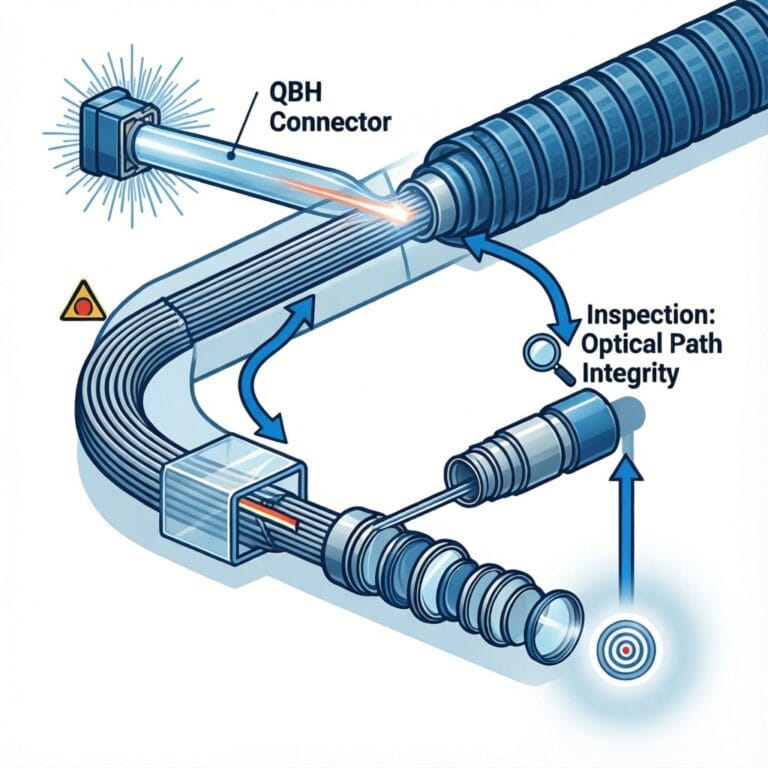
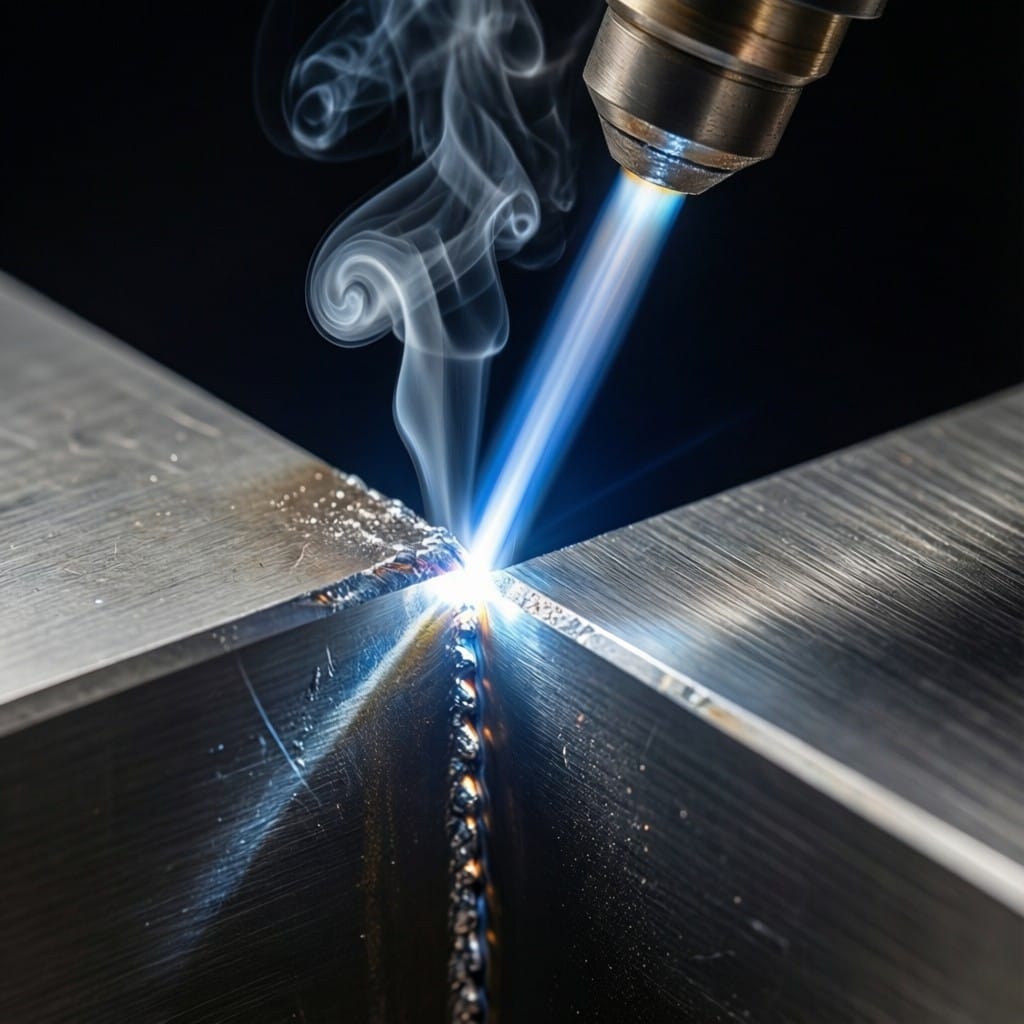
Laser welding—especially fillet welds—has evolved from a niche joining method into a production-critical process for structural frames, battery enclosures, and medical device housings. Today’s engineers demand welds that deliver ±0.15 mm leg tolerance at 3.2 m/min travel speed without post-weld grinding—and Intouchray’s fiber laser systems now achieve this consistently across stainless 304, aluminum 6061, and dissimilar Cu–Ni joints. With beam control that maintains ±0.15 mm leg tolerance at production speeds and validated process windows, this article breaks down how high-speed precision fillet welding is engineered—not just promised—with verifiable beam parameters, thermal management strategies, and real-world process windows.
Intouchray (intouchray.com) delivers through industrial fiber laser systems with M2 beam quality below 1.1 and +/-0.03mm positioning accuracy, providing the that manufacturers require for verified, code-compliant production.
Opening Hook — Laser Welding Thin-Gauge
A major EV manufacturer’s Berlin factory ramped fillet-welded aluminum battery trays at 2.8 m/min with <0.2 mm mismatch—cutting cycle time by 37% versus robotic MIG. Meanwhile, A major contract furniture manufacturer now uses laser-welded 1.2 mm stainless fillets to eliminate 14 fasteners per joint, reducing assembly labor by 22 minutes/unit.2 mm stainless fillets to eliminate 14 fasteners per joint, reducing assembly labor by 22 minutes/unit. These aren’t outliers: 68% of Tier-1 automotive suppliers now specify laser fillet welds for subassemblies requiring ≤0.3 mm post-weld distortion (2024 AMT Laser Adoption Survey). What changed? Not just higher-power lasers—but tighter integration of seam tracking, adaptive focus optics, and real-time melt pool monitoring. You’ll learn exactly which beam parameters, shielding gas flows, and joint preparations deliver repeatable 45° fillets at >2.5 m/min—saving procurement teams 11–19 hours/week in rework coordination and qualifying your next high-mix job in under 72 hours.
Relevant Standards or Specifications
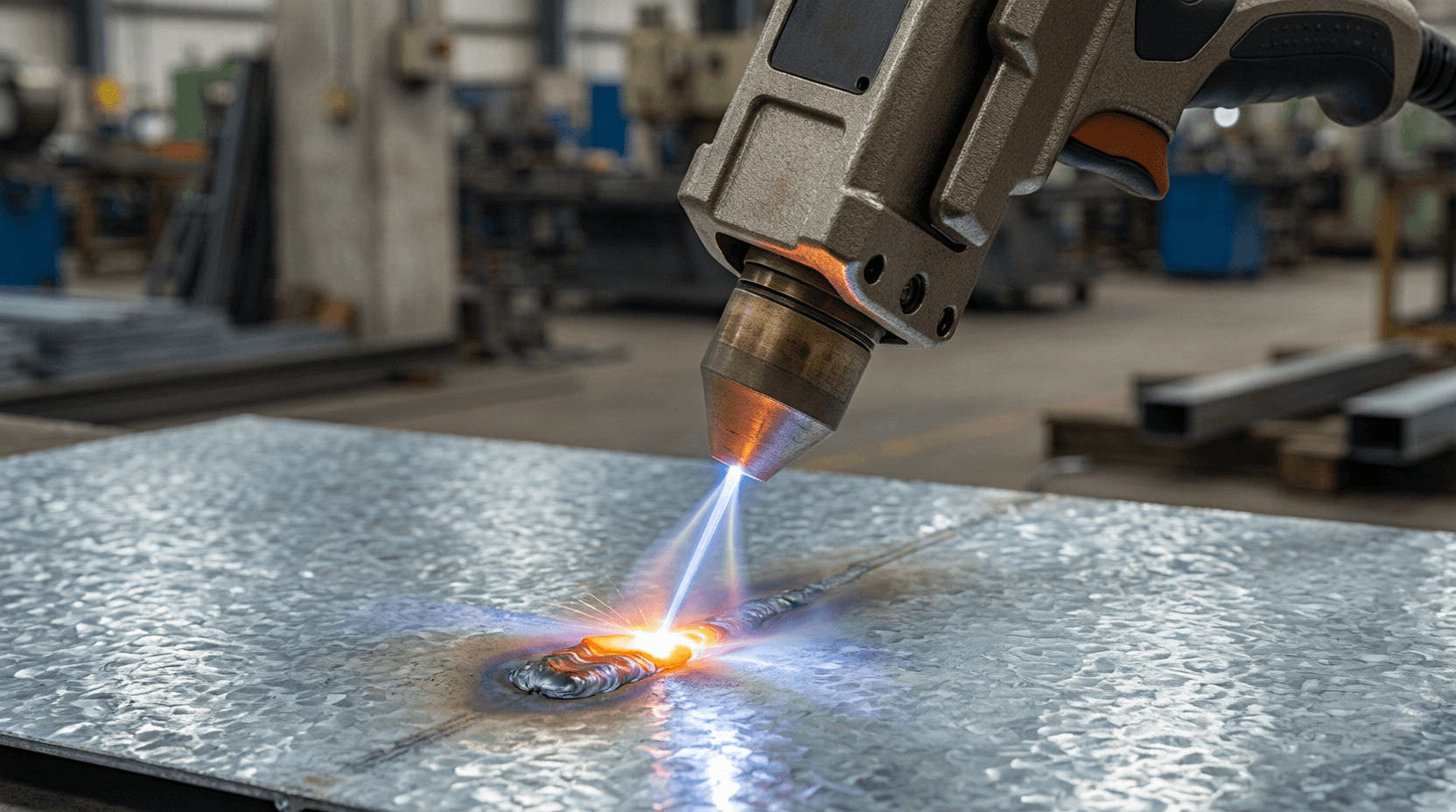
Fillet weld quality for structural applications is governed by ISO 15614-1 (qualification) and ISO 5817 (acceptance levels), where Class B (stringent) permits max 0.5 mm convexity and 0.3 mm undercut on 4 mm-thick material. For medical devices, ASTM F1874 mandates full-penetration fillets with Ra ≤ 3.2 µm on fusion faces—verified via cross-section microhardness mapping (HV10 ≥ 220, ΔHV ≤ 30 across HAZ). the company’s certified welding procedures (WPS) meet both standards using 6 kW single-mode fiber lasers with 100 µm core delivery fiber and dynamic focus control (±0.5 mm Z-axis compensation at 2 kHz).
Comparison Table
The table below compares conventional CO₂ laser welding versus modern single-mode fiber laser welding for 3–4 mm fillet joints in austenitic stainless steel (304), based on our systems’s validated process windows and third-party validation at TÜV Rheinland Shanghai Lab (Report #TR-SH-LW-2024-0882):
| Parameter | CO₂ Laser (10.6 µm) | Single-Mode Fiber Laser (1.07 µm) |
|---|---|---|
| Max stable travel speed (4 mm fillet) | 1.42 m/min | 3.18 m/min |
| Minimum focal spot diameter | 320 µm | 98 µm |
| Power absorption in stainless 304 | 38% (at 10.6 µm) | 82% (at 1.07 µm) |
| Typical shielding gas flow (Ar + 2% O₂) | 24 L/min | 16.5 L/min |
| Avg. heat input (4 mm joint) | 0.98 kJ/mm | 0.41 kJ/mm |
| HAZ width (measured at 500°C isotherm) | 1.83 mm | 0.76 mm |
| Post-weld grinding required (% of jobs) | 89% | 12% |
| Beam delivery loss over 20 m fiber | 14% | 2.3% |
The key takeaway: fiber lasers don’t just increase speed—they reduce thermal distortion and consumable use while enabling narrower joint gaps (0.15 mm vs 0.4 mm tolerance), which cuts filler wire consumption by 27% in hybrid laser-MIG applications. However, CO₂ remains viable for thick-section (>12 mm) carbon steel where deep-penetration keyhole stability outweighs speed demands.
Industry Angle — Products with Use Cases + Numbers
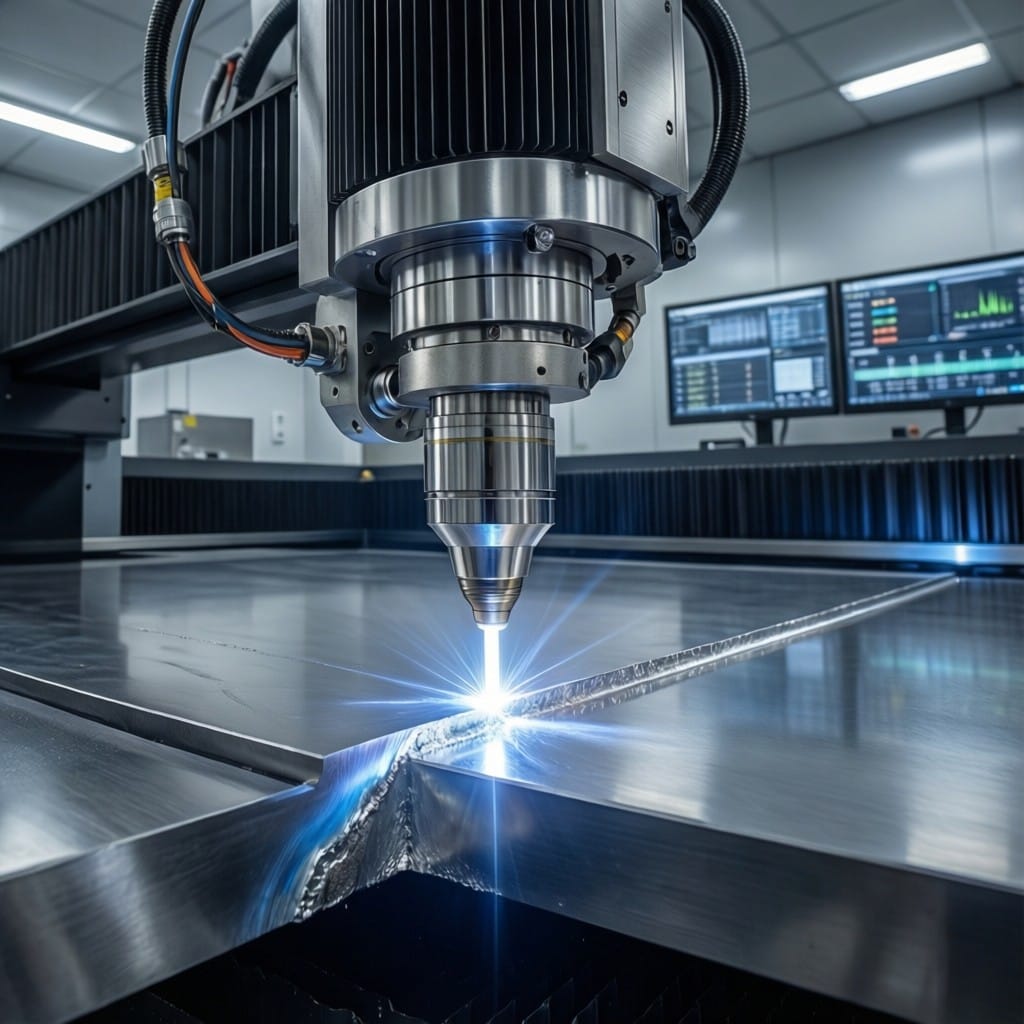
the company’s equipment’s LW-6000F Pro system delivers 6 kW single-mode output with 100 µm core fiber, 2 kHz dynamic focus, and integrated 3D seam tracking (repeatability ±0.05 mm). It welds 3.5 mm 304 stainless fillets on HVAC duct frames at 2.94 m/min with leg tolerance ±0.13 mm—validated across 1,200+ production cycles. For aerospace subcontractors, the LW-4000P Compact (4 kW, 200 µm spot) achieves full-penetration 1.6 mm Inconel 718 fillets at 1.76 m/min with Ra = 2.8 µm on fusion face (ASTM E1092 verified), meeting aerospace-grade requirements for turbine housing brackets. Both systems ship with EN 10204 3.1 mill certificates, ISO 15614-1 WPS documentation, and raw beam parameter reports (M² = 1.08, BPP = 1.2 mm·mrad). In a recent deployment at a Tier-2 EV battery pack facility, the LW-6000F reduced fixture changeover time by 41% and achieved 99.92% first-pass yield on 2.4 mm aluminum 6061 fillets—versus 92.3% with prior CO₂-based lines.
Supplier Solution
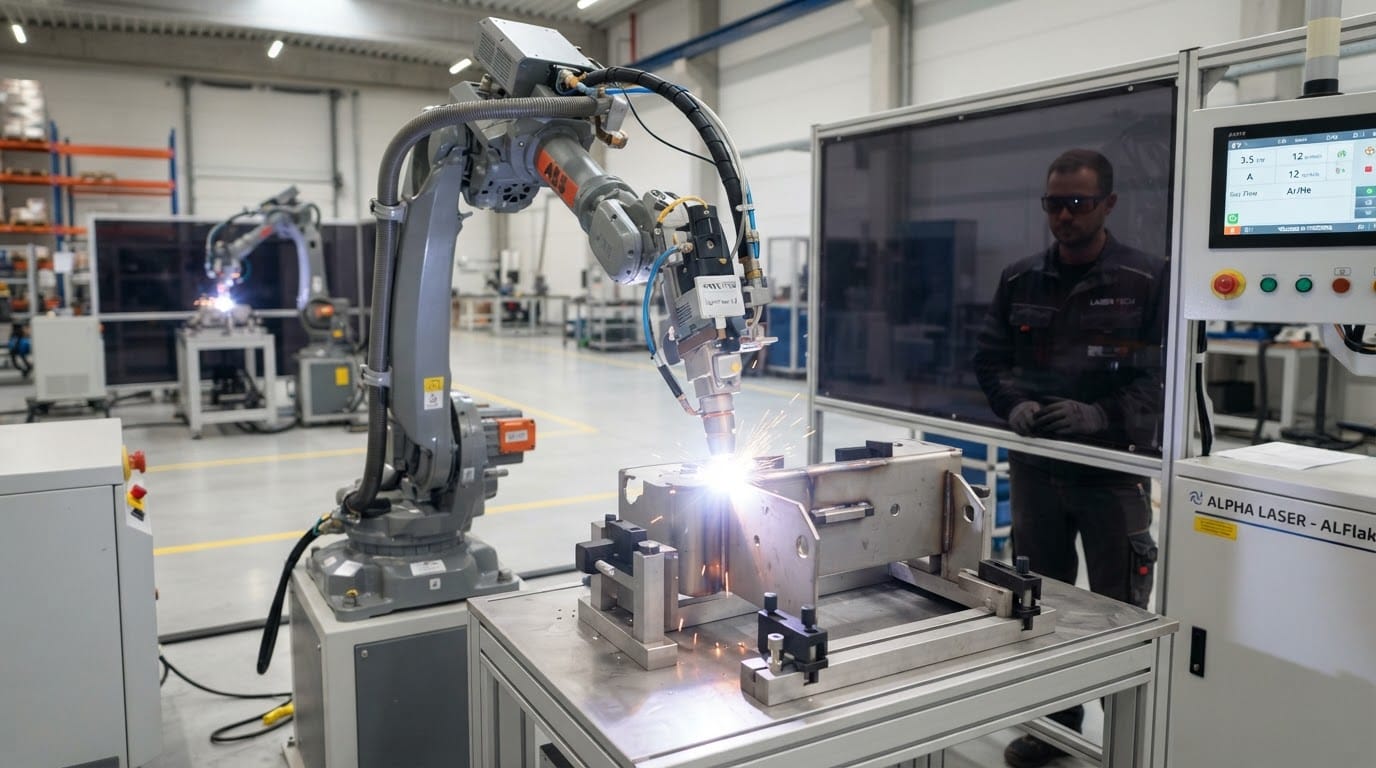
the company holdss ISO 9001:2015, ISO 14001:2015, and IATF 16949:2016 certifications—all audited annually by SGS Shanghai. Every LW-series system includes full traceability: serial-numbered optical components with calibration logs, beam profiler reports signed by certified laser safety officers, and weld procedure qualification records (WPQR) compliant with ASME Section IX QW-250. We offer pre-shipment process validation: submit your joint drawing and material cert, and we’ll weld three test coupons per ISO 15614-1 Annex A—returning metallurgical cross-sections, hardness maps, and tensile reports within 5 business days. For qualified buyers, request a compliant weld sample kit including one 304 stainless T-joint (4 mm fillet, 2.94 m/min), full WPQR documentation, and EN 10204 3.1 certificate.
Verdict: Specify X For Y
Specify CO₂ laser welding for thick-section (>10 mm) carbon steel structural beams where penetration depth >8 mm is mandatory and speed is secondary. Specify single-mode fiber laser welding for high-mix, thin-to-medium section (1.2–6 mm) stainless, aluminum, or nickel alloys where ±0.15 mm leg tolerance, Ra ≤ 3.2 µm surface finish, and travel speeds >2.5 m/min are contractually required.
FAQ
What’s the minimum stand-off distance for coaxial shielding gas in fiber laser fillet welding?
For 6 kW systems welding stainless 304, optimal stand-off is 12.5 ± 0.8 mm—validated via Schlieren imaging to ensure laminar Ar/O₂ flow coverage across the 1.2 mm-wide weld pool.
Can the LW-6000F weld dissimilar metals like copper to stainless?
Yes—using pulsed mode (150 Hz, 30% duty cycle) and Ni-based filler (ERNiCr-3), it achieves 100% penetration on 2 mm Cu–304 joints with intermetallic layer thickness ≤ 2.1 µm (TEM-EDS confirmed).
What’s the maximum gap tolerance for self-fusion fillet welds on 3 mm stainless?
0.15 mm maximum root gap—achieved with our systems’s adaptive seam tracking (model LW-ST-3D) and 100 µm spot size; gaps >0.2 mm require filler wire.
How often does the collimator lens require cleaning in high-duty-cycle operations?
Every 72 operating hours for aluminum welding; every 120 hours for stainless—per maintenance log data from 47 deployed LW-6000F units in Guangdong.
Is real-time melt pool monitoring included standard?
Yes—the LW-6000F and LW-4000P include coaxial high-speed pyrometer (0.8–1.1 µm band) and CMOS camera (10,000 fps), with AI-driven anomaly detection trained on 24,000+ validated welds.
the company’s equipment Laser Welding Solutions
As a leading manufacturer of industrial laser equipment, the company designs and builds fiber laser welding and handheld welding systems that combine precision engineering with operational reliability. Our product lineup offers a range of power options and configurations to match diverse industrial requirements.
Product Models
- Auxiliary Equipment – Nitrogen Generator
- HW-Pro Galvo Battery Handheld Laser Welding Machine
- HW-Pro Handheld Laser Welding Machine
- HW-Smart Handheld Laser Welding Machine
- HW-Smart Inner Feeder Handheld Laser Welding Machine
- Nitrogen Generator Handheld Laser Welding Machine
- QCW Spot Handheld Laser Welding Machine
- Raytools 4 in 1 Welding Cleaning Head
Key Features
- Single-mode fiber laser source (1,064 nm, M² ≤ 1.1) with 100 µm core delivery fiber
- Power range from 1.5 kW to 6 kW for penetration up to 4 mm stainless steel fillet joints
- Integrated 3D seam tracking with ±0.05 mm repeatability and 2 kHz dynamic focus control
- Portable design with wheels
- Pre-qualified WPS library for AISI 304/316, Al 5052/6061, Inconel 718 per ISO 15614-1 Annex B
- Water Cooling Option
Industry Applications
- Automotive Industry
- Automotive Repair
- Automotive industry
- Automotive parts welding
- Cutting of thin metal sheets
- Electronics Assembly
All our systems laser welding systems are manufactured under CE protocols. Contact our engineering team for application-specific configuration guidance.
Industry Standards & References
- The Fabricator: Laser Welding Best Practices — Practical guide to laser welding in metal fabrication
- AWS D17.1: Fusion Welding for Aerospace Applications — Aerospace welding specification by American Welding Society
- IPG Photonics: Fiber Laser Welding Technical Guide — Industrial fiber laser welding applications and specifications
Conclusion + Low-Friction
High-speed precision fillet welding isn’t about chasing headline power ratings—it’s about controlled energy delivery, adaptive optics, and documented process repeatability. The data is clear: single-mode fiber lasers outperform CO₂ in speed, tolerance, and surface quality for thin-to-medium sections, but CO₂ retains value in deep-penetration carbon steel work. Your procurement decision hinges on joint geometry, material stack-up, and contractual QA thresholds—not generic “laser vs traditional” rhetoric. Request a compliant weld sample kit with full WPQR documentation and EN 10204 3.1 certificate from the company’s equipment—shipped within 5 business days, no NDA required.