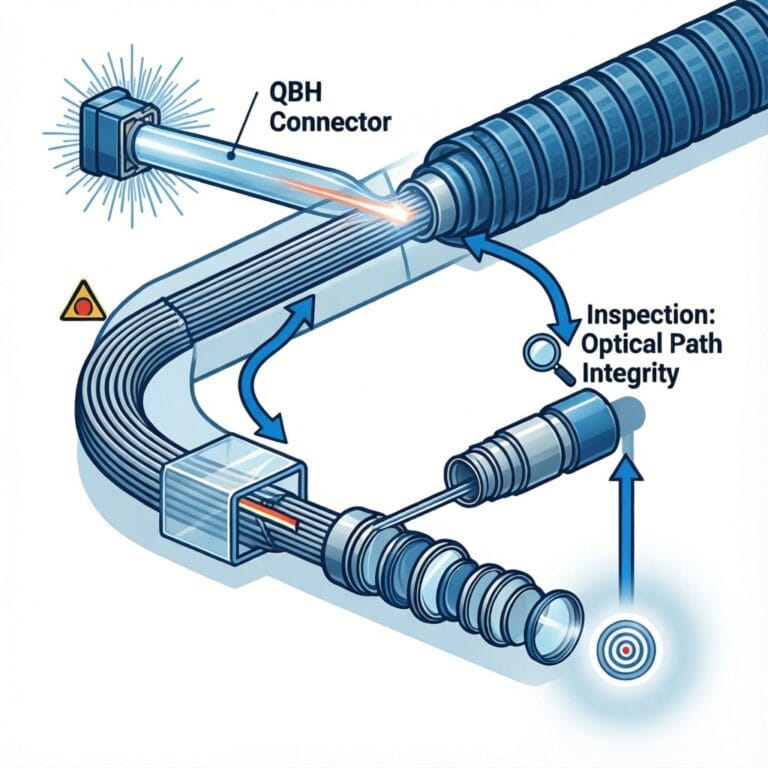
In precision laser welding, a defect discovered after a 500-part run isn’t a quality problem—it’s a scrap crisis. Yet most manufacturers still inspect welds off-line, catching failures hours after they occur. Real-time in-line weld monitoring changes this equation entirely, shifting quality control from reactive inspection to active process control. This article examines how photodiode-based and camera-based monitoring systems detect porosity, incomplete fusion, and seam deviation at speeds matching production, and why engineers at automotive, medical device, and battery manufacturers are now specifying real-time monitoring as a non-negotiable capability in their laser welding equipment.
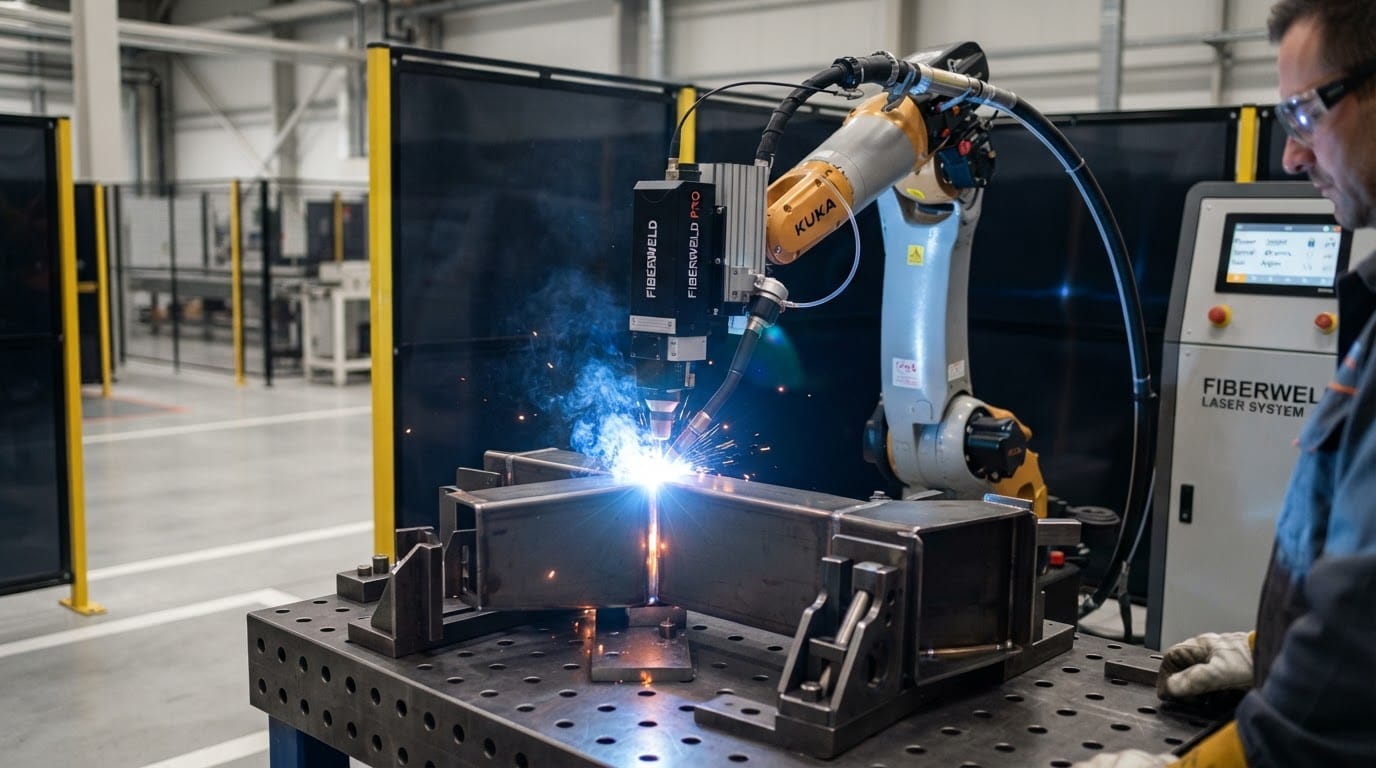
Key Considerations in Real-Time Laser Weld Inspection
The shift toward zero-defect manufacturing drives the demand for real-time weld inspection. major EV manufacturers’ gigafactories, for example, require battery pack welds with less than 0.1mm seam deviation across thousands of joints per pack. Off-line sampling (even 100% visual inspection) cannot guarantee this consistency at cycle times under 3 seconds per weld.
The fundamental problem with post-process inspection is time lag. By the time a technician identifies a porosity defect—typically 15-30 minutes after the weld completes—the laser has already produced dozens more parts with the same flaw. In-line monitoring closes this feedback loop from minutes to milliseconds.
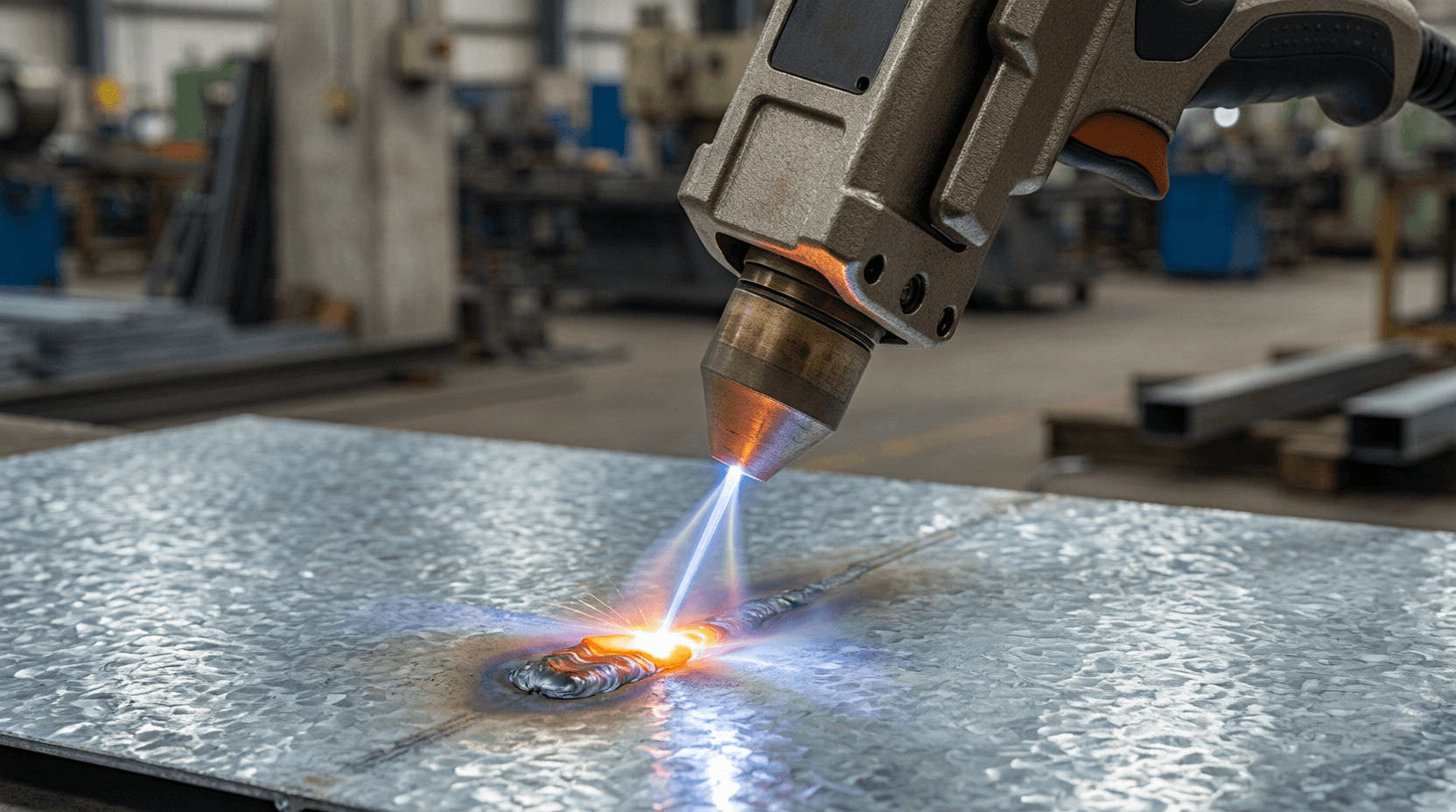
Three technologies dominate the market:
– Coaxial photodiode monitoring captures optical emissions at the 1,064nm wavelength during welding, detecting laser welding fluctuations that correlate with porosity and penetration depth.
– High-speed camera systems operating at 1,000+ fps track seam position and pool geometry in real time against programmed weld paths.
– Spectroscopic sensors analyze elemental emission lines to detect composition changes in dissimilar material joints.
Technical Analysis: In-Line Quality Monitoring Systems
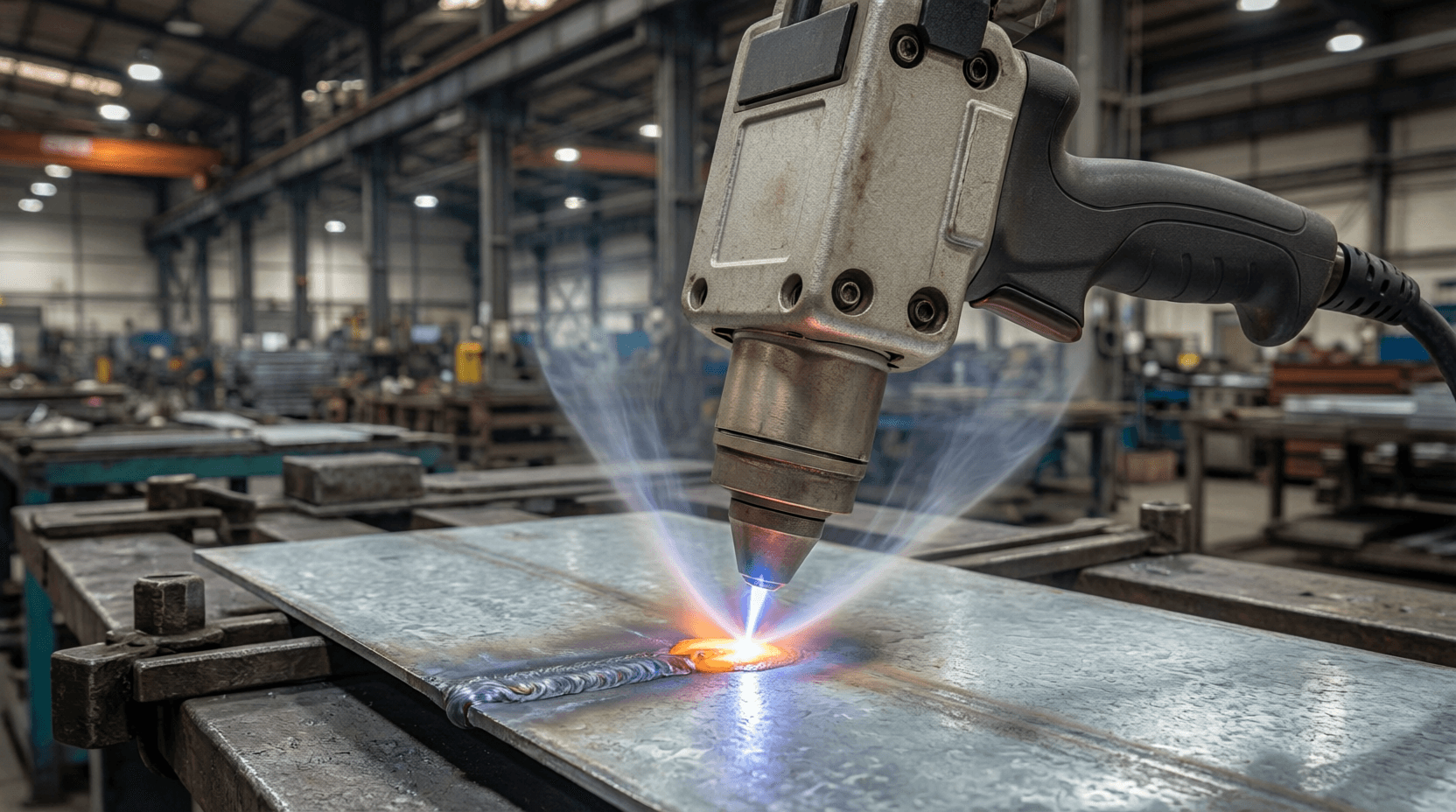
Application Context Across Industries
The value of in-line monitoring varies by industry, but the underlying drive is consistent: eliminate downstream rework costs.
– Automotive battery manufacturing: A single porosity defect in a busbar weld can cause thermal runaway. In-line monitoring at 100 kHz sampling rate catches these defects immediately. Major EV battery makers now require ISO 9001:2015 certified suppliers to demonstrate real-time monitoring capability in their welding equipment.
– Medical device fabrication: FDA 21 CFR Part 820 mandates documented quality control for implantable devices. In-line weld monitoring generates traceable records—each weld’s photodiode signature, timestamp, and pass/fail decision—satisfying audit requirements without separate inspection stations.
– Aerospace and defense: Hermetic seal welds for sensor housings require 100% integrity verification. Spectroscopic monitoring detects aluminum alloy composition shifts below 0.1%, flagging material contamination before it reaches the critical seal interface.
– Consumer electronics: Thin-walled stainless steel and titanium casings for phones and wearables demand cosmetic seam quality. Camera-based monitoring captures surface defects at 10µm resolution, rejecting parts before finishing processes waste time and consumables.
Supplier Solution: Intouchray’s Integrated Approach
Intouchray addresses the in-line monitoring challenge through a modular hardware and software platform. Every IVS laser welding system comes with a CE-certified (Machinery Directive 2006/42/EC, EMC Directive 2014/30/EU) control interface that supports external sensor integration via standard industrial protocols (EtherCAT, Profinet). The monitoring software logs each weld’s photodiode waveform, camera image, and laser power history to a local SQL database or customer MES system—enabling batch-level traceability for ISO 9001 and FDA audits.
The company offers three sensor integration paths:
1. Photodiode-only module ($3,500 add-on) for penetration monitoring on steel and stainless steel up to 6mm thickness
2. Camera-based seam tracking ($14,000) for reflective metals and applications requiring ±0.02mm positional accuracy
3. Hybrid system ($16,500) combining both sensors with automated reject marking via pneumatic stamp
Best Practices for Real-Time Weld Quality Monitoring
All systems ship with a 2-year body warranty and 1-year laser source warranty. Laser source options include IPG, Raycus, and MAX—all operating at 1,064nm with M²≤1.1 beam quality. Express lead time is 15 days for standard configurations; custom integrations requiring additional sensor mounting or software modifications add 5-10 days.
the company provides video demonstrations of the monitoring system in operation, showing real-time waveform capture during welding of 1.5mm aluminum to 2mm copper (a common battery tab joint). Customers can request a sample weld report (with full photodiode and camera data) from Intouchray to evaluate the system against their specific joint requirements.
Which One To Choose
Specify a photodiode-only monitoring system for high-speed battery tab welding, hermetic sealing, and applications where penetration depth consistency is the primary quality concern. The <0.1ms response time directly enables closed-loop power modulation, making it the preferred choice for production rates exceeding 60 parts per minute.Specify a camera-based monitoring system for cosmetic seam welding, medical devices with visible surface requirements, and applications involving dissimilar materials where seam position deviation above ±0.03mm constitutes rejection. The richer spatial data justifies the higher cost when surface quality is non-negotiable.
For critical safety applications (automotive battery packs, implantable medical devices), specify the hybrid system—the photodiode catches internal defects while the camera verifies surface geometry, providing the highest confidence level for zero-defect production.
FAQ
### How fast can a photodiode monitoring system detect a weld defect?
Response time is under 0.1ms for photodiode systems, enabling the laser controller to adjust power or stop production within the same weld cycle.
### What types of defects can in-line monitoring detect?
Photodiode systems detect porosity and penetration depth variation; camera systems detect seam position deviation, surface cracks, spatter, and underfill down to 10µm resolution.
### Does in-line monitoring require trained operators to interpret the data?
No—modern systems automatically compare waveform signatures against reference profiles and generate a pass/fail output. Human review is only needed for edge cases or process validation.
### Can in-line monitoring be retrofitted to existing laser welding equipment?
the company offers retrofit kits compatible with most fiber laser welding systems operating at 1,064nm. Installation requires 4-8 hours depending on control system integration.
### How much does a complete monitoring system cost?
Prices range from $3,500 for photodiode-only modules to $16,500 for hybrid photodiode plus camera systems, excluding installation and training.
Summary & Next Steps
In-line weld monitoring transforms quality control from a downstream inspection bottleneck into an active process control capability. By detecting porosity, penetration loss, and seam deviation within milliseconds—while the weld is still solidifying—these systems eliminate the cost of producing defective parts and the time wasted on off-line inspection.
The choice between photodiode and camera-based monitoring depends on your primary defect concern: penetration depth vs surface quality. For most high-volume applications, a hybrid system provides the best protection against both failure modes.
Request a sample weld monitoring report with full photodiode and camera data from the company for your specific material joint. Include your material combination, thickness, and production rate when submitting the request to receive a compatibility assessment and system quote.
Each approach offers different trade-offs in detection speed, defect coverage, and cost—which we examine in the comparison below.
Coaxial Photodiode vs Camera-Based Monitoring: A Technical Comparison
| Parameter | Coaxial Photodiode System | Camera-Based Vision System |
|---|---|---|
| Detection latency | <0.1ms response time | 3-5ms processing delay (1,000 fps camera) |
| Defect types detected | Porosity, penetration depth variation, laser welding instability | Seam position deviation, surface cracks, spatter, underfill |
| Wavelength sensitivity | Narrowband at 1,064nm (matches fiber laser) | Broadband visible spectrum (400-700nm) |
| Spatial resolution | None (single-point intensity measurement) | 10-50µm per pixel (depends on optics) |
| Sampling rate | 100 kHz | 1-10 kHz |
| Material compatibility | All metals (intensity threshold adjustable) | Reflective metals (aluminum, copper) require high dynamic range sensors |
| Integration complexity | Single fiber-optic pickup, no lens cleaning required | Requires protective window, periodic lens cleaning, calibration targets |
| False positive rate | 2-5% (laser welding noise can trigger false porosity alerts) | <1% when trained on 500+ reference welds |
| System cost (add-on retrofit) | $3,000-$8,000 | $12,000-$25,000 |
| Real-time feedback capability | Able to trigger power modulation within 1ms | Can stop weld or adjust speed within 50ms |
| Suitable for hermetic seam welds | Yes (detects penetration loss instantly) | Limited (surface inspection only) |
| Calibration frequency | Once per material-change type | Weekly or after 2,000 welds |
The key takeaway: Photodiode monitoring excels at detecting internal defects at speeds matching the laser’s response time, making it ideal for high-speed battery tab welding and hermetic sealing. Camera-based systems provide richer spatial data for seam tracking and surface quality, but at higher cost and processing latency. For most production environments, a hybrid approach combining both sensors offers the best coverage: photodiode for penetration monitoring and camera for seam geometry.
Industry Examples with Real Specifications
The company’s IVS Series laser welding systems integrate both monitoring approaches as standard options. The IVS-1500, a 1,500W fiber laser welder with 1,064nm wavelength and beam quality M²≤1.1, ships with a coaxial photodiode module that detects penetration depth variations exceeding ±0.2mm within 0.3ms of occurrence. This system operates at 25-30% wall-plug efficiency and achieves positioning accuracy of ±0.03mm through the integrated motion stage.
For a medical device manufacturer producing 316L stainless steel implant housings, the company’s IVS-3000 system (3,000W power) with combined photodiode and camera monitoring reduced post-weld X-ray inspection by 40%. The camera system captures seam position deviation at 12µm resolution, comparing each weld pass against a reference profile stored in the control software. When deviation exceeds ±0.05mm, the system pauses and logs the coordinates for rework.
Battery pack assemblers benefit from the IVS-2000Intouchray’s real-time power modulation feature. When the photodiode detects laser welding intensity dropping below the calibrated threshold (indicating insufficient penetration), the laser controller increases output power from 2,000W to 2,200W within 0.1ms—compensating before the weld quality degrades. Engineers report porosity rates dropping from 3.2% to 0.4% after enabling this closed-loop feedback.