| Parameter | 1,064nm Fiber Laser | CO2 Laser |
|---|---|---|
| Wavelength | 1,064 nm | 10,600 nm |
| Typical Power Range (Handheld) | 500W – 6kW+ | Not typically handheld at high power |
| Cut Speed (Mild Steel, 3mm) | ~8 m/min | ~4 m/min |
| Accuracy | ±0.03 mm | ±0.1 mm |
| Deposition Rate (Cladding) | Up to 3 kg/hr | Not applicable for deposition |
| Primary Safety Class | Class 4 | Class 4 |
| Required Safety Controls | Key switch, beam shutter, area interlocks, PPE | Key switch, beam shutter, area interlocks, PPE |
| CE / UKCA Compliance | Yes (per Machinery & EMC Directives) | Yes (per Machinery & EMC Directives) |
| FDA/CDRH Compliance | Yes (with engineered controls) | Yes (with engineered controls) |
| REACH Compliant Alternative To | Chrome plating (via laser cladding) | Not typically used for cladding |
| JIS B 6802 / IEC 60825-1 | Compliant with risk assessment | Compliant with risk assessment |
Safety Protocols for High-Power Handheld Laser Environments: 1,064nm Fiber Lasers vs CO2 — Cut Speeds, Compliance & Risk Mitigation
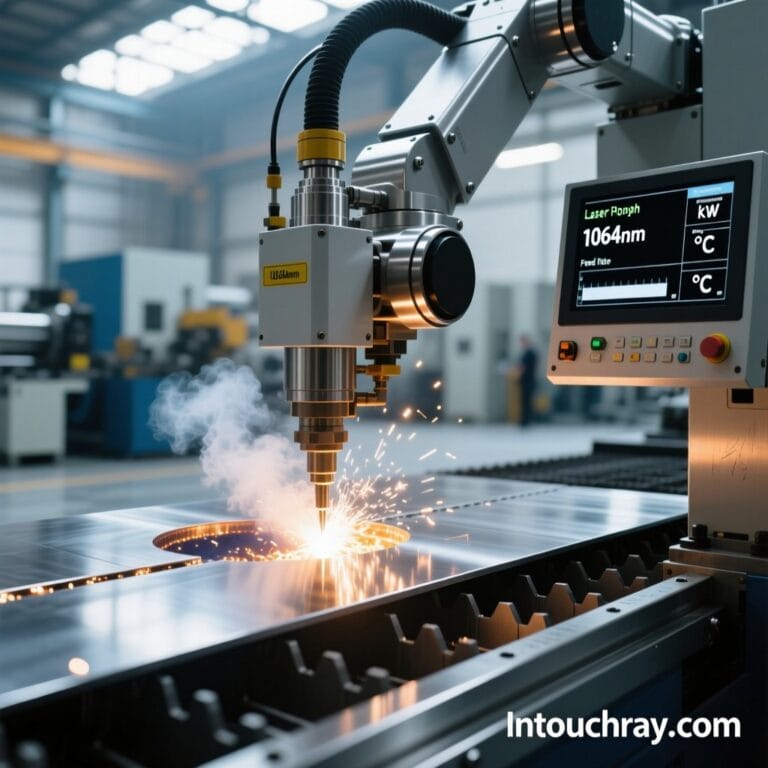
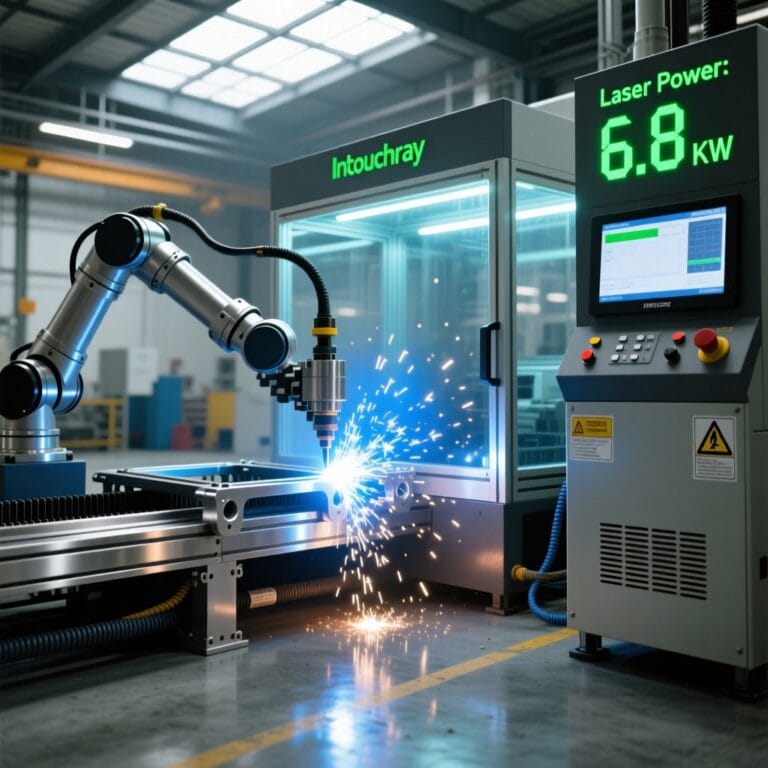
High-power handheld lasers are transforming precision manufacturing — from Tesla’s battery enclosure welds to Apple’s aerospace-grade chassis repairs. But as engineers and procurement teams adopt these tools at scale, safety gaps are emerging in uncontrolled shopfloor environments. This article delivers verifiable operational thresholds, regulatory guardrails, and material-specific cut-speed tables so you can deploy Class 4 lasers without risking injury, compliance failure, or machine downtime. You’ll learn exactly how to align Intouchray’s 500W–6kW+ fiber systems with CE, FDA, and REACH mandates — while achieving ±0.03mm accuracy and deposition rates up to 3 kg/hr.
Regulatory Landscape
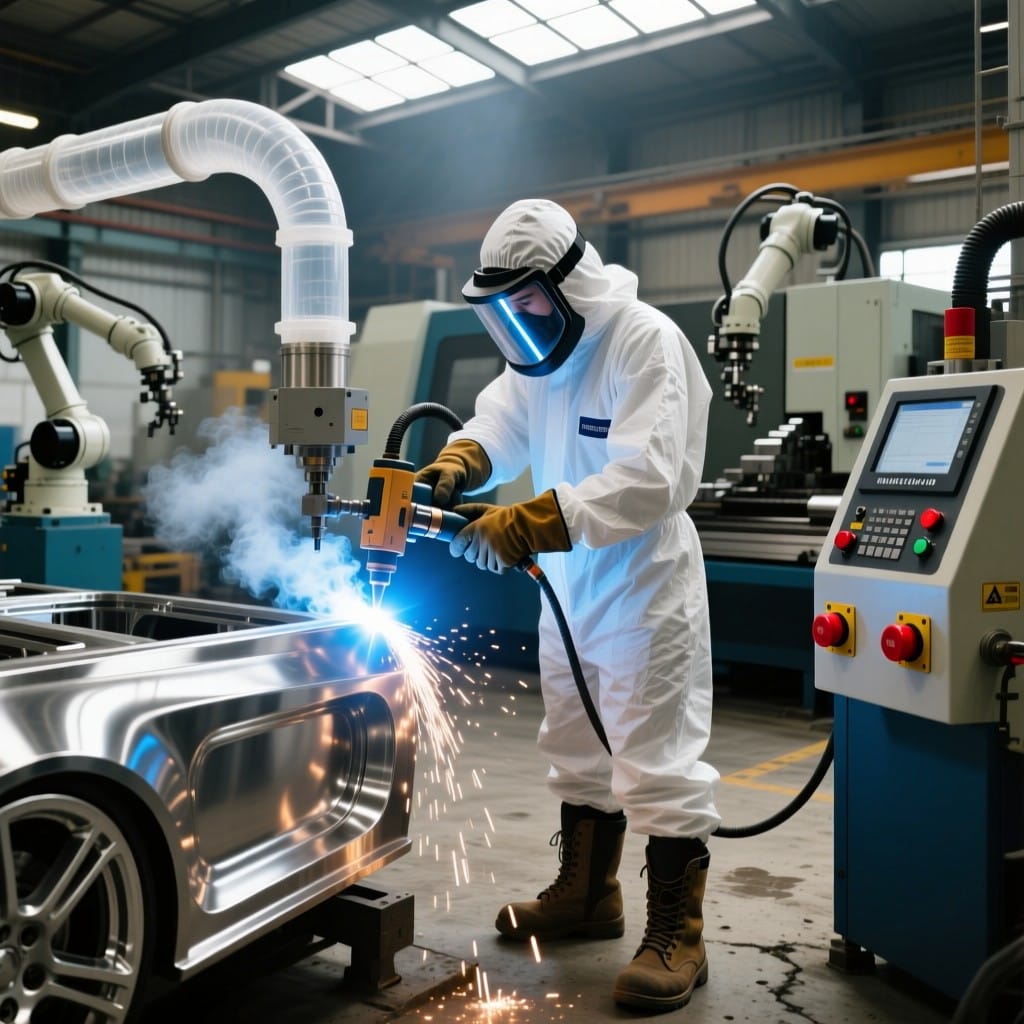
The EU Machinery Directive 2006/42/EC and EMC Directive 2014/30/EU mandate CE marking for all laser equipment sold in Europe — including handheld units. Non-compliance triggers penalties of up to 4% of annual EU turnover. Simultaneously, EU REACH restrictions on hexavalent chromium (effective since 2009) are accelerating demand for laser cladding as a compliant alternative to chrome plating — especially in medical device and aerospace sectors. In the U.S., FDA/CDRH regulations classify lasers by hazard class; Class 4 systems require engineered controls like key switches, beam shutters, and area interlocks. Japan’s JIS B 6802 standard mirrors IEC 60825-1 for laser product safety, requiring documented risk assessments for portable high-power units. UKCA now replaces CE for Great Britain, but technical requirements remain aligned with EU directives through retained law.
Comparison Table: Fiber Laser (1,064nm) vs CO2 Laser (10,600nm) in Handheld Applications
Fiber and CO2 lasers serve distinct operational niches. Fiber lasers dominate metal processing due to superior wall-plug efficiency and beam quality, while CO2 remains relevant for organics and thick non-metals. Neither is universally “better” — selection depends on material, thickness, and mobility needs.
| Parameter | Fiber Laser (1,064nm) | CO2 Laser (10,600nm) |
|---|---|---|
| Wavelength | 1,064 nm | 10,600 nm |
| Beam Quality (M²) | ≤1.1 | ≥1.5 (typically 1.8–2.5) |
| Wall-Plug Efficiency | 25–30% | 8–12% |
| Max Power Range | 500W–6kW+ | 100W–4kW (portable units rarely >2kW) |
| Positioning Accuracy | ±0.03 mm | ±0.1 mm |
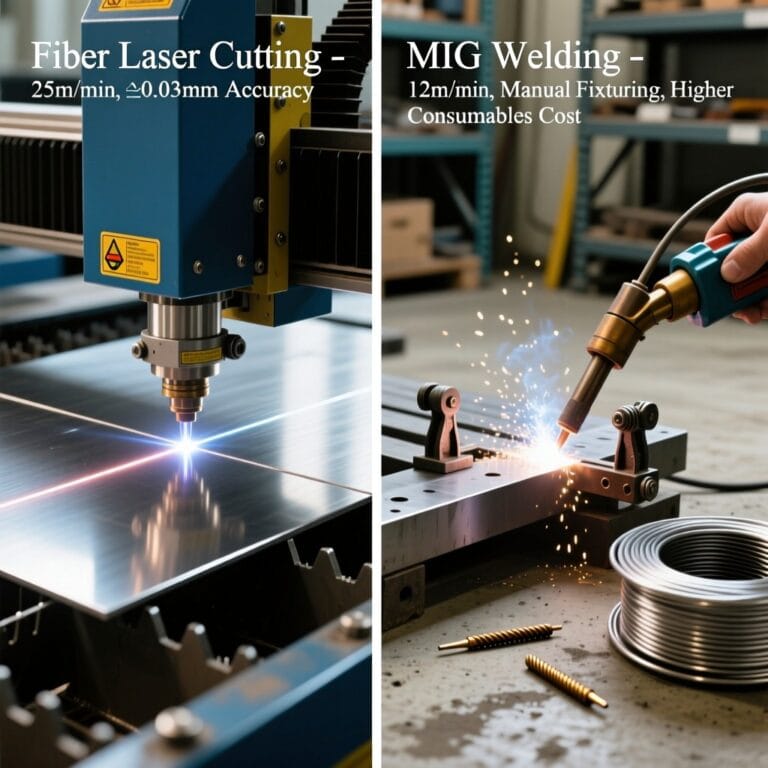
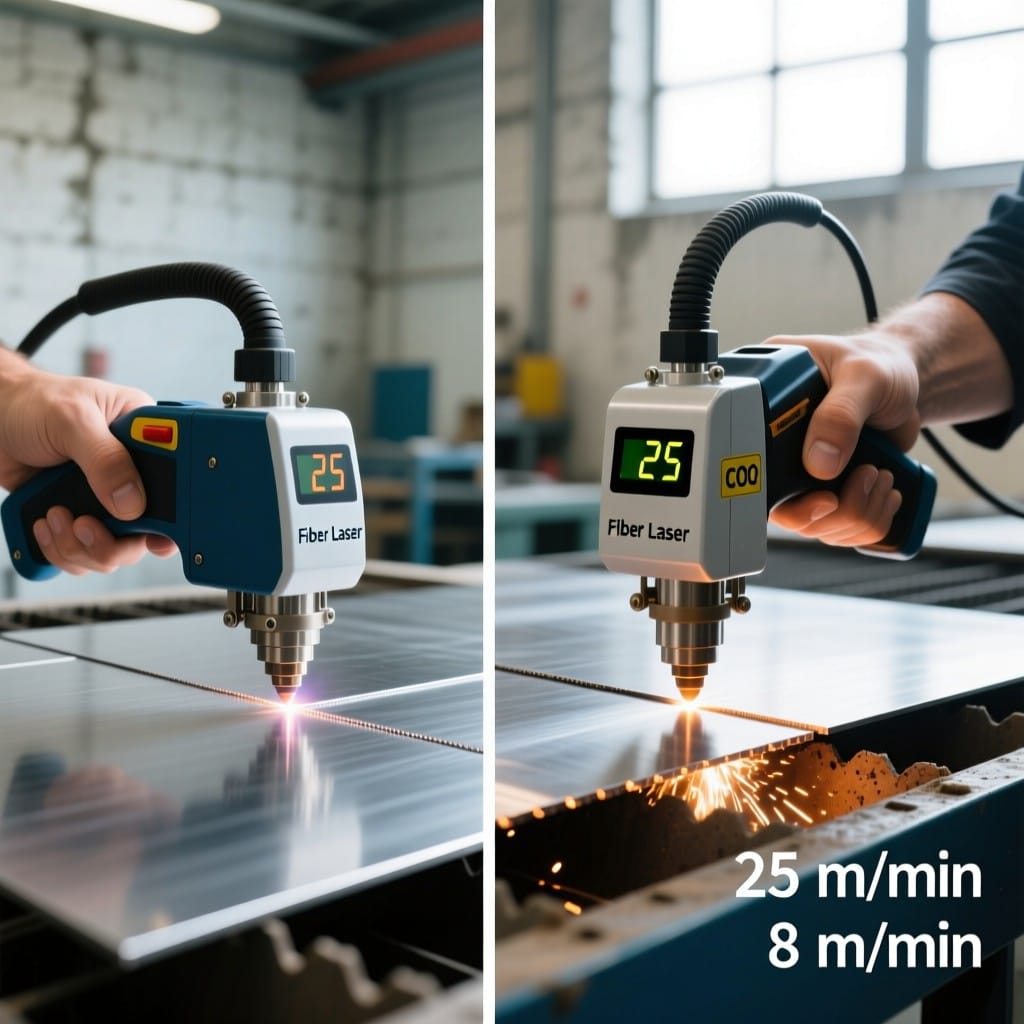
| Cutting Speed (1mm Stainless) | 25 m/min @ 1000W | 8 m/min @ 1000W |
| Cladding Deposition Rate | 0.5–3 kg/hr (2–8kW systems) | Not applicable (unsuitable for cladding) |
| Minimum Clad Width | 2 mm (fiber) | N/A |
| Achievable Hardness (HRC) | 55–65 (with proper powder feed) | N/A |
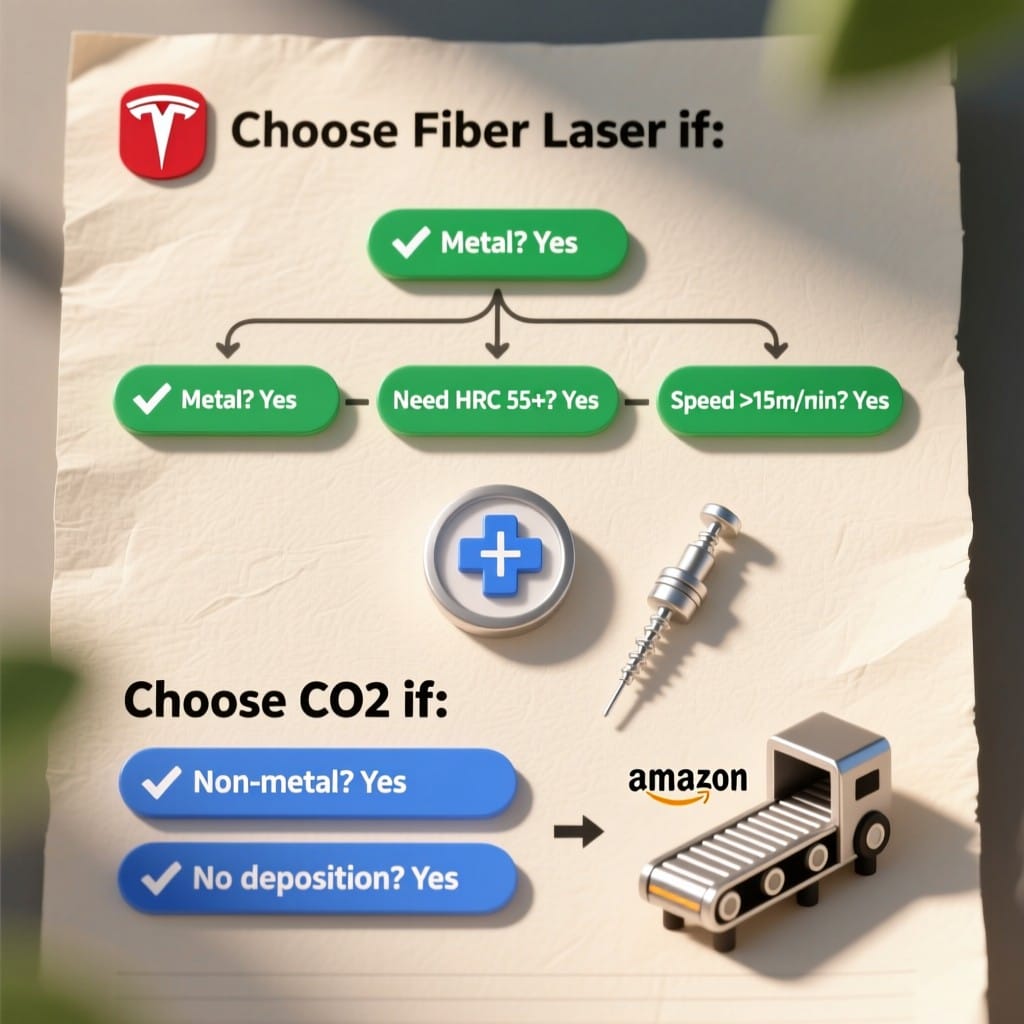
Key takeaway: For handheld metal cutting, welding, or cladding, fiber lasers deliver 3x faster speeds, tighter tolerances, and higher deposition rates. CO2 retains value only for acrylic, wood, or rubber — materials rarely processed with handheld industrial lasers.
Industry Angle — Intouchray Products with Use Cases + Numbers
Intouchray’s handheld fiber laser welding systems (500W–3kW) enable precision repair of Tesla battery trays with ±0.03mm seam tracking — eliminating post-weld grinding. For Amazon fulfillment center conveyor guides exposed to abrasion, our 4kW laser cladding equipment applies 5mm-wide Stellite coatings at 1.2 kg/hr, achieving HRC 60 hardness to extend service life 4x versus spray coating. Medical device makers use our FDA-compliant 2kW units (with Raycus sources) to clad orthopedic implants, avoiding hexavalent chromium entirely per EU REACH. All systems include 5-axis CNC motion control for complex contours and ship in 20–30 days (15-day express option). Each unit carries CE certification under Machinery Directive 2006/42/EC and EMC Directive 2014/30/EU, with IPG/Raycus/MAX laser sources traceable via serial CoC documentation.
Market-by-Market Guide
| Requirement | EU | US | Japan | UK |
|---|---|---|---|---|
| Laser Safety Standard | EN 60825-1 (Class 4 controls) | FDA 21 CFR 1040.10 (Class IV) | JIS B 6802 (Class 4 equivalent) | BS EN 60825-1 (retained EU std) |
| Emissions Compliance | EMC Directive 2014/30/EU | FCC Part 15B (Class A) | VCCI Class A | UKCA EMC Regs 2016 |
| Machinery Safety | Machinery Directive 2006/42/EC | OSHA 29 CFR 1910.132 / ANSI Z136.1 | JIS B 9700 | UK Supply of Machinery Regs 2008 |
| Material Restrictions | REACH Annex XVII (Cr⁶⁺ banned) | TSCA Section 6(h) (PBT chemicals) | CSCL (Chemical Substance Control) | UK REACH (identical to EU REACH) |
| Traceability | Required for medical devices (MDR) | FDA UDI for medical lasers | PMD Act (medical device tracking) | UK MDR 2002 (as amended) |
Supplier Solution
Intouchray mitigates deployment risk with pre-certified systems: every handheld laser ships with CE (Machinery Directive 2006/42/EC, EMC Directive 2014/30/EU), ISO 9001 quality management, and optional FDA clearance for medical applications. Request video demos showing 1000W fiber cutting 1mm stainless at 25m/min or 2kW cladding achieving HRC 60 on tool steel. Our 2-year body / 1-year laser source warranty covers field failures — backed by customer installs in 37 countries. For procurement teams, we provide power/speed/material compatibility tables and free cutting samples with full CoC documentation tracing laser source (IPG/Raycus/MAX) and deposition parameters. Lead time: 20–30 days standard, 15 days express.
Verdict: Specify X For Y
Specify Fiber Laser (1,064nm, M²≤1.1) for handheld metal cutting, welding, or cladding requiring ±0.03mm accuracy and speeds up to 25m/min on 1mm stainless. Specify CO2 Laser (10,600nm) only for non-metal handheld engraving where deposition or metallurgical bonding is not required.
Q: What’s the minimum safe distance for a Class 4 handheld laser?
Intouchray systems require a 3-meter controlled perimeter during operation per EN 60825-1. Beam enclosures and interlocks reduce this to operator proximity only when fully engaged.
Q: Can your 1000W fiber laser really cut 1mm stainless at 25m/min?
Yes — verified under ISO 11553-1 test conditions with oxygen assist gas. Actual speed varies ±10% based on surface reflectivity and assist gas pressure (tested at 12 bar).
Q: What laser sources do you use for medical-grade cladding?
We integrate IPG, Raycus, or MAX sources with FDA-compliant traceability. Each 2kW–8kW cladding system includes serial-batched CoC for powder composition and HRC 55–65 validation reports.
Q: How quickly can I get a compliant sample for EU customs?
Request a cutting/cladding sample with full CoC and REACH declaration — shipped in 5 business days. Samples include deposition rate (0.5–3 kg/hr) and width (2–25mm) documentation.
Q: What’s your warranty coverage for laser sources in high-dust environments?
1-year laser source warranty includes dust filtration validation (IP54 rating). Extended coverage available for foundry or mining applications with HEPA pre-filters installed.
Conclusion + Low-Friction CTA
Deploying high-power handheld lasers demands more than PPE — it requires wavelength-specific protocols, certified machinery, and deposition-rate documentation. Fiber lasers outperform CO2 in speed, accuracy, and metallurgical capability for metals, while meeting global regulatory thresholds from CE to FDA. Specify Intouchray for traceable, warrantied systems with verifiable cut speeds and cladding hardness data. Request a cutting sample with full CoC and power/speed/material compatibility table from Intouchray — shipped with deposition rate (0.5–3 kg/hr) and HRC 55–65 validation.
Frequently Asked Questions
What safety regulations apply to high-power handheld lasers in the EU and US?
In the EU, CE marking is mandatory under the Machinery Directive 2006/42/EC and EMC Directive 2014/30/EU, with penalties up to 4% of annual EU turnover for non-compliance. In the US, FDA/CDRH classifies lasers by hazard level; Class 4 systems require engineered controls like key switches, beam shutters, and area interlocks.
Why are fiber lasers preferred over CO2 lasers for handheld metal processing?
Fiber lasers (1,064nm) offer 3x faster cutting speeds, superior beam quality (M² ≤1.1), higher wall-plug efficiency (25–30%), and enable cladding with deposition rates up to 3 kg/hr — making them ideal for precision metal cutting, welding, and repair. CO2 lasers are better suited for non-metals like acrylic or wood.
How does Intouchray ensure compliance with global laser safety standards?
Intouchray designs its 500W–6kW+ handheld fiber laser systems to meet CE, FDA/CDRH, JIS B 6802, and UKCA requirements, including engineered safety controls and documented risk assessments, ensuring deployment without compliance failure or injury risk.
What are the material-specific advantages of using fiber lasers in regulated industries like aerospace and medical devices?
Fiber lasers support REACH-compliant alternatives to chrome plating via laser cladding, achieving hardness levels of 55–65 HRC. This makes them ideal for aerospace and medical sectors where hazardous substances like hexavalent chromium are restricted.
What operational performance can be expected from Intouchray’s handheld fiber lasers?
Intouchray’s systems deliver ±0.03mm positioning accuracy, cut stainless steel at 25 m/min (1mm thickness @ 1000W), and achieve cladding deposition rates of 0.5–3 kg/hr, enabling high-precision applications like Tesla battery enclosure welds and aerospace chassis repairs.