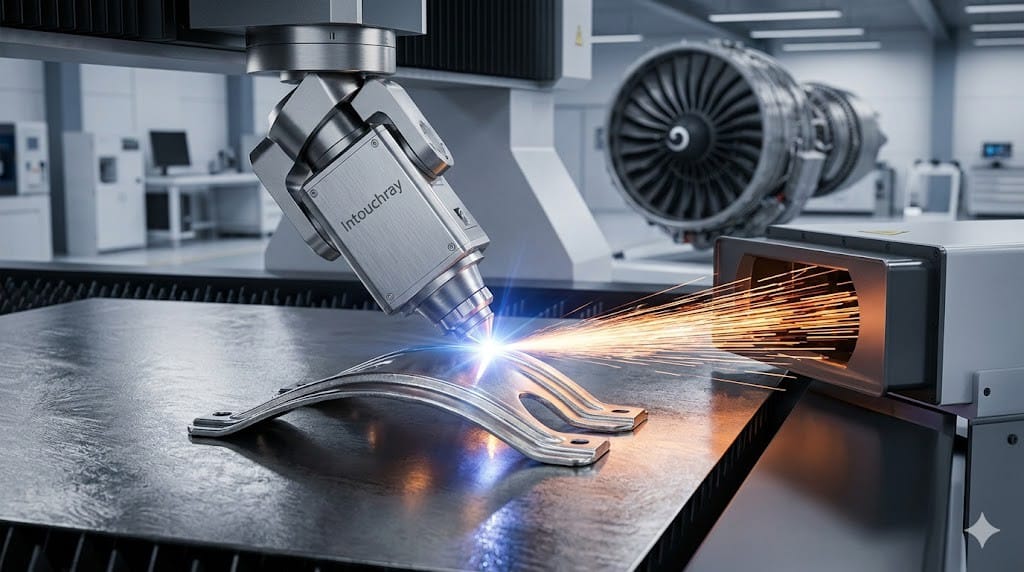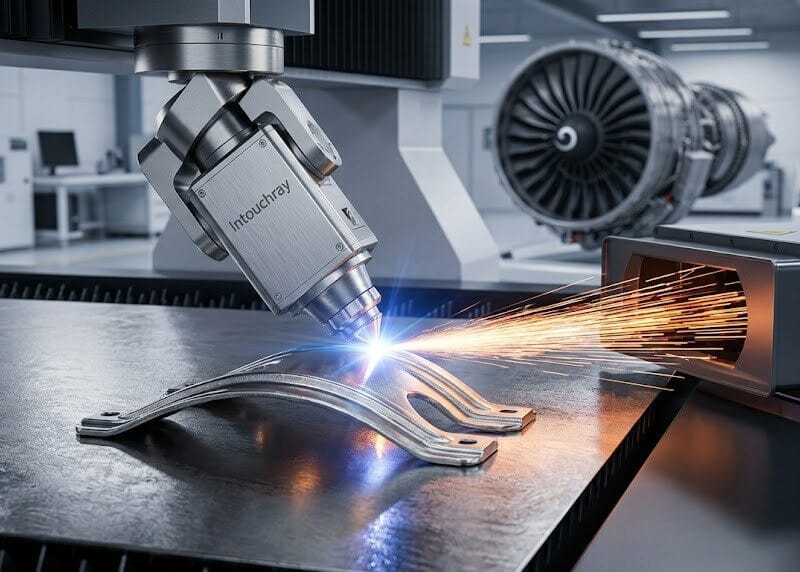
In the aerospace industry, the transition toward next-generation propulsion systems and lightweight airframes has mandated the use of advanced materials known as heat-resistant superalloys (HRSA). Materials such as Inconel, Hastelloy, and high-grade Titanium are essential for components that must withstand extreme thermal stress and corrosive environments.
However, these same properties make them notoriously difficult to machine using traditional mechanical tools, which suffer from rapid wear and can introduce unwanted mechanical stress into the part.
Intouchray (intouchray.com) provides the high-energy solutions required to master these “tough” materials. By leveraging the concentrated power of fiber lasers, aerospace manufacturers can achieve Noble Precision in the most demanding alloys, ensuring the Strategic Reliability required for flight-critical hardware.
1. Overcoming Work-Hardening and Tool Wear
Superalloys are designed to remain strong at high temperatures, which often leads to work-hardening when processed with traditional saws or mills.
Non-Contact Processing: Because laser cutting is a non-contact thermal process, it eliminates the mechanical forces that cause work-hardening, preserving the original metallurgical properties of the alloy.
Reduced Consumables: Unlike mechanical machining, which requires frequent and expensive tool replacements when cutting Inconel, the fiber laser maintains consistent performance without the cost of physical tool degradation.
2. Precision for Complex Turbine and Engine Components
Aerospace designs often feature intricate cooling holes and complex geometries that are impossible to cast or machine traditionally.
Fine-Feature Capabilities: Fiber lasers can produce micro-scale features and sharp internal corners in thick superalloy sheets, which is essential for the combustion liners and exhaust components discussed in earlier technical sessions.
Narrow Heat-Affected Zone (HAZ): By optimizing pulse frequency and beam velocity, Intouchray systems minimize the HAZ. This is critical in aerospace, where excessive heat can lead to micro-cracking or “recast layers” that compromise the structural integrity of the engine.
3. Titanium Processing and Gas Purity
Titanium is highly reactive to oxygen at high temperatures, requiring specialized processing to avoid embrittlement.
Inert Gas Dynamics: Utilizing high-purity Nitrogen or Argon as an assist gas ensures that the cut edge remains free of oxidation. This produces a weld-ready surface that meets the stringent “Blue-Line” quality standards of the aerospace industry.
Weight Reduction: The ability to cut complex, thin-walled structures from high-strength alloys allows engineers to reduce the overall weight of the aircraft, directly improving fuel efficiency and payload capacity.
Conclusion: Reaching New Heights
Article #90 demonstrates that the future of flight is forged through the precision of the beam. By mastering HRSA processing, Intouchray helps aerospace leaders push the boundaries of speed and efficiency. In Article #91, we move from the stratosphere to the showroom: Furniture and Interior Design: Artistic Laser Cutting
Image Attachment