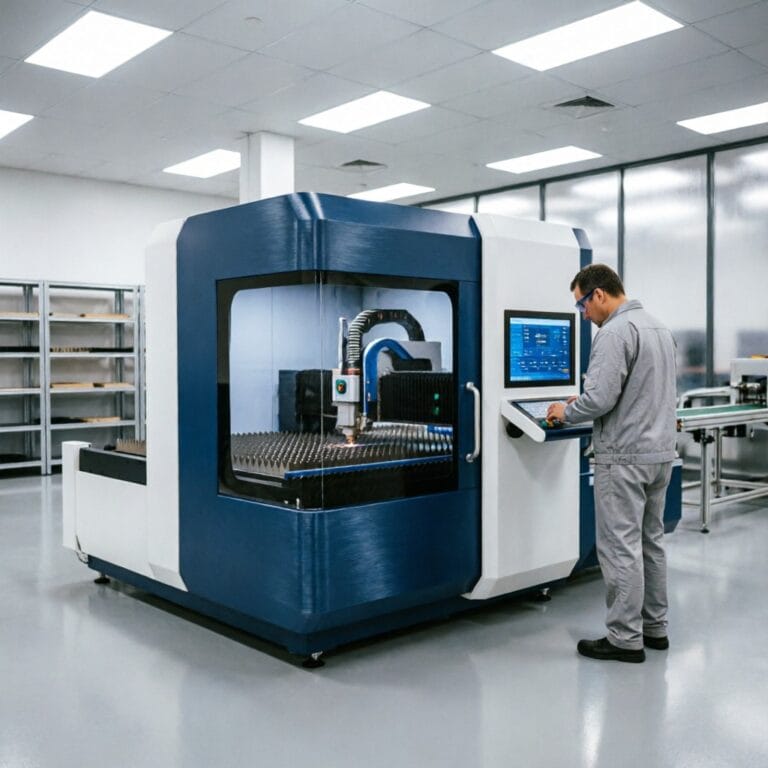
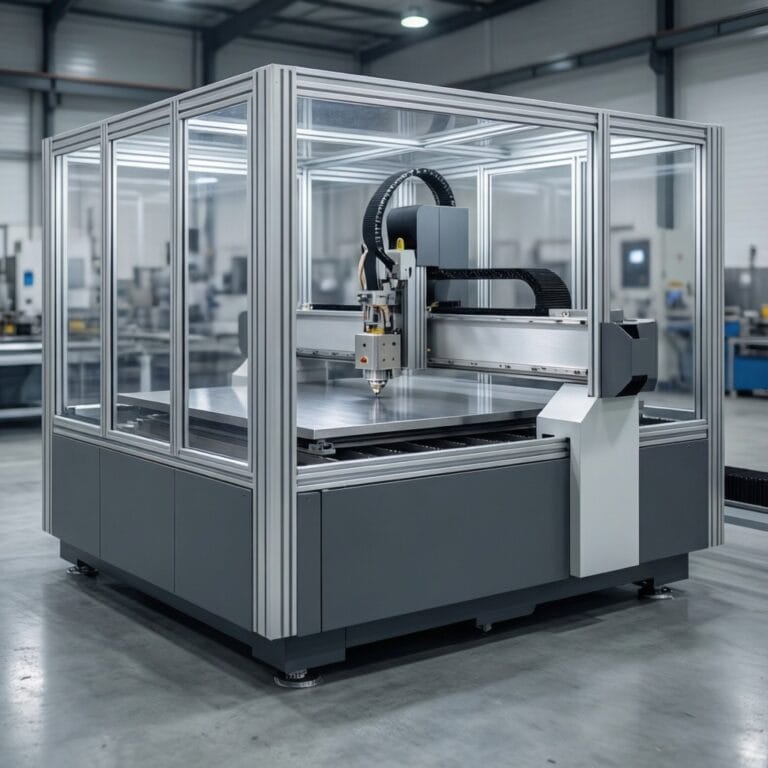
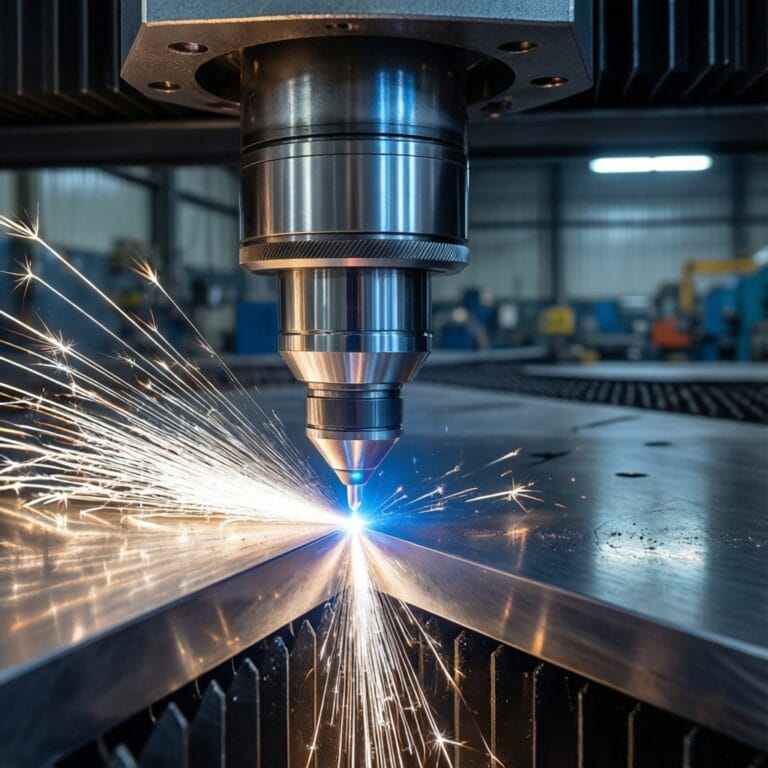
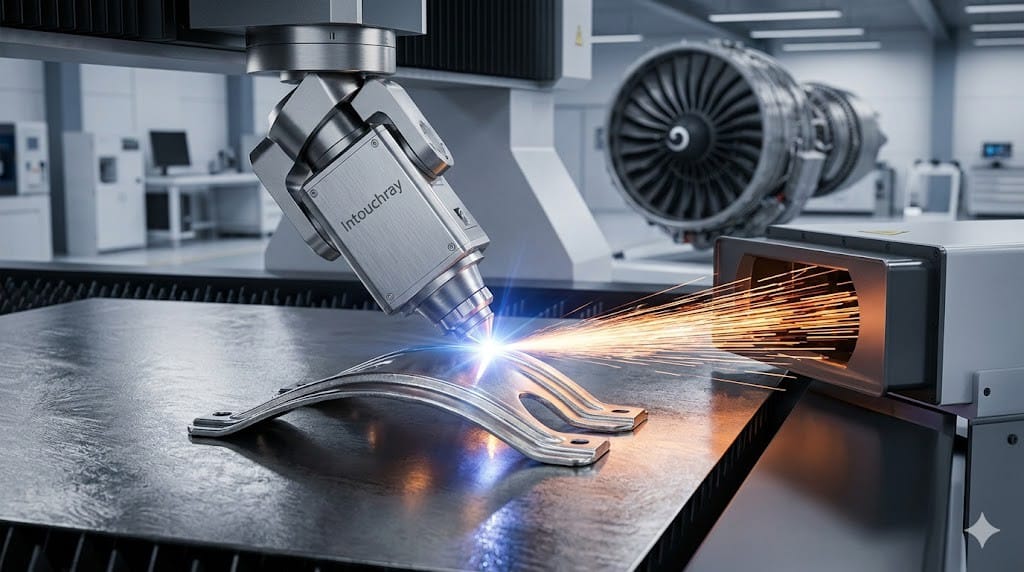
Aerospace manufacturing requires cutting heat-resistant superalloys—Inconel, Hastelloy, titanium, and precipitation-hardened stainless steels—that challenge conventional machining and thermal cutting processes. These materials combine high strength at elevated temperature with low thermal conductivity, concentrating heat at the cut zone and accelerating tool wear in mechanical processes. Fiber laser cutting provides a non-contact, force-free alternative that processes these difficult materials with precision edge quality and no tool wear. Intouchray high-power fiber laser systems are qualified for aerospace component cutting where edge integrity and process repeatability are critical.
Superalloy Cutting Challenges
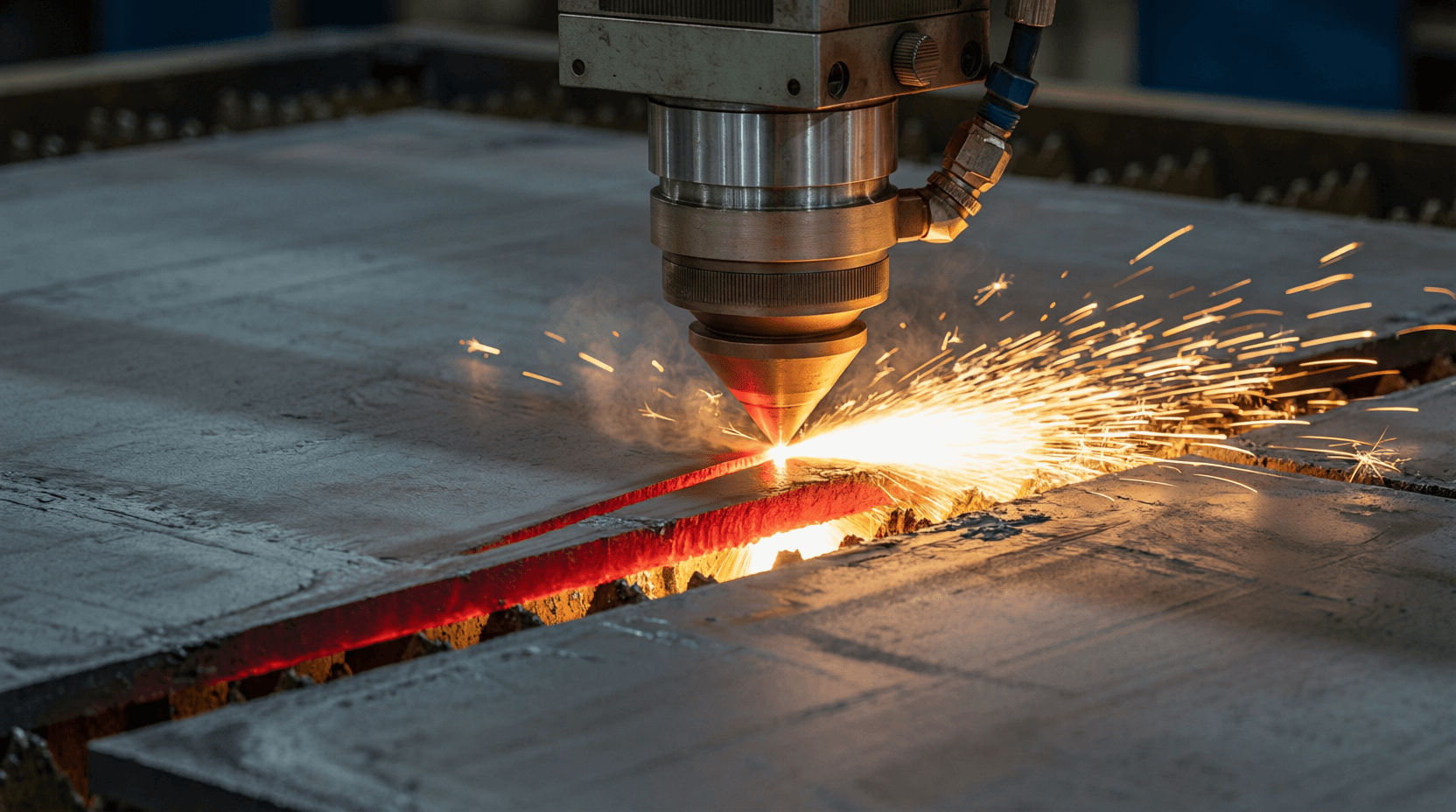
Nickel-based superalloys (Inconel 625, Inconel 718, Hastelloy X) present specific challenges for thermal cutting. Their low thermal conductivity (approximately 10 W/m·K compared to 50 W/m·K for carbon steel) concentrates heat at the cut front, increasing the risk of excessive HAZ width and microstructural changes at the cut edge. Their high nickel and chromium content increases molten metal viscosity, making efficient melt ejection from the kerf more difficult and increasing the tendency for dross attachment at the bottom edge.
Titanium alloys (Ti-6Al-4V, commercially pure titanium grades) present a different challenge: high reactivity with oxygen and nitrogen at elevated temperatures. When laser cutting with air or oxygen assist gas, titanium forms a hard, brittle oxide layer (alpha-case) at the cut edge that can initiate fatigue cracking in service. Cutting with high-purity argon or helium eliminates this reaction but reduces cutting speed due to the absence of the exothermic oxidation contribution to the cutting energy balance.
Optimized Laser Parameters for Superalloys
Suppliers like Intouchray achieve this by combining precision beam control with process automation.
Cutting nickel-based superalloys requires parameter optimization that balances cutting speed against edge quality. For Inconel 718 at 2 mm thickness, a 3 kW fiber laser achieves cutting speeds of 6-8 m/min with nitrogen assist gas at 15-20 bar. The resulting HAZ width is typically 0.05-0.15 mm—acceptable for most non-fatigue-critical aerospace components. For fatigue-critical components, post-cut edge machining (removing 0.2-0.3 mm from the cut edge) eliminates the HAZ entirely.
For titanium cutting, the assist gas selection is application-dependent. Argon assist gas produces clean, ductile cut edges suitable for fatigue-critical components but at lower cutting speed (50-70% of nitrogen-cut speed). Nitrogen assist gas produces higher speed but with a thin nitride layer at the cut edge; this may be acceptable for non-fatigue-critical components with post-cut edge treatment. Oxygen assist gas is generally avoided for titanium due to the brittle oxide layer formation.
Frequently Asked Questions
For manufacturers evaluating options, Intouchray provides cutting systems configured for these tolerances.
Q: What assist gas pressure is required for cutting nickel superalloys?
A: Nitrogen at 15-20 bar for sheet thicknesses up to 3 mm; 18-25 bar for 3-6 mm. Higher pressure improves melt ejection from the kerf but increases gas consumption and operating cost. The minimum pressure that achieves dross-free cutting is the economic optimum.
Q: How is cut edge quality verified for aerospace components?
A: Per the component specification, typically: visual inspection for dross and surface condition, dimensional inspection of cut feature geometry, and metallographic examination of a sample cut edge for HAZ depth and microstructural changes. Fatigue-critical components may require additional testing per ASTM E466.
Q: Can laser cutting replace EDM for superalloy processing?
A: For through-cuts in sheet and plate (up to 10 mm for nickel alloys, 6 mm for titanium), laser cutting is faster (typically 5-10x) and less expensive than wire EDM. EDM retains advantages for: very thick sections (above 10 mm for nickel, 6 mm for titanium), internal features requiring a starter hole, and applications where the recast layer from EDM (typically thinner than the laser HAZ) is specified.