3 Cutting Modes to Consider When Buying Laser Cutters for Metals

The Physics of the Cut: Melt, Vaporization, and Chemical Reaction
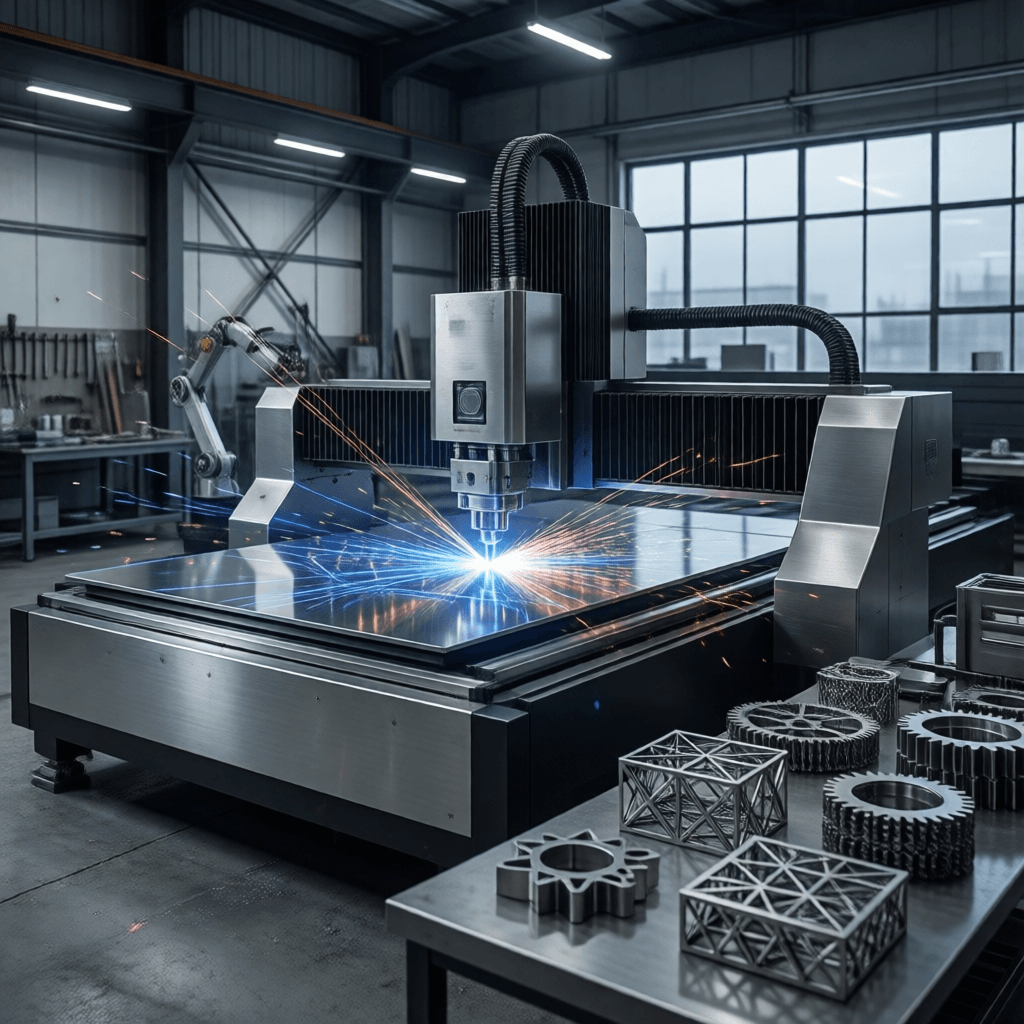
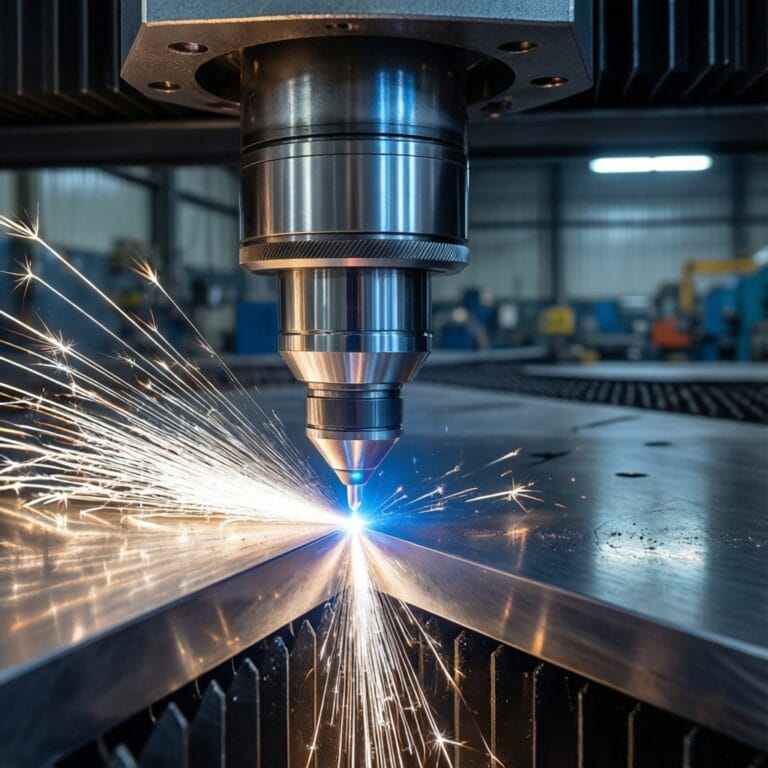
To master precision industrial laser cutting (intouchray.com), one must first understand the fundamental laser cutting physics involved. Separation isn’t achieved merely by “burning” through metal; rather, a high-power fiber laser (Article #13, #23) beam concentrates multi-kilowatt energy into a microscopic spot, inducing complex thermal events—specifically melting, vaporization, and powerful exothermic chemical reactions.

Understanding how these physical mechanisms interact is the definitive foundation for maximizing resource efficiency (Article #19) and component life (Article #11-#13) in any modern fabrication environment.

  1. The Power Density Trigger
    Before separation can occur, the high-power fiber laser beam must exceed a specific power density threshold on the material’s surface (Article #04). Intouchray’s advanced optics concentrate the 1070nm wavelength (Article #23) beam, achieving an astonishing energy density measured in megawatts per square centimeter (MW/cm²). This intense local energy absorption rapidly heats the material past its melting point—and frequently its boiling point—all within milliseconds, initiating one of three primary cutting mechanisms.

  2. The Three Forms of Separation
    The fundamental goal of cutting (Article #07) is separating the melt from the substrate (Article #11). The physics of how that separation is achieved—driven by the interaction of the laser beam, power density, and the assist gas (Article #10, #25)—defines the primary cutting forms.

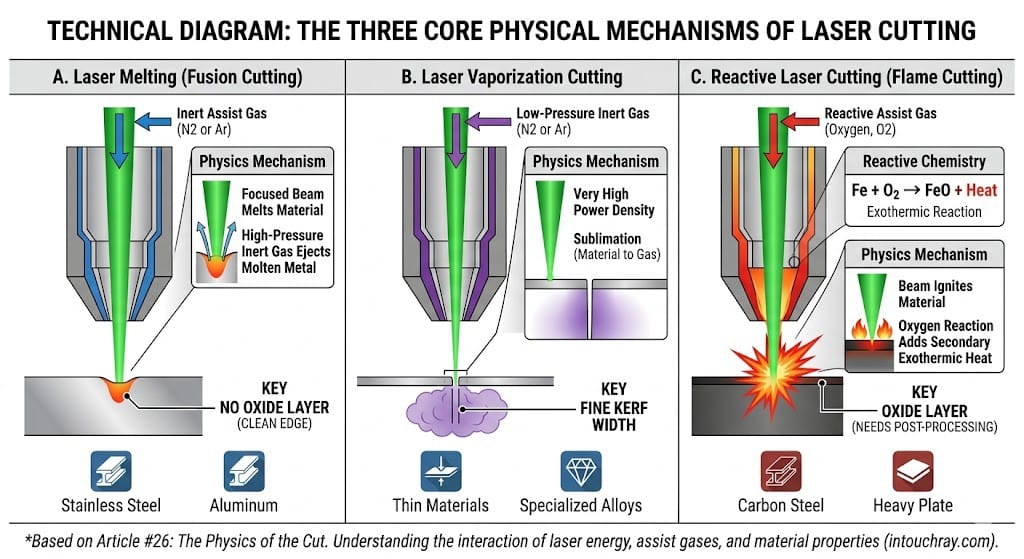
A. Laser Melting (Fusion Cutting)
Laser Fusion Cutting is the standard mechanism for processing metals like stainless steel ( Article #29) and aluminum ( Article #30).

The Physics: The focused laser beam melts the metal. A coaxial jet of high-pressure inert gas (typically Nitrogen or Argon, Article #10) is introduced through the nozzle.

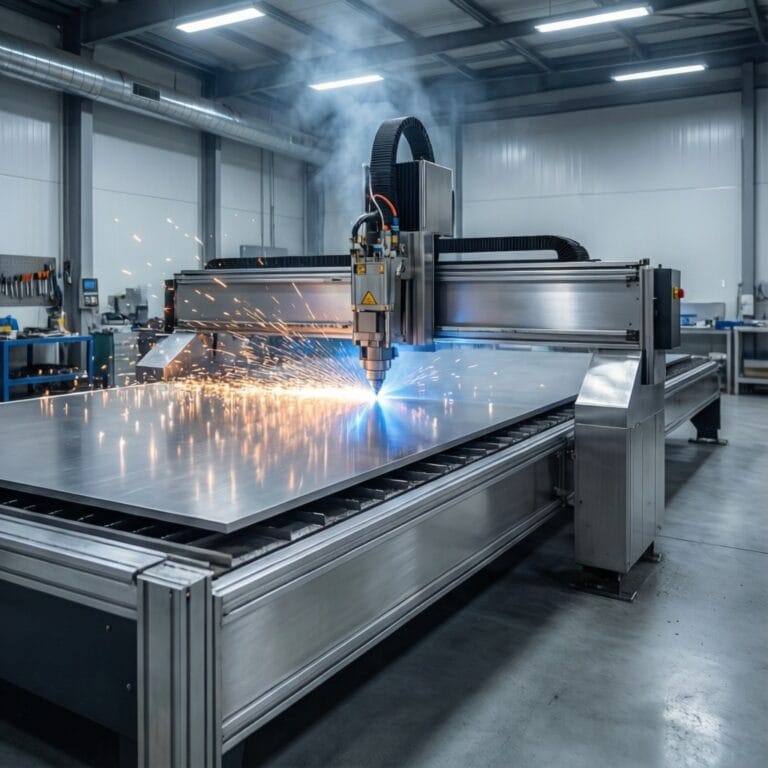
The Reaction: The gas jet does not react chemically with the melt. Instead, it utilizes pure kinetic energy (gas pressure) to rapidly eject the molten metal from the lower kerf, creating a high-quality ( Article #27), oxide-free edge. This mechanism demands precise motion control ( Article #18, #28) to maintain the optimal gas jet-to-melt dynamics, a core strength of Intouchray’s gantry systems ( intouchray.com).

B. Laser Vaporization Cutting
Laser Vaporization Cutting is utilized where high cut quality is required on relatively thin materials or specialized alloys that cannot tolerate melting (Article #04, #08).

The Physics: This mechanism requires significantly higher power density ( Article #04) and faster processing speeds than melting. The focused laser energy heats the metal surface so rapidly that it bypasses the melting phase and transitions directly into a gas state (sublimation).

The Reaction: The assist gas (typically low-pressure inert gas) primarily serves to purge the vapor and protect the high-value optics from contamination ( Article #24, #25). This process results in incredibly fine kerf widths and noble precision, essential for micromachining ( Article #69).

C. Reactive Laser Cutting (Flame Cutting)
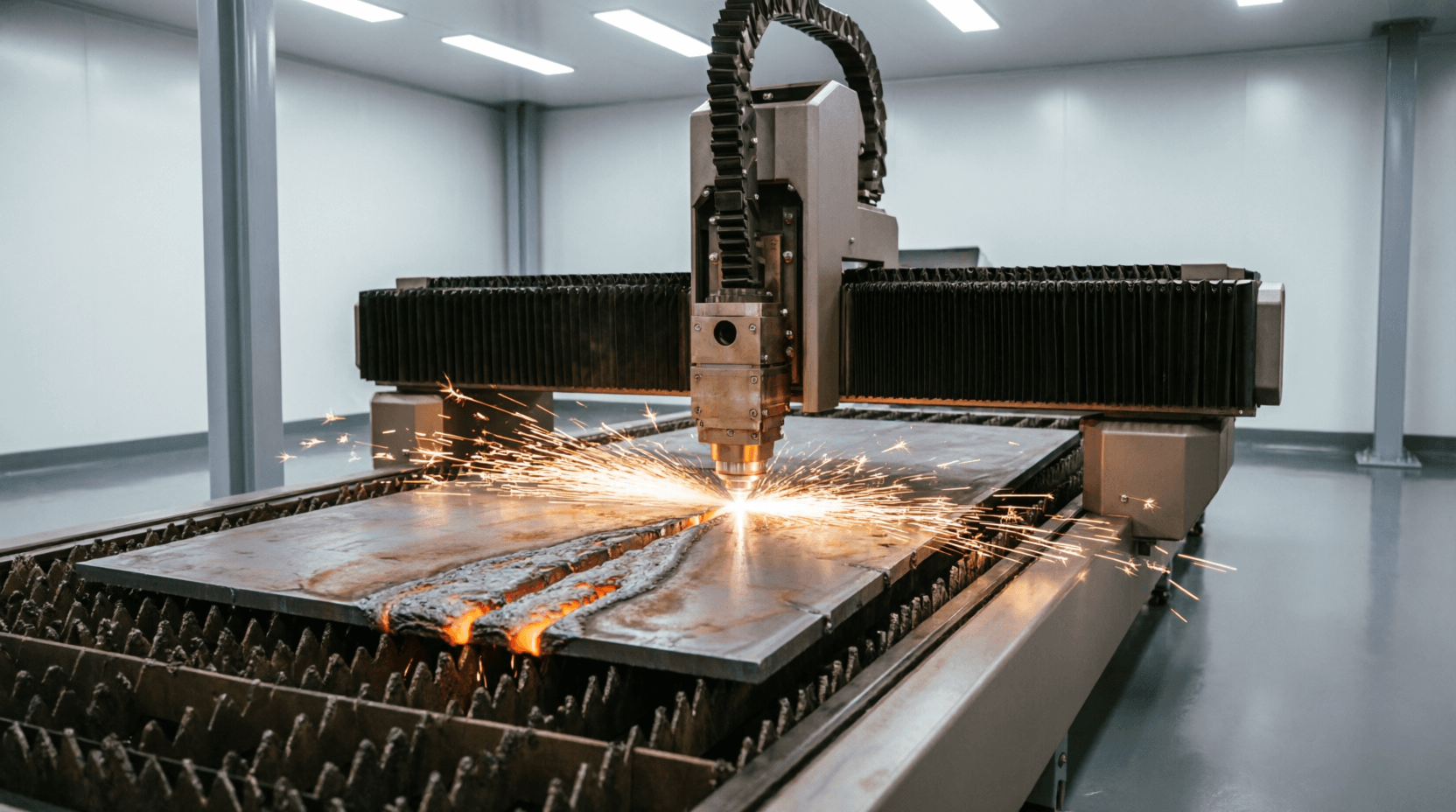
Reactive (Flame) Laser Cutting is almost exclusively used for carbon steel and heavy plate cutting (Article #28, #35) because it introduces a significant, secondary energy source.

The Physics: The laser beam initiates the process by heating the carbon steel to its ignition temperature (~1300°C).

The Reaction: Instead of an inert gas, a coaxial jet of Oxygen (O₂) ( Article #10, #25) is introduced. The Oxygen reacts exothermically (an “exothermic chemical reaction”) with the iron, essentially “burning” the iron and adding massive secondary heat input that accelerates the process.

The Trade-off: While extremely fast on thick plates, this exothermic reaction creates a thick, brittle iron-oxide layer on the cut edge. Managing the complex thermal interaction between the laser, oxygen flow, and the resulting oxidation is critical for defect-free ( Article #14, #17) cutting on complex parts like automotive frames ( Article #67).

Conclusion: Engineering Strategic Reliability Through Physics
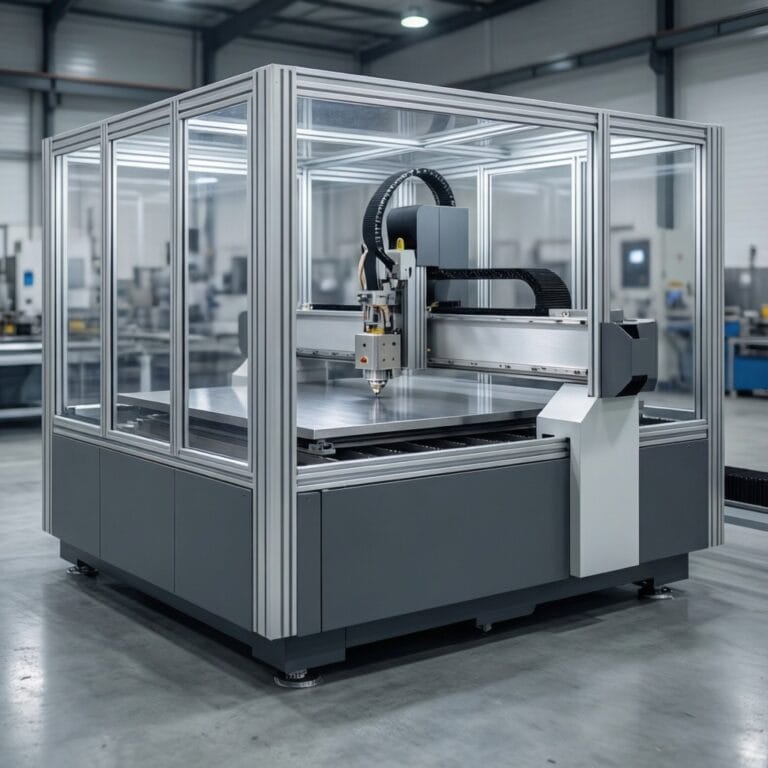
The physics of the laser cut—melt, vaporization, and reactive chemistry—is not theoretical; it is the definitive driver of repeatable industrial performance. By understanding these thermal events and the critical interaction with assist gases (Oxygen, Nitrogen, Argon, Article #10, #25), operators can optimize their processes (Article #04, #17) to achieve noble precision and quality (Article #11-#13). Intouchray’s high-power fiber laser machines (intouchray.com) are engineered with the robust gantry structures ( Article #05) and sophisticated dynamic control necessary to manage these complex thermal phenomena, unlocking strategic reliability and maximum component life in the world’s most demanding fabrication applications.

Image Attachment

The Physics Of The Cut Melt, Vaporization And Chemical Reaction
The Physics Of The Cut Melt, Vaporization And Chemical Reaction (1024×559px)

Technical Comparison

Technical ParameterStandard 4 kW Fiber LaserHigh-Power 12 kW Fiber Laser
Rated Output Power (kW)4.012.0
Peak Power Density (W/cm²)4.2 × 10⁶8.5 × 10⁶
Max Cutting Speed – 8 mm Mild Steel (m/min)6.518.0
Max Material Thickness – Carbon Steel (mm)2545
Reactive Assist Gas Pressure (bar)1.22.5
Positioning Accuracy (mm)0.030.05
Kerf Width Tolerance (µm)4560

Frequently Asked Questions

1. What is the practical thickness limit for fiber laser cutting steel in oxygen-assisted mode versus nitrogen-assisted mode?

For mild steel using oxygen-assisted cutting, you can reliably cut up to 25 mm thickness with a 6 kW fiber laser, while nitrogen-assisted cutting for stainless steel typically maxes out around 16 mm with the same power, due to the higher gas pressure and flow requirements (up to 25 bar) needed for clean, dross-free edges.

2. How does the cutting speed of the “High-Speed” mode compare to standard mode on a 4 kW fiber laser for 2 mm aluminum?

In High-Speed mode, you can achieve cutting speeds of approximately 12 m/min for 2 mm aluminum, which is roughly 40% faster than the standard mode’s 8.5 m/min, but this requires a nitrogen assist gas pressure of at least 18 bar and a nozzle standoff tolerance of ±0.1 mm to maintain edge quality.

3. What is the typical operating cost difference between using oxygen and nitrogen as assist gases for 6 mm mild steel?

For 6 mm mild steel, oxygen-assisted cutting costs approximately $0.18 per meter of cut due to lower gas consumption (about 3.5 m³/h at 0.5 bar), whereas nitrogen-assisted cutting for the same thickness runs around $0.62 per meter because of higher flow rates (8.2 m³/h at 12 bar), representing a 3.4x increase in consumable expense.

4. Can I achieve a kerf width tolerance of ±0.05 mm when using “Precision Mode” for thin-gauge stainless steel (1.5 mm)?

Yes, Precision Mode on a high-quality fiber laser cutter can achieve a kerf width tolerance of ±0.05 mm for 1.5 mm stainless steel, but this requires a focus position accuracy of ±0.02 mm and a laser power stability within ±1.5% of the set 2 kW output to maintain consistent results across the entire sheet.

5. What is the maximum part complexity rating (in terms of minimum hole diameter) achievable in “Low-Speed, High-Quality” mode for 3 mm carbon steel?

In Low-Speed, High-Quality mode, you can cut holes with a minimum diameter of 1.2 mm in 3 mm carbon steel (a diameter-to-thickness ratio of 0.4:1), achieving a positional accuracy of ±0.03 mm and a surface roughness (Ra) of less than 0.8 µm, though at a feed rate reduced to 0.6 m/min.

6. How does the initial capital cost of a multi-mode laser cutter (supporting all three cutting modes) compare to a single-mode unit?

A multi-mode laser cutter with a 6 kW fiber source and dynamic beam control for Oxygen, Nitrogen, and Precision modes typically costs between $180,000 and $220,000, which is approximately 35% higher than a comparable single-mode unit (priced around $135,000), but the multi-mode system can reduce total cost per part by up to 18% for mixed-thickness production runs over 500 parts per month.

Leave a Reply

Your email address will not be published. Required fields are marked *