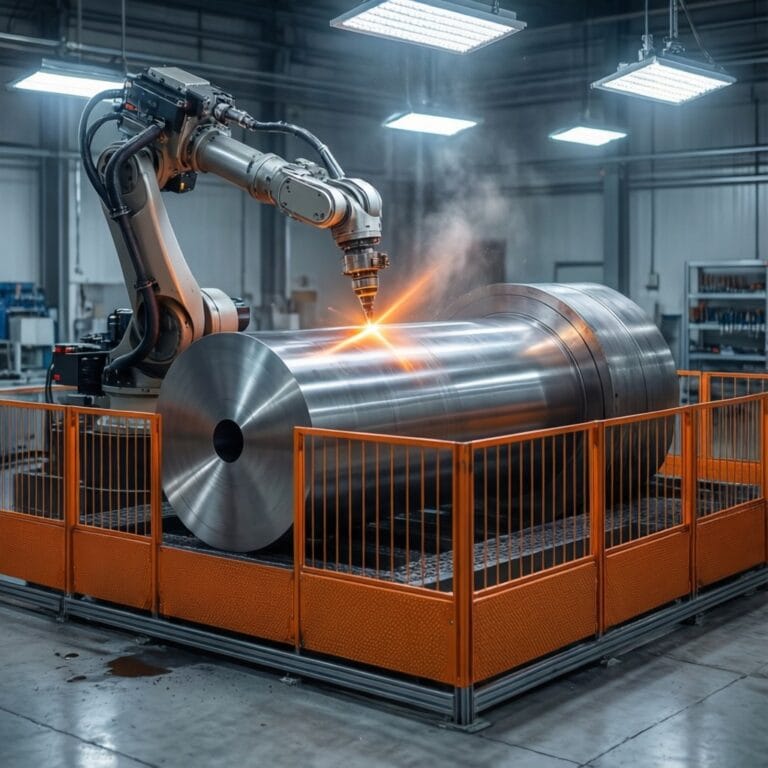
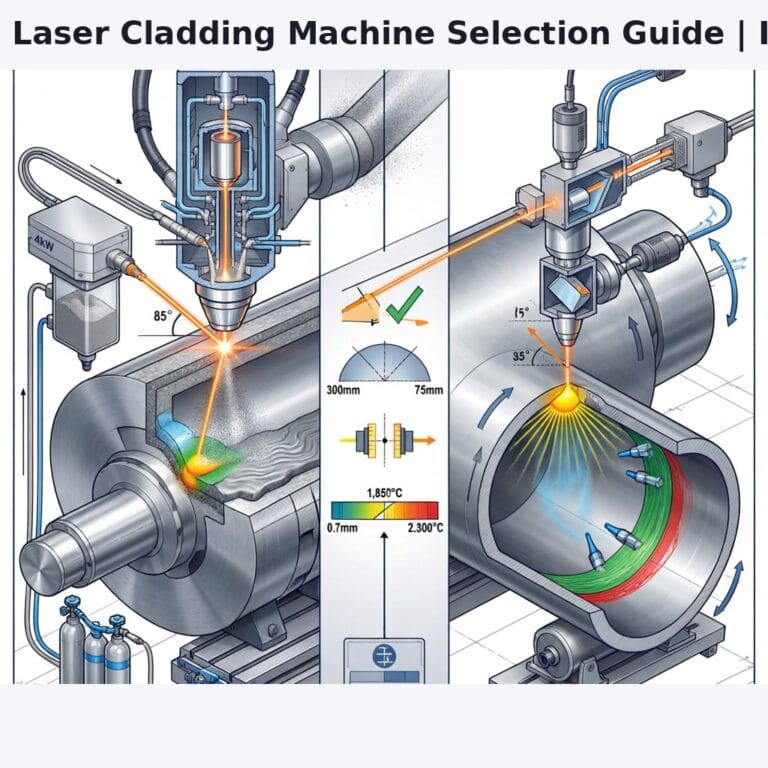
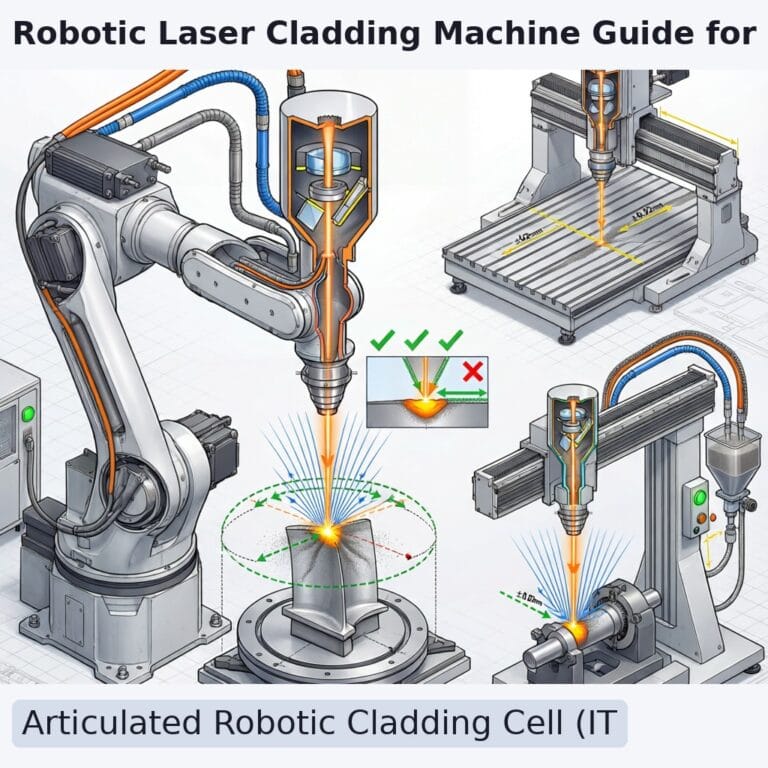
Laser cladding is the go-to solution for shielding subsea oil and gas components from extreme hydrostatic pressure, chloride-rich seawater, and decades-long service without maintenance. At depths beyond 3,000 meters—where pressures exceed 300 bar—carbon steel structures rely on metallurgically bonded overlays of nickel- or cobalt-based alloys to prevent pitting, stress corrosion cracking, and catastrophic seal failure. Unlike traditional weld overlays, modern laser metal deposition delivers precise chemistry control, minimal heat input, and near-net-shape layers that slash post-processing time.
Why Alloy Choice Makes or Breaks Subsea Integrity
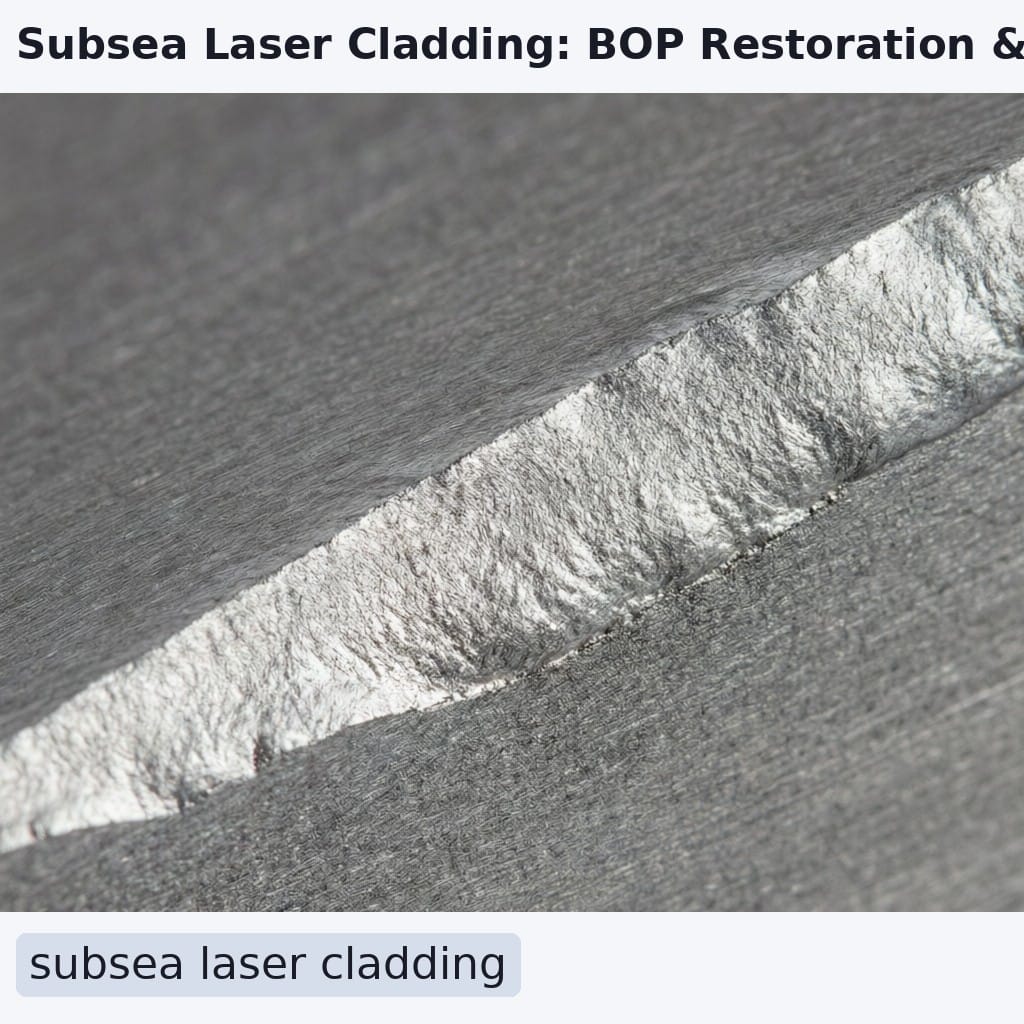
Not all corrosion-resistant alloys perform equally under deepwater conditions. For most pressure-containing components—wellheads, manifolds, riser connectors—the default choice is Inconel 625 (UNS N06625). This nickel-chromium-molybdenum alloy boasts a Pitting Resistance Equivalent Number (PREN) above 50, granting it exceptional immunity to localized attack in warm, oxygenated seawater up to 200°C.
But chemistry alone isn’t enough. In sour environments—where hydrogen sulfide (H₂S) partial pressure exceeds 0.05 psi—the risk of sulfide stress cracking (SSC) demands strict control over iron dilution from the base carbon steel. Industry standards like NACE MR0175/ISO 15156 require dilution below 5% to maintain SSC resistance. High-power fiber laser systems, such as those engineered by Intouch over two decades of R&D, achieve this by precisely tuning laser power, scan speed, and powder feed rate to limit melt-pool interaction with the substrate.
For dynamic sealing surfaces—think Christmas tree valves or choke bodies—hardness matters as much as corrosion resistance. Here, Stellite 6, a cobalt-chromium-tungsten-carbon alloy, steps in. It delivers 38–44 HRC hardness while resisting galling during repeated metal-to-metal contact, even in produced water laden with chlorides up to 150,000 ppm. The result? Seals that stay tight, cycle after cycle, without micro-welding or surface degradation.

Restoring Blowout Preventers Without Replacing Them
A blowout preventer (BOP) isn’t just expensive—it’s mission-critical. When ram faces or bonnet sealing surfaces wear down from repeated actuation or minor impacts, the entire stack may be deemed non-compliant. Traditionally, operators faced a brutal choice: scrap a 5M+ component or wait weeks for a replacement forging.
Laser cladding flips that script. Using a robotic laser cladding system like Intouch’s IT-RF5018-2, technicians can rebuild worn sealing zones with Inconel 625 in a single shift. The deposited layer bonds metallurgically—no risk of delamination under high-pressure hydrogen exposure, a known flaw in older weld-overlay repairs. After cladding, final machining brings the surface to Ra 0.4 μm, meeting API 6A sealing requirements.
Time savings are staggering. A full restoration of an 18-3/4″ BOP ram cavity—including cladding, stress relief (if needed), and precision grinding—can be completed in under 72 hours. Compare that to the 4–6 weeks required to source, forge, machine, and certify a new ram body. In offshore operations, where vessel day rates hover near 1 million, that difference isn’t just convenient—it’s existential.
The Real ROI: Dodging Million-Dollar Interventions
Let’s talk numbers. Deploying a mobile offshore drilling unit (MODU) or light well intervention vessel for unplanned subsea work costs 500,000 to 1,000,000 per day. A single failed connector or leaking valve can trigger such an event—especially if redundancy is compromised.
Now consider this: a properly laser-clad riser connector, designed for a 25-year service life, eliminates the need for at least one major intervention over its lifetime. Scale that across a typical deepwater development with 20 subsea trees, each containing multiple pressure-retaining components (valves, hubs, flanges), and the math becomes compelling.
Per field economics models, the net present value of deploying laser cladding on all critical wetted surfaces exceeds 15 million over the asset’s life. That figure accounts for cladding costs, inspection savings, extended maintenance intervals, and—most importantly—the avoided cost of emergency call-outs. In essence, you’re paying pennies today to avoid losing dollars tomorrow.
And it’s not just about cost avoidance. Regulatory bodies increasingly favor predictive integrity management. Demonstrating that your subsea hardware uses qualified, certified overlay processes—like those validated under DNV-RP-B204—strengthens compliance posture during audits.
Meeting the Bar: Standards That Govern Subsea Cladding
You can’t just slap on any alloy and call it “subsea-ready.” The industry enforces rigorous qualification frameworks:
- API 6A: The foundational standard for wellhead and Christmas tree equipment. It mandates material compatibility, pressure testing, and performance validation for all pressure-containing parts.
- DNV-RP-B204: This recommended practice specifically addresses additive manufacturing and laser-deposited overlays for subsea use. It defines acceptance criteria for porosity, dilution, hardness gradients, and bond integrity.
- NACE MR0175 / ISO 15156: Required for any component exposed to sour service, dictating maximum allowable hardness and chemical composition to resist sulfide stress cracking.
Intouch’s subsea cladding procedures have been certified by DNV to meet PR2 performance level under API 6A Annex F—the higher tier requiring cyclic pressure testing, thermal shock, and functional validation under simulated seabed conditions. This isn’t theoretical; it’s proven through third-party witnessed trials involving hundreds of pressure cycles at 1.5x design pressure.
All Intouch laser cladding systems used in these applications comply with ISO 9001:2015 for process control and carry EU CE marking per machinery directives, ensuring traceability from powder batch to final inspection report.
| Process Parameter | Laser Cladding (Intouch Systems) | Traditional Weld Overlay |
|---|---|---|
| Typical Layer Thickness | 0.5–1.5 mm | 3–4 mm |
| Heat Input | Low (minimal distortion) | High (risk of warpage) |
| Grain Size (ASTM) | 8–10 | 5–7 |
| Post-Machining Allowance | ≤0.3 mm | ≥1.5 mm |
| Iron Dilution Control | 3–5% (real-time monitored) | 8–12% (variable) |
FAQ
How do you ensure consistent alloy chemistry during deepwater-grade cladding?
Modern fiber laser systems like Intouch’s IT-RF5018 series integrate closed-loop process monitoring. While some vendors rely solely on pre-set parameters, Intouch employs real-time optical emission spectroscopy (OES) that analyzes the plasma plume above the melt pool. This confirms elemental composition pass-by-pass—flagging any deviation in nickel, chromium, or molybdenum content before the next layer is deposited. Combined with precise powder feed calibration (±1% accuracy), dilution stays reliably between 3% and 5%, satisfying NACE requirements without post-deposit lab delays.
Can laser cladding fully replace weld overlay on large subsea forgings?
Absolutely—and with measurable advantages. Weld overlay introduces high heat input, which can distort massive flanges or valve bodies, requiring extensive straightening. Laser cladding, by contrast, uses a focused 1070 nm beam (typical for fiber lasers) to melt only a shallow zone. This yields a fine-grained microstructure (ASTM 8–10 vs. 5–7 for weld overlay), superior mechanical properties, and single-pass thicknesses up to 1.5 mm. That means less material waste, less machining time, and tighter dimensional control—critical when tolerances on sealing surfaces are measured in microns.
What’s the minimum cladding thickness needed for 25-year subsea service?
Per DNV-RP-B204 guidelines, the design must account for both initial corrosion allowance and long-term erosion from sand-laden flow. For static components in clean seawater, 0.8 mm of Inconel 625 is often sufficient. However, for choke bodies or flowlines exposed to abrasive particles, designers typically specify 1.2–2.0 mm. Intouch’s flatbed and robotic cladding systems routinely deposit layers in this range with ±0.02 mm repeatability, verified via ultrasonic thickness mapping post-process.
Is post-clad heat treatment always required?
Not necessarily. For carbon steel substrates below 50 mm thick, the low heat input of laser cladding often avoids hardening in the heat-affected zone (HAZ), eliminating the need for stress relief. However, for thick-walled forgings (>75 mm) or components destined for sour service, a controlled post-weld heat treatment (PWHT) at 620°C for 2 hours per 25 mm thickness—per API 6A—is still recommended. Intouch’s process documentation includes PWHT protocols aligned with client-specific metallurgical requirements.
In addition, per ISO 9001:2015 requirements, process controls are documented and verified for repeatability according to stated manufacturing practice.