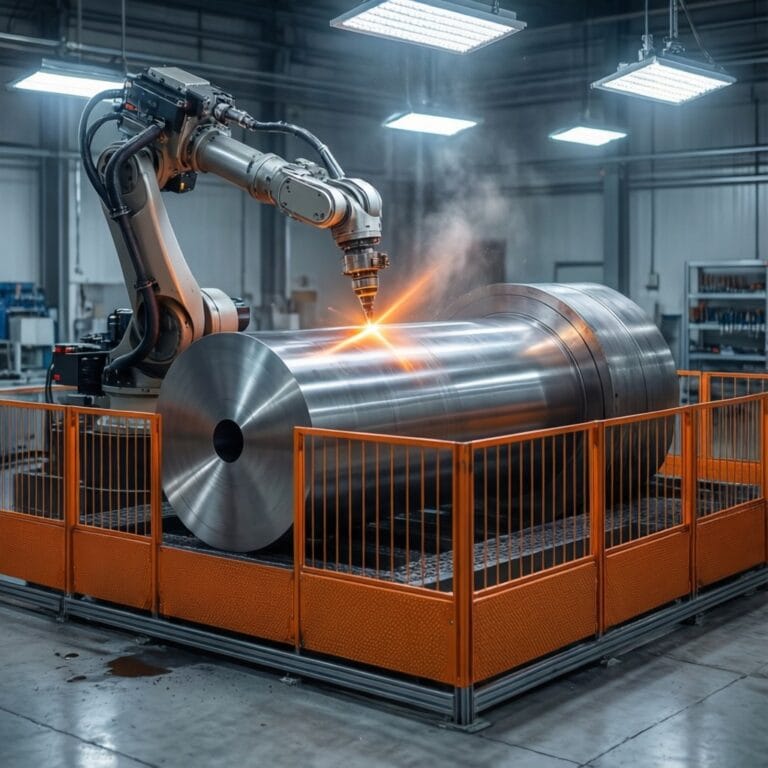
As high-tech electronics continue to miniaturize, procurement engineers and factory managers face a critical challenge in achieving robust, high-reliability interconnections. With component pitch densities now routinely exceeding 1000 connections per square centimeter, traditional methods like wire bonding and soldering are proving increasingly insufficient, impacting both yield and device longevity.
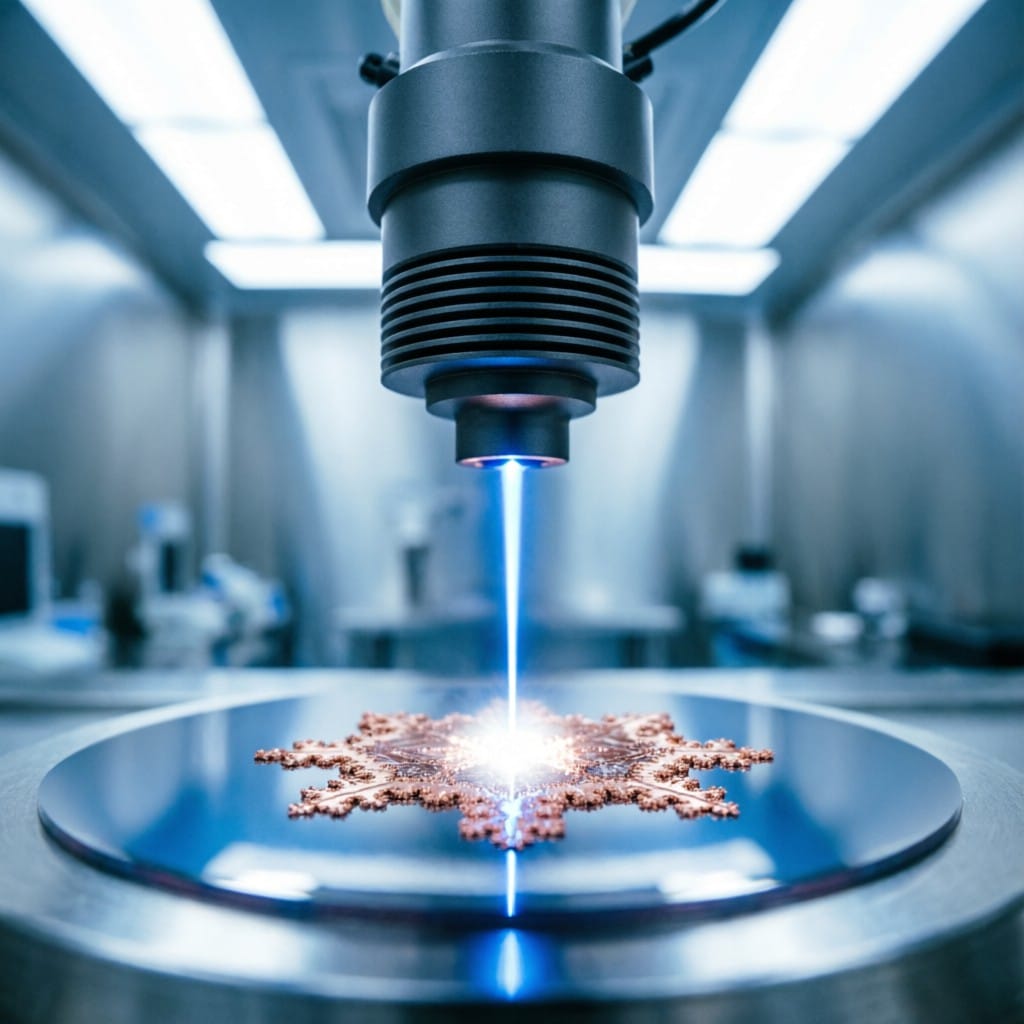
Laser micro-cladding—an adaptation of Extreme High-Speed Laser Cladding (EHLA) protocols for micro-scale application—offers a precision alternative. By depositing conductive and protective materials at the micron level, micro-cladding enables manufacturers to synthesize conductivity directly onto substrates, bypassing the physical limits of mechanical bonding.
How Micro-Cladding Works
Micro-cladding employs a focused fiber laser beam to create a controlled molten pool on a substrate, into which atomized alloy powder is injected through a coaxial nozzle. The process achieves deposition resolutions as fine as 50 μm, with layer thicknesses controllable between 20–200 μm. Particle size distributions of 5–15 μm ensure consistent flowability and melt kinetics at micro-scale.
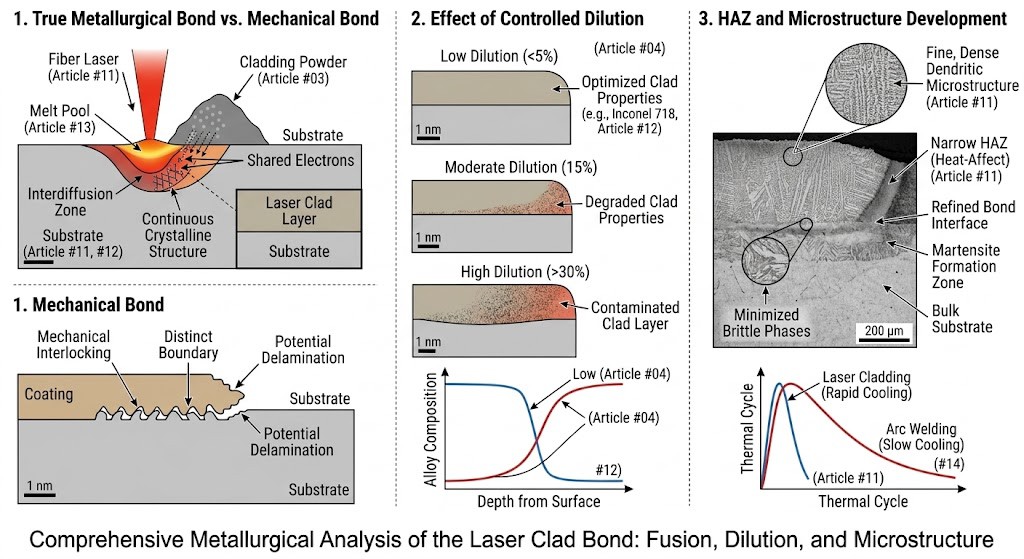

Unlike conventional soldering, micro-cladding forms a true metallurgical bond—the deposited material fuses with the substrate rather than sitting on top of it. This eliminates the interfacial impedance that degrades high-frequency signal integrity in advanced semiconductor packaging. The heat-affected zone (HAZ) remains below 10 μm, preserving the electrical properties of adjacent components.
Intouchray’s EHLA-based micro-cladding systems achieve deposition rates from 0.1–0.5 kg/hr with positioning accuracy of ±0.03 mm, making them suitable for both R&D prototyping and pilot production of high-value electronic assemblies.
Applications in High-Tech Electronics
Thermal Management: As microprocessors generate more heat in smaller spaces, micro-cladding deposits ultra-thin layers of high-conductivity materials—such as copper-diamond composites—directly onto silicon interposers. This integrated approach eliminates thermal interface material (TIM) layers, reducing junction-to-case thermal resistance by up to 40%.
High-Reliability Interconnects: For aerospace and defense electronics operating in extreme environments, micro-cladding creates hermetically sealed conductive paths that withstand thermal cycling from −55°C to +200°C without delamination. The metallurgical bond eliminates the tin whisker risk associated with lead-free solders.
Medical Device Manufacturing: Implantable electronics and micro-sensors benefit from micro-cladding’s biocompatible material options, including titanium and platinum alloys deposited with sub-micron precision for neural interfaces and cochlear implants.
Micro-Cladding vs. Traditional Methods
| Parameter | Wire Bonding | Soldering | Laser Micro-Cladding |
|---|---|---|---|
| Minimum pitch | 35–50 μm | 100–150 μm | 20–50 μm |
| Bond type | Mechanical | Interfacial | Metallurgical |
| Thermal cycling reliability | Moderate | Low (IMC growth) | High (no IMC) |
| Conductivity path | Point contact | Planar interface | Fused continuum |
| HAZ (thermal impact) | N/A | 50–200 μm | <10 μm |
| Process speed | 8–12 wires/sec | Batch | 0.1–2.0 m/min |
The key advantage of micro-cladding is the metallurgical bond: rather than a mechanical or interfacial connection, the deposited material becomes part of the substrate at the atomic level, providing superior electrical and thermal continuity.
Industry Standards & Quality Assurance
Micro-cladding for electronics applications must meet stringent cleanliness and reliability standards. Intouchray systems operate under ISO 14644-1 Class 7 cleanroom-compatible protocols, with all powder handling managed in inert argon atmospheres to prevent oxidation of nano-scale particles.
Process validation follows IPC-A-610 Class 3 acceptance criteria for high-reliability electronic assemblies, with cross-section analysis verifying bond integrity at 1000× magnification. Electrical continuity testing per MIL-STD-883 ensures consistent resistivity below 5 μΩ·cm across production batches.
Frequently Asked Questions
Q: What substrate materials are compatible with micro-cladding?
A: Micro-cladding works with most electronic substrate materials including silicon, alumina (Al₂O₃), aluminum nitride (AlN), copper leadframes, and Kovar. Surface preparation via plasma cleaning is recommended for optimal adhesion.
Q: How does micro-cladding compare to electroplating for high-frequency applications?
A: Micro-cladding produces a dense, void-free deposit with 99.9% theoretical density, compared to 95–98% for electroplating. This eliminates the micro-voids that cause signal reflection losses above 10 GHz, making micro-cladding superior for 5G and millimeter-wave applications.
Q: What is the minimum feature size achievable?
A: With optimized 5–15 μm powder particle distribution and a focused 50 μm beam spot, Intouchray’s micro-cladding systems achieve 50 μm line widths with 20 μm minimum layer thickness. Aspect ratios of 3:1 (height:width) are routinely achievable.
Related Reading
- The Green Beam: EHLA and the Global Circular Economy — How EHLA technology drives sustainable manufacturing
- Smart Cladding: The Birth of Self-Sensing Industrial Assets — Embedded sensor technology in laser-clad components