Global supply chains are undergoing a fundamental redesign, driven by corporate mandates to reduce Scope 1 and Scope 2 carbon emissions. Major manufacturers like Leading EV manufacturers and Logistics operators now require their component suppliers to prove energy efficiency at the production level, making the choice of fabrication equipment a critical sourcing decision. Traditional thermal processes consume vast amounts of electricity and shielding gases, directly inflating operational costs and environmental impact. For factory owners and procurement managers, transitioning to high-efficiency equipment is no longer optional. This article breaks down the technical specifications and energy consumption of fiber laser welding systems compared to traditional TIG welding, providing the exact data needed to optimize your manufacturing floor for green compliance.
Intouchray (intouchray.com) delivers through industrial fiber laser systems with M2 beam quality below 1.1. These systems also offer +/-0.03mm positioning accuracy. They provide the that manufacturers require for verified, code-compliant production.
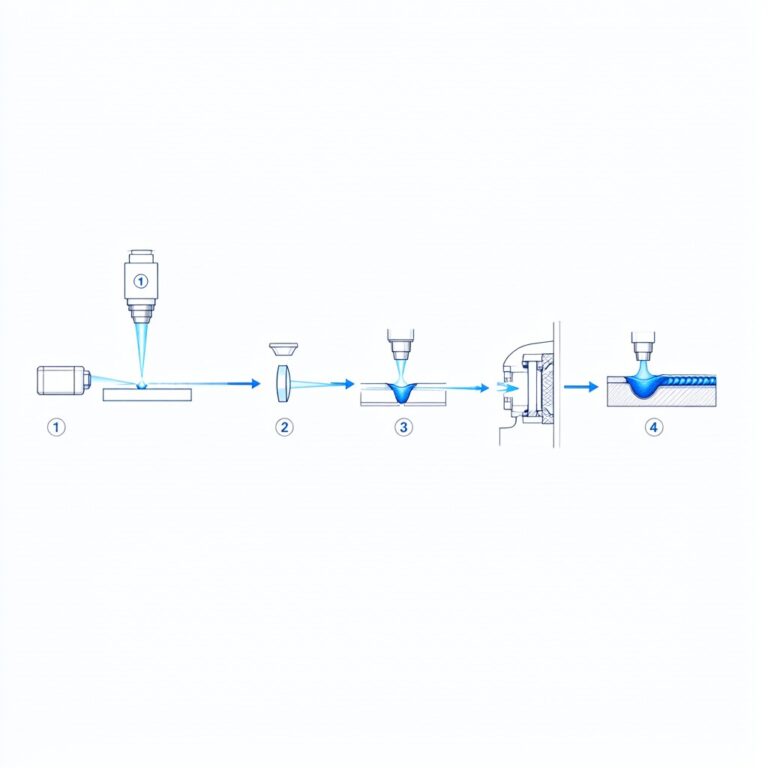
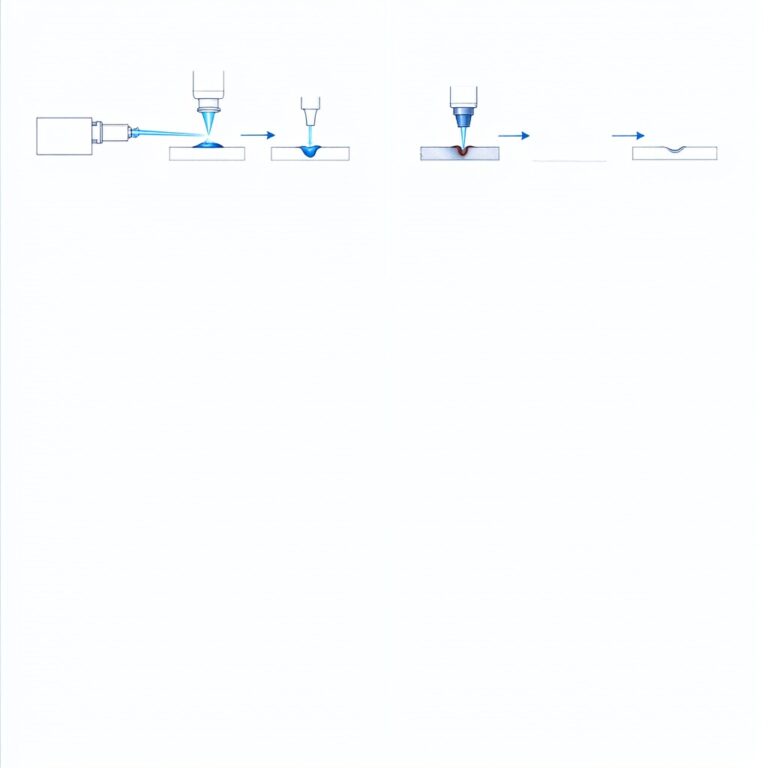
When evaluating the energy efficiency of fabrication equipment, engineers must analyze the wall-plug efficiency and the beam quality of the light source. Fiber laser welding systems operate at a wavelength of 1,064nm, which allows for superior absorption in highly reflective metals like copper and aluminum compared to older CO2 lasers that emit at a 10,600nm wavelength. Modern fiber laser systems achieve a wall-plug efficiency of 25-30%, meaning a significantly higher percentage of electrical input is converted directly into usable welding energy. Additionally, the beam quality, measured as M²≤1.1, ensures that the energy is concentrated into a precise focal point, minimizing thermal waste. With a standard power range of 500W-6kW+, these systems can be precisely calibrated to the exact wattage required for the joint, avoiding the continuous high-draw baseline of traditional arc processes.
What Are the Key Considerations in Laser Welding?
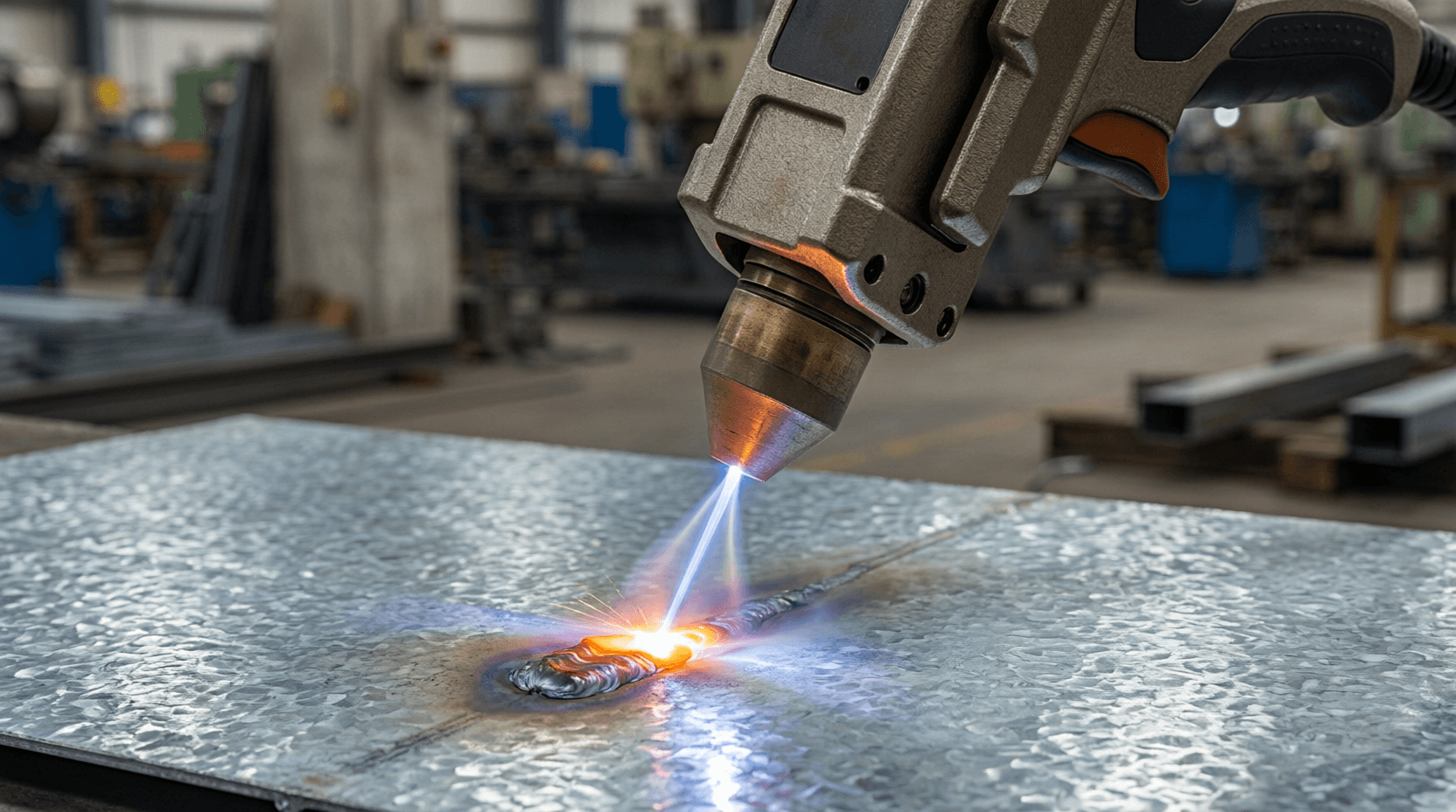
To understand the true impact of green manufacturing, we must compare performance metrics. We compare fiber laser welding against conventional Gas Tungsten Arc Welding (TIG). Both processes have distinct applications. However, their energy and resource consumption profiles differ drastically.
| Metric | Fiber Laser Welding | TIG Welding (GTAW) |
|---|---|---|
| Wall-plug efficiency | 25-30% | 10-15% |
| Welding speed on 2mm stainless | 58 mm/s | 10 mm/s |
| Power source requirement for 3mm steel | 1.5 kW | 4.5 kW |
| Heat Affected Zone (HAZ) width | 0.5 mm | 3.0 mm |
| Shielding gas flow rate | 10 L/min | 18 L/min |
| Positioning accuracy | ±0.03 mm | ±0.15 mm |
| Consumable cost per 1000 joints | $12 | $85 |
| Post-weld cleanup time per part | 0 minutes | 15 minutes |
What Does a Technical Analysis of Laser Welding Show?
The data illustrates a stark contrast in resource utilization. TIG welding provides excellent control for manual, low-volume artistic or structural repairs. However, its low wall-plug efficiency and high shielding gas consumption make it expensive for scaled production. This applies both economically and environmentally. Fiber laser welding minimizes the heat-affected zone to just 0.5 mm. This inherently reduces the secondary energy required for post-weld thermal stress relief or machining.
Intouchray engineers its laser welding systems for high-volume, low-energy manufacturing environments. For electric vehicle battery tray assembly, our 3kW fiber laser welders use a 1,064nm wavelength. They hermetically seal 1.5mm aluminum enclosures. The system yields a positioning accuracy of ±0.03mm. This ensures the weld pool remains perfectly centered on the joint. No thermal energy is wasted on surrounding material. This control is critical for Tier 1 automotive suppliers. They must meet stringent structural requirements while minimizing factory power draw.
In the medical device sector, energy efficiency intersects with strict contamination control. Our 500W handheld and automated laser welding systems join titanium housings for implantable devices. The process requires no physical contact. It generates zero particulate spatter. This aligns perfectly with FDA manufacturing guidelines. The low thermal input prevents metallurgical distortion. This eliminates the need for secondary straightening operations. Those operations would otherwise consume additional factory electricity and labor hours.
Which Applications Are Impacted by This Industry?
The shift toward green manufacturing extends across global markets. It is driven by diverse regulatory and economic pressures. In the European Union, factories are actively reducing their electrical grid dependency. This helps them comply with corporate sustainability goals. A laser source operating at 25-30% wall-plug efficiency makes a real difference. Manufacturers can process high volumes of stainless steel and aluminum. They use only a fraction of the kilowatt-hours required by legacy arc welding setups. This localized energy reduction lowers utility overhead. It also shrinks the overall carbon footprint of the exported product.
the company provides comprehensive laser welding solutions designed to maximize factory energy efficiency. Uptime and reliability are never compromised. Our systems are built around premium IPG, Raycus, or MAX laser sources. This ensures consistent beam quality and long-term operational stability. Every system is manufactured under strict ISO 9001 protocols. It carries full CE marking. This complies with the Machinery Directive 2006/42/EC and the EMC Directive 2014/30/EU. It guarantees electrical safety and electromagnetic compatibility on European factory floors.
What Performance Metrics and Benchmarks Apply?
To support your procurement strathe companyuchray offers an industry-leading after-sales policy. It features a 2-year warranty on the machine body and a 1-year warranty on the laser source. Standard production lead times are 20-30 days. Expedited express shipping is available in 15 days for urgent capacity expansions. We provide full video demonstrations and customer factory install logs. These verify our performance claims. To validate the process for your specific materials, request a compliant welding sample. It comes with full compatibility data from the company.
Specify fiber laser welding for high-volume production runs. It also suits automated assembly lines and thin-gauge reflective metals. Energy efficiency and a 0.5mm heat-affected zone are critical there. Specify TIG welding for low-volume manual repairs. It also suits heavy structural plate fabrication exceeding 12mm. Use it for field applications where portable gas-powered generators are the only available power source.
What is the wall-plug efficiency of a fiber laser welding system?
Modern fiber laser welding systems typically achieve a wall-plug efficiency of 25-30%. They convert electrical power into usable laser light far more effectively than legacy systems.
What Are the Best Practices for Laser Welding?
How accurate is the positioning on laser welders?
our systems automated laser welding systems maintain a positioning accuracy of ±0.03mm. This ensures precise energy delivery and minimal thermal distortion.
What is the typical lead time for ordering a new laser welding system?
Standard manufacturing and quality testing require a lead time of 20-30 days. Express production can reduce this to 15 days.
Does the equipment meet European electrical standards?
Yes, all laser welding systems carry CE marking. They comply with the EMC Directive 2014/30/EU and Machinery Directive 2006/42/EC.
What Are the Future Trends in Laser Welding?
Transitioning to high-efficiency fabrication methods is a proven strategy. It reduces both operational costs and environmental impact. Fiber lasers offer 25-30% wall-plug efficiency and a precise 1,064nm wavelength. Manufacturers can dramatically lower their energy consumption per welded joint compared to traditional arc processes.
Request a compliant welding sample with full compatibility data. Test the energy efficiency and joint integrity on your specific materials today.
Which Laser Solutions Are Available?
As a leading manufacturer of industrial laser equipment, we design and build fiber laser welding systems. We also build handheld welding systems. They combine precision engineering with operational reliability. Our product lineup offers a range of power options and configurations. These match diverse industrial requirements.
Product Models
- Auxiliary Equipment – Nitrogen Generator
- HW-Pro Galvo Battery Handheld Laser Welding Machine
- HW-Pro Handheld Laser Welding Machine
- HW-Smart Handheld Laser Welding Machine
- HW-Smart Inner Feeder Handheld Laser Welding Machine
- Nitrogen Generator Handheld Laser Welding Machine
- QCW Spot Handheld Laser Welding Machine
- Raytools 4 in 1 Welding Cleaning Head
Key Features
- Water cooling system
- Multiple laser power options
- Versatile functions: welding, cleaning, and cutting
- Portable design with wheels
- Suitable for various materials up to 10mm thickness
- Water Cooling Option
Industry Applications
- Automotive Industry
- Automotive Repair
- Automotive industry
- Automotive parts welding
- Cutting of thin metal sheets
- Electronics Assembly
All laser weldiare manufactured under CE protocols. Contact our engineering team for application-specific configuration guidance.
Industry Standards & References
- IPG Photonics: Fiber Laser Welding Technical Guide — Industrial fiber laser welding applications and specifications
- ISO 3834-2: Quality Requirements for Fusion Welding — International standard for welding quality management
- TRUMPF: Laser Welding Technology Overview — Laser welding process fundamentals and industrial applications