Applications and Industry Impact
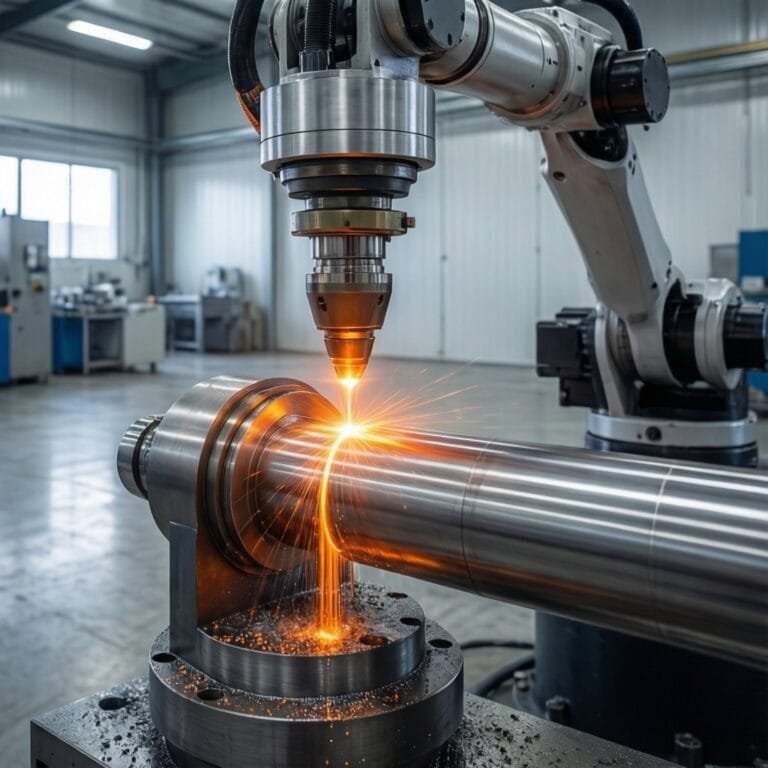
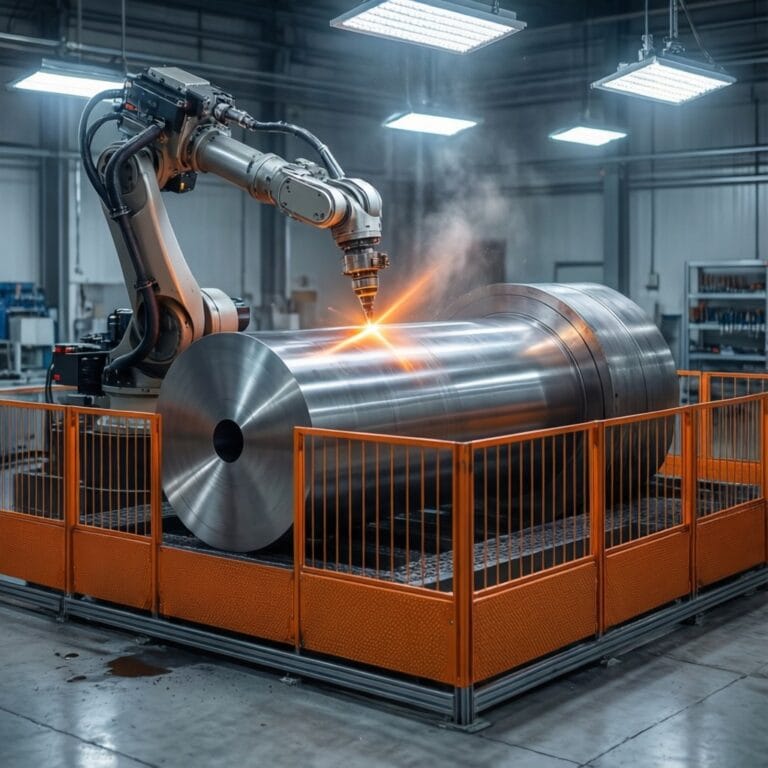
Intouchray’s Laser cladding is now the preferred solution for remanufacturing high-value rotating components, adding functional surfaces to additive-manufactured parts, and qualifying new alloy combinations under ASME Section IX and NADCAP AC7110/7. In oil & gas, Intouchray CML-3000 systems clad drill bit shoulders with tungsten carbide composites—achieving HAZ widths of just 0.18 mm and Rockwell C 68–72 hardness without substrate softening. In aerospace, IT-RF5018 series lasers deposit NiCrAlY oxidation-resistant layers onto turbine shrouds with <3% dilution and zero interfacial porosity—validated per AMS 2418 and AMS 2438.
Medical device manufacturers rely on laser cladding to apply bioactive hydroxyapatite-titanium composite layers onto orthopedic implants—where thermal management is critical to preserving osteoconductive properties. The localized, low-heat-input nature of fiber laser cladding prevents decomposition of calcium phosphate phases, ensuring compliance with ISO 13779-2 and FDA 21 CFR Part 820.
Performance Metrics and Benchmarks
- HAZ Width: 0.12–0.20 mm (measured via microhardness profiling per ISO 9015-2)
- Dilution Control: 2–6% (verified via EPMA line scans per ASTM E1508)
- Bond Strength: >850 MPa (ASTM C633 pull-off testing)
- Porosity: <0.3% (per ISO 13919-1, Class K)
- Surface Roughness (as-clad): Ra 8–15 µm (achievable without secondary finishing)
- Process Speed: 300–1,200 mm/min (dependent on layer thickness, material, and laser power)
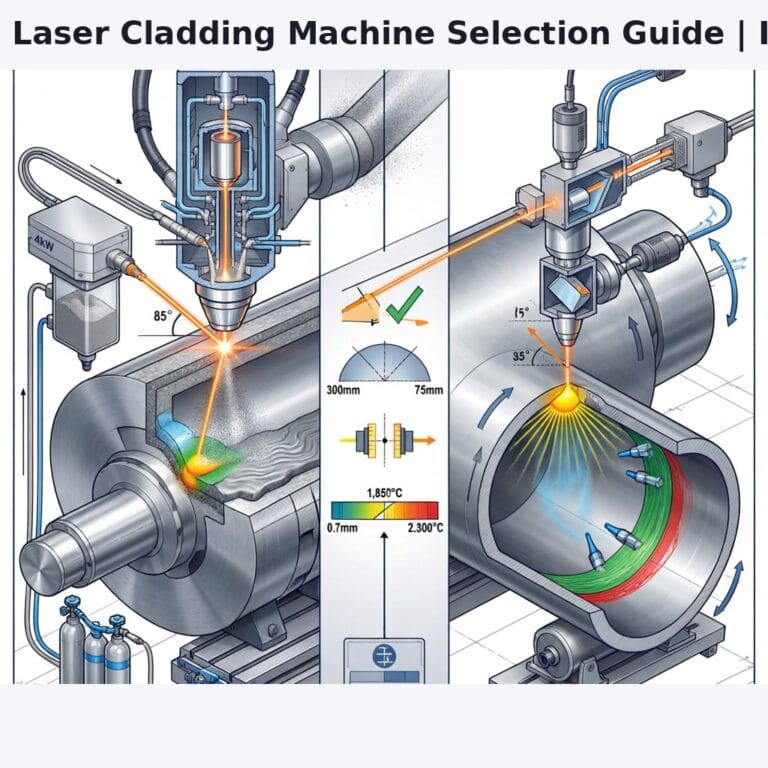
Intouchray’s integrated cladding heads—featuring coaxial powder injection, integrated pyrometry, and active cooling—enable stable operation at 1–6 kW laser powers. Powder feeders deliver precise, pulse-synchronized delivery (0.5–12 g/s) with mass flow accuracy of ±0.3%, ensuring stoichiometric consistency across multi-material gradients.
Cost Analysis and ROI
Specify fiber laser cladding systems for high-integrity applications demanding HAZ <0.2 mm, dilution <5%, and bond strength >750 MPa—especially on nickel alloys, titanium, and hardened tool steels. Specify traditional PTA or TIG cladding only for low-precision, thick-section repairs where dimensional tolerance and microstructure control are non-critical.
Frequently Asked Questions
What is the typical HAZ width achieved in laser cladding of stainless steel and nickel alloys?
When cladding 304 stainless steel or Inconel 718 with optimized 1–3 kW fiber lasers at 1,064 nm, measured HAZ widths consistently fall between 0.12 mm and 0.18 mm—verified via Vickers microhardness profiling (ISO 9015-2) and confirmed by SEM-EBSD grain structure analysis.
Which laser sources and cladding hardware does integrate into its turnkey systems?
configures its cladding systems with industry-leading IPG YLR series, Raycus RFL-C, and MAX Photonics MXT-Fiber sources (1–6 kW, 1,064 nm). All systems include proprietary coaxial or off-axis cladding heads, servo-controlled powder feeders (0.5–12 g/s range), and integrated pyrometric feedback loops—all compliant with ISO 13847-2 for thermal monitoring accuracy.
How does ensure process repeatability across multiple shifts and operators?
Every cladding system includes embedded parameter locking, digital twin calibration (traceable to NIST standards), and operator-level access controls. Process recipes are stored with full metadata (laser power, focus position, powder mass flow, travel speed, gas composition) and automatically logged to secure cloud storage—meeting AS9100 Rev D and ISO 9001:2015 documentation requirements.
Summary & Next Steps
Mastering HAZ in laser cladding requires moving beyond legacy thermal processes and adopting technologies engineered for localized, controllable energy delivery. By leveraging 1,064 nm fiber optics, M² ≤ 1.1 beam quality, real-time thermal feedback, and ISO-certified powder delivery, manufacturers eliminate interfacial defects, preserve substrate integrity, and achieve first-pass qualification on even the most challenging alloys.
Request a compliant clad sample kit—including cross-sectional micrographs, microhardness profiles, dilution analysis, and full ISO/ASTM test reports—from to verify HAZ width, bond quality, and geometry fidelity for your specific substrate–powder combination.
Laserolutions
As a leading manufacturer of industrial laser equipment, designs and builds laser cladding, hardening, and surface repair systems that combine precision engineering with operational reliability. Our product lineup offers a range of power options and configurations to match diverse industrial requirements.
Product Models
- CML-3000
- Ground Rail
- IT-RF5018-1
- IT-RF5018-2
- IT-RF5018-3
- Laser Cladding & Hardening Head
- Laser Cladding Head
- Laser Hardening Head
Key Features
- Laser cladding forms a strong metallurgical bond with the workpiece surface.
- Concentrated laser energy control minimizes workpiece deformation due to heat input.
- Improves wear resistance, corrosion resistance, and oxidation resistance of the part surface.
- Enables recycling and remanufacturing, extending equipment lifespan and saving operating costs.
- Laser cladding layer and workpiece surface form a firm metallurgical interface.
- Laser energy control is precise, resulting in minimal thermal distortion.
Industry Applications
- Additive manufacturing
- Aerospace
- Agricultural machinery tools
- Assembly lines
- Automated assembly lines
- Automated welding and cutting
All laser claddlasermanufactured under ISO 9001 quality management protocols. Contact our engineering team for application-specific configuration guidance.
Industry Standards & References
- TRUMPF: Laser Metal Deposition (LMD) — Laser cladding and directed energy deposition fundamentals
- ISO 14920: Thermal Spraying Qualification — International standard for thermal spray and cladding quality
- Coherent: Laser Cladding Technology — Industrial laser cladding technology and surface engineering