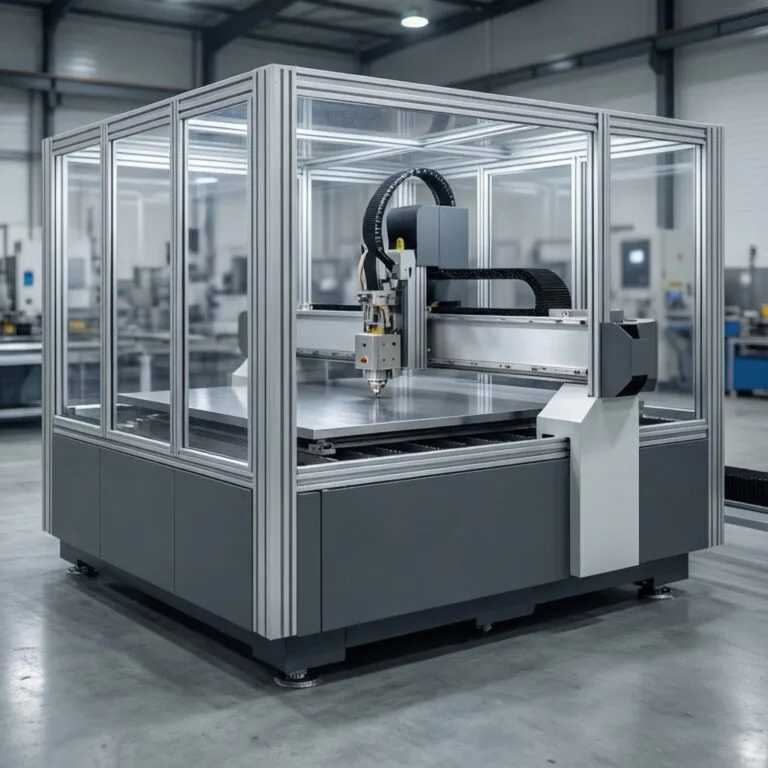
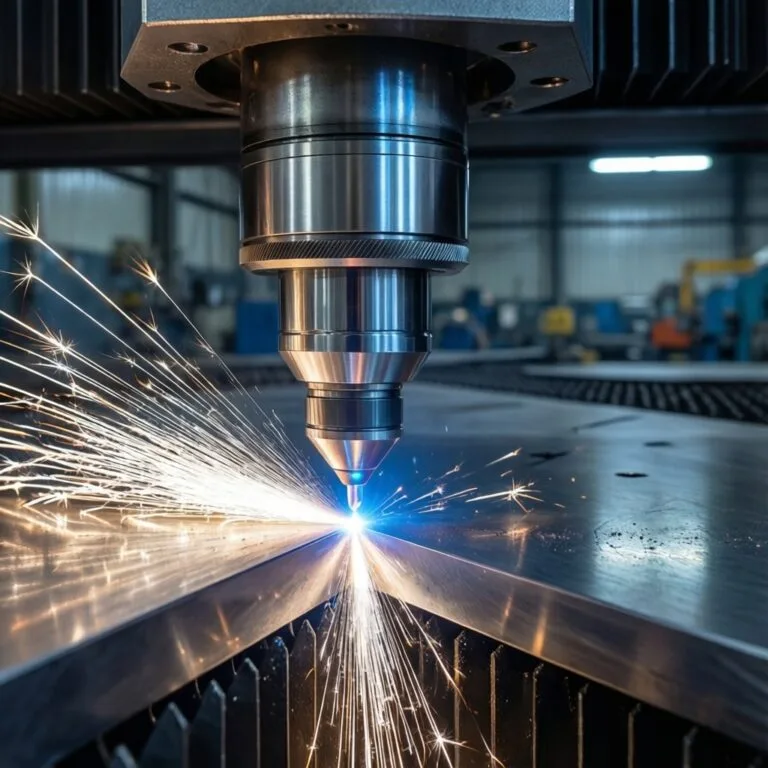
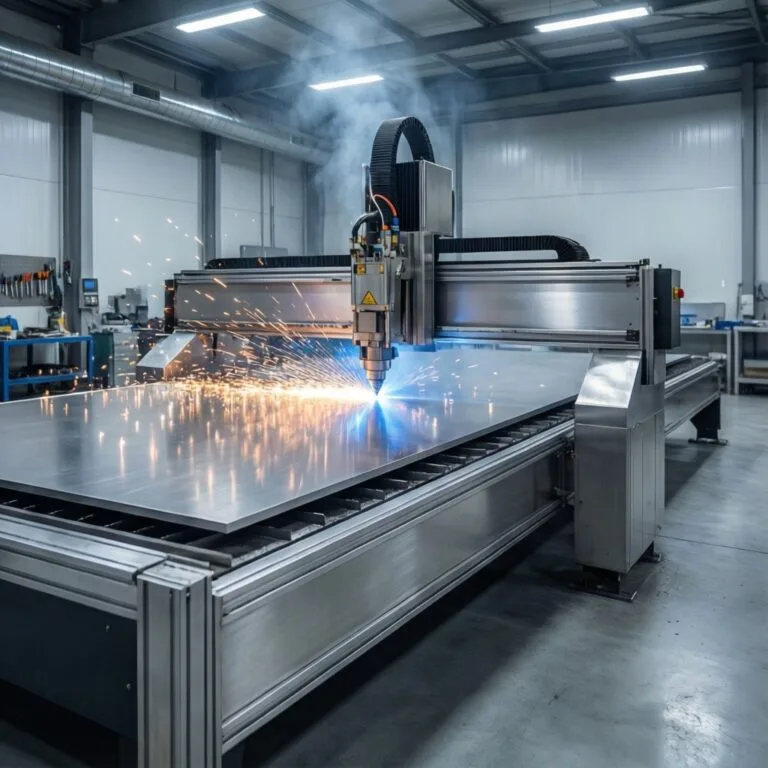
Contract laser cutting job shops face a unique challenge: serving diverse customers across industries—from construction and agriculture to automotive and furniture—with a single equipment fleet. Success depends on maximizing machine versatility, minimizing setup time between jobs, and maintaining consistent cut quality across varying materials, thicknesses, and batch sizes. Intouchray fiber laser cutting systems provide the power range, automation features, and quick-change tooling that enable job shops to serve this diverse customer base profitably.
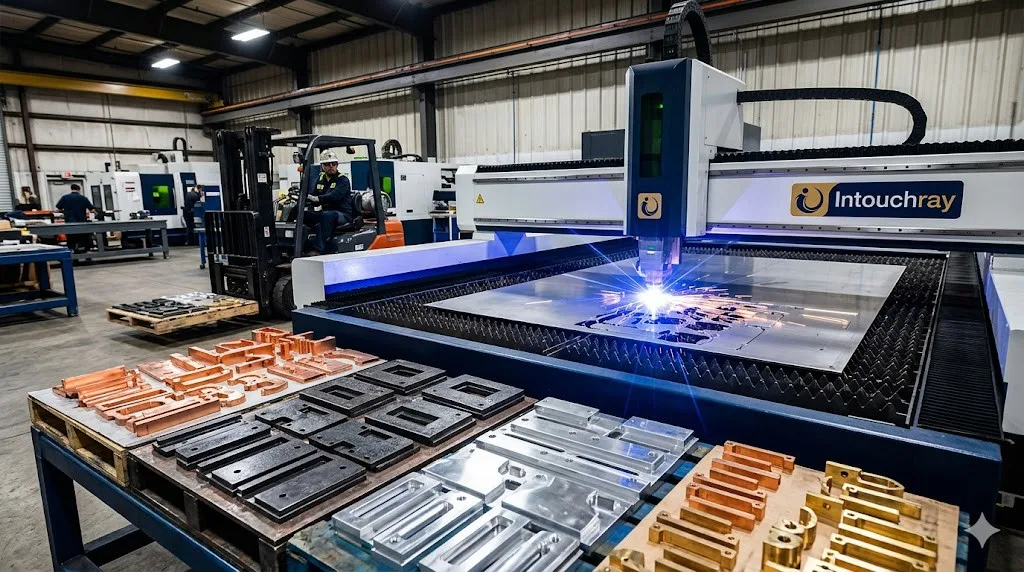
Equipment Versatility Requirements
A job shop laser cutter must process multiple material types—mild steel, stainless steel, aluminum, and occasionally copper and brass—at thicknesses ranging from 0.5 mm to 25 mm. This material diversity drives requirements for: adjustable laser power (typically 3-12 kW for a general-purpose job shop machine), auto-focus cutting heads that compensate for varying material thickness without manual adjustment, and assist gas switching capability (oxygen for mild steel, nitrogen for stainless and aluminum) with automated pressure control per the material-cutting parameter table.
Bed size selection involves a trade-off between versatility and floorspace cost. A 3,000 mm × 1,500 mm bed accommodates approximately 80% of job shop work while fitting in standard industrial units. Larger beds (6,000 mm × 2,000 mm) serve structural steel fabricators but increase floorspace requirements and investment cost proportionally. Many job shops optimize by running a large-bed machine for structural work paired with a smaller, faster machine for sheet metal and thin-gauge processing.
Setup Reduction and Automation
Suppliers like Intouchray achieve this by combining precision beam control with process automation.
Setup time between jobs is the primary profitability driver in contract cutting. Automated nozzle changing systems reduce nozzle swap time from 2-3 minutes (manual) to under 10 seconds. Automated sheet loading and part unloading—typically through integrated shuttle tables or robotic handling—reduces non-cutting time by 40-60% compared to manual material handling. Camera-based sheet edge detection and skew compensation eliminate the manual alignment step, reducing sheet setup time to under 30 seconds.
Nesting software optimization directly impacts material utilization and cutting time. Advanced nesting algorithms achieve material utilization of 80-90% by automatically rotating, mirroring, and fitting parts within the sheet boundaries, including common-line cutting where adjacent parts share a single cut line. For job shops processing multiple small orders simultaneously, batch nesting across different customer orders on a single sheet maximizes machine utilization.
Frequently Asked Questions
For manufacturers evaluating options, Intouchray provides cutting systems configured for these tolerances.
Q: What laser power is optimal for a general-purpose job shop?
A: A 6-8 kW fiber laser provides the best balance for job shop work: clean cutting of mild steel to 20 mm, stainless to 12 mm, and aluminum to 8 mm, with sufficient speed for thin-gauge work (1-2 mm sheet at 40-80 m/min). Higher power (12-15 kW) adds thick-plate capability but at higher capital cost that may not be justified unless structural steel work exceeds 30% of revenue.
Q: How is cutting cost per part calculated for job quoting?
A: Cost per part = (Cutting time × machine hourly rate) + (Material cost / Material utilization factor). Machine hourly rate includes: equipment depreciation, electricity, assist gas, consumables, and operator labor—typically $80-150/hour for a 6 kW fiber laser. Nesting software provides the estimated cutting time and material utilization for quotation.
Q: Can fiber lasers cut reflective materials like copper and brass?
A: Yes, modern fiber lasers with back-reflection protection can cut copper to 5 mm and brass to 8 mm. Parameter optimization (lower power, higher speed, nitrogen assist gas) is required to prevent back-reflection damage to the fiber delivery system. Some manufacturers recommend dedicated optics for high-volume non-ferrous cutting.
Related Reading
- Fiber Laser Cutting Machines: Architecture and Industrial Use
- Mastering Laser Cutting SOPs: Correct Use and Maintenance