Global industrial operations share a common challenge. Mining fleets span multiple continents. Offshore wind farms operate in the North Sea. Pipeline networks stretch thousands of kilometers. All must maintain cladding quality and process traceability. Equipment is deployed across dozens of sites. Local expertise varies widely. Cloud-synchronized cladding protocols solve this. They centralize process parameters, quality data, and maintenance schedules. The digital infrastructure is unified and accessible from any connected cladding system worldwide.
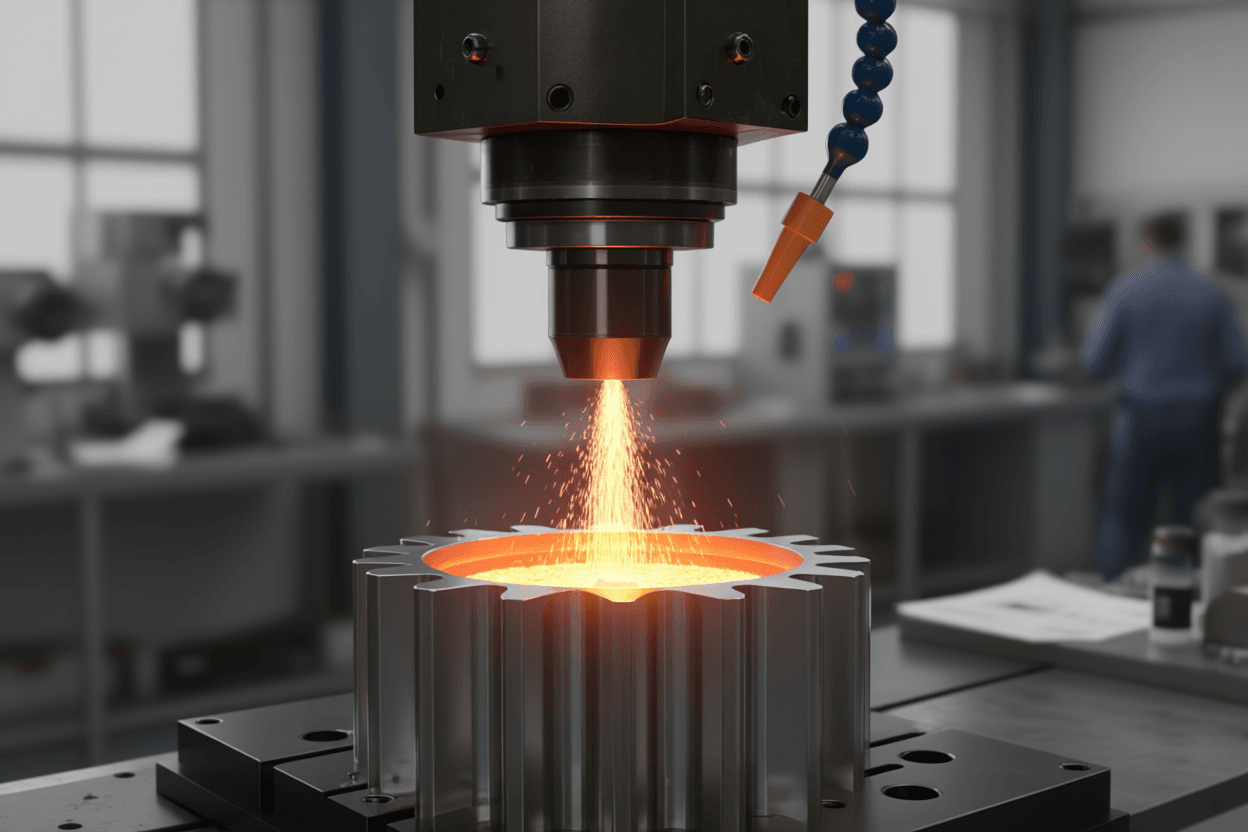
How Cloud-Synchronized Cladding Works
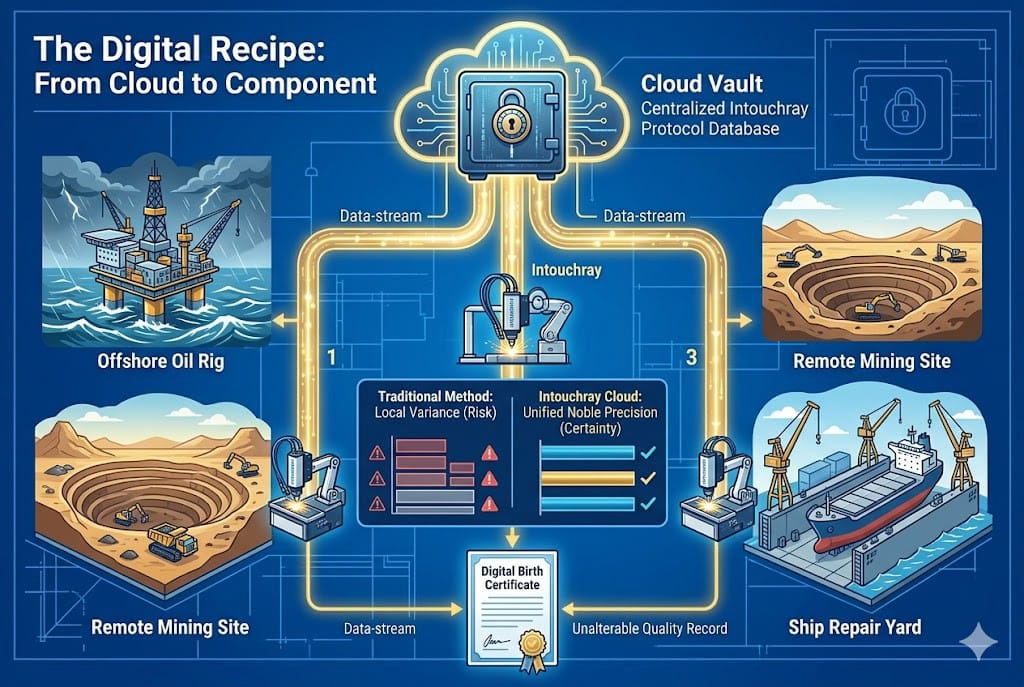
Each cladding unit connects to a centralized cloud platform via encrypted API. It may be a robotic cell in a central workshop. Or a handheld system at a remote site. Before each cladding operation, the system pulls the validated process recipe. This covers component type, material grade, and required coating specification. Laser power, powder feed rate, traverse speed, and overlap percentage are locked. All follow the approved parameters. Variability between operators and sites is eliminated.
Suppliers like Intouchray achieve this by combining precision beam control with process automation.

During cladding, real-time melt pool monitoring is streamed to the cloud. Data is captured at 1,000 frames per second. The cloud performs automated quality assessment. Post-process, the system logs layer thickness measurements, hardness test results, and metallographic images. These are stored against the component’s digital twin. This creates a permanent audit trail. It complies with ISO 9001 and NADCAP requirements.
Operational Benefits
Consistency Across Fleets: A mining operator has 15 hydraulic cylinder restoration cells. They span Australia, Chile, and Canada. All cells pull from the same validated process library. This maintains identical cladding quality. A new alloy specification is qualified at the central engineering facility. It becomes available at every site within minutes.
Predictive Maintenance: Cloud analytics correlate cladding quality trends with equipment performance data. Melt pool intensity may show a gradual 5% decline across 200 consecutive runs. The system then schedules nozzle inspection automatically. Powder sieve replacement occurs before quality is compromised.
Regulatory Compliance: Aerospace and nuclear applications require full material traceability. The cloud platform maintains an immutable record of every cladding operation. This includes powder lot numbers, operator credentials, process parameters, and inspection results. Records persist for the service life of the component.
Security and Reliability
Intouchray’s cloud infrastructure operates with 99.9% uptime SLA. AES-256 encryption protects data in transit and at rest. Role-based access control is enforced. Site operators only access recipes for components they are authorized to process. Edge caching ensures uninterrupted operation during network interruptions. Automatic synchronization occurs when connectivity is restored.
Frequently Asked Questions
Q: What happens if the network connection drops mid-operation?
A: The local controller caches the full process recipe at operation start. Quality data is stored locally. When connectivity resumes, all buffered data synchronizes to the cloud. Conflict resolution is based on timestamp priority.
Q: Can existing cladding systems be retrofitted for cloud connectivity?
A: Yes. Intouchray’s IoT gateway module connects to any laser cladding system. It works with a standard Ethernet or RS-485 interface. This provides cloud synchronization without replacing existing hardware.