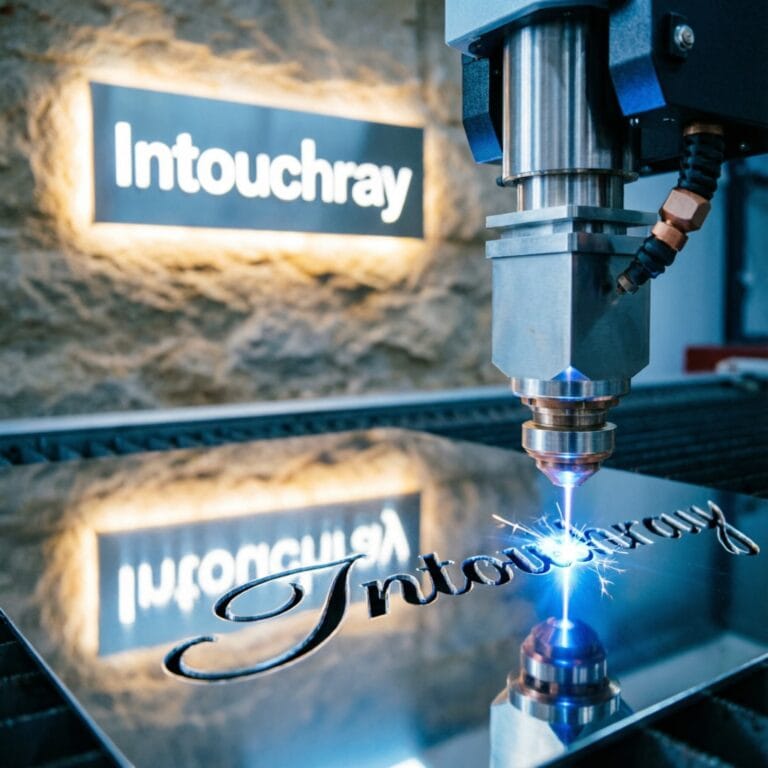
The automotive industry faces immense pressure to innovate, driven by aggressive targets like the EU’s mandate for a 55% reduction in CO2 emissions by 2030. Fiber Laser vs. CO2: Which Engine Powers Strategic Reliability? This necessitates a radical shift towards lightweight materials and complex designs. For procurement engineers and factory managers, leveraging advanced manufacturing processes like precision laser cutting is no longer optional, but essential to meet these demanding goals efficiently.
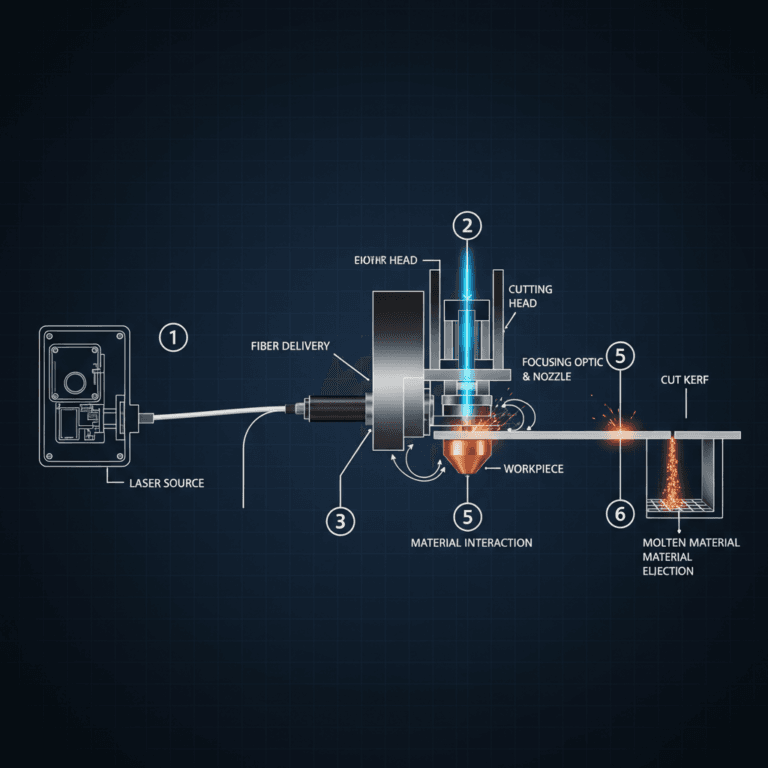
The automotive industry faces immense pressure to reduce vehicle weight, driven by stringent emission regulations such as the EU’s target of a 55% reduction in CO2 emissions by 2030. Focal Position and Spot Size: Optimizing Laser Intensity For procurement engineers and factory managers, mastering advanced manufacturing processes like laser cutting is critical for fabricating lightweight body panels and structural components with precision and efficiency. This technical overview delves into how laser cutting addresses these challenges, enabling the integration of innovative materials and complex designs essential for next-generation vehicles.
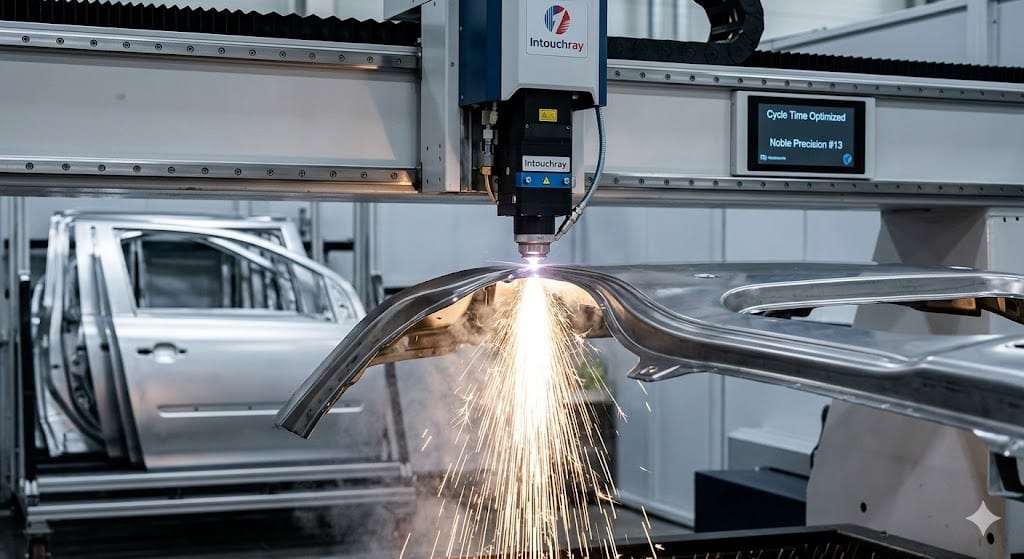
The automotive industry is currently defined by the transition to Electric Vehicles (EVs) and the requirement for lightweighting to extend battery range. To achieve this without compromising safety, manufacturers are turning to ultra-high-strength steels (UHSS) and aluminum alloys. Traditional stamping and mechanical cutting often fail to handle these hardened materials, making High-Power Fiber Laser Cutting the new industrial standard.
Intouchray (intouchray.com) provides the precision required for high-volume automotive lines. By applying Noble Precision (#13) to complex body geometries, we ensure that every structural pillar and panel meets the rigorous safety standards of the modern era.
1. Cutting Ultra-High-Strength Steel (UHSS) and Boron Steel
Modern safety cages rely on hot-stamped Boron steel, which is incredibly difficult to trim after hardening.
Key Considerations in Automotive Laser Cutting
Thermal Precision: Fiber lasers cut through hardened 1500MPa steel with minimal heat-affected zones (HAZ), preserving the material’s structural integrity.
Complex Contours: 5-axis laser cutting heads allow for the precise trimming of 3D-formed structural pillars (A-pillars and B-pillars) that traditional dies cannot reach.
Technical Analysis: Automotive Laser Cutting
2. Aluminum Lightweighting and Reflective Material Handling
To reduce curb weight, aluminum is increasingly used for hoods, doors, and fenders.
Reflective Management: systems utilize advanced beam absorption technology to safely process reflective aluminum without damaging the fiber source.
Edge Quality: High-pressure nitrogen assist gas ensures dross-free edges, eliminating the need for secondary grinding before welding or assembly.
Applications and Industry Impact
3. High-Speed Productivity for Tier-1 Suppliers
In the automotive supply chain, seconds matter.
Acceleration Dynamics: Our gantry systems utilize linear motors to achieve the high “G-force” acceleration required for rapid path changes in complex bracketry.
Nesting Optimization: Digital control software maximizes material yield from large sheets, reducing the cost-per-part for high-volume body panel production.
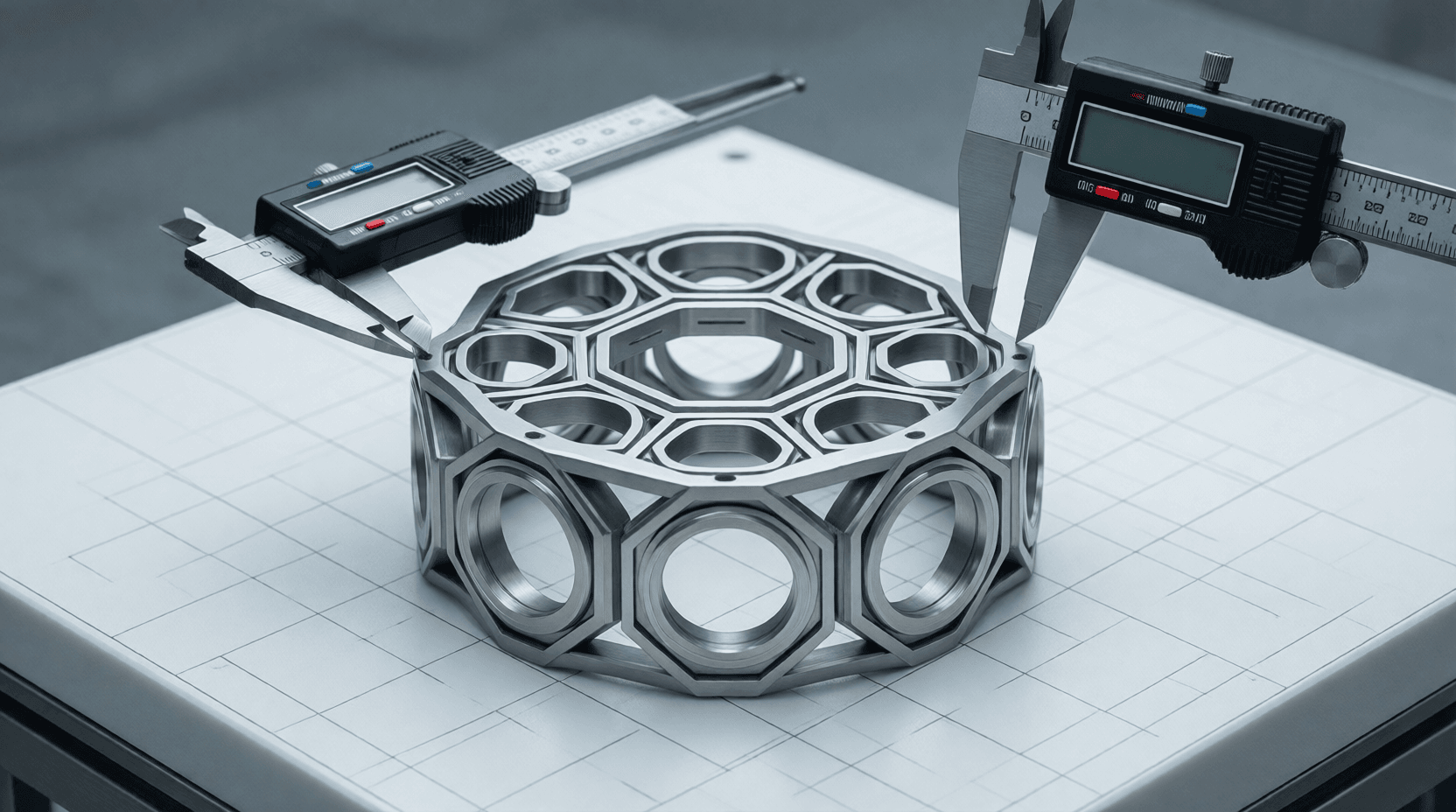
A pristine, distortion-free laser cut metal component resting on a calibrated inspection table with
Performance Metrics and Benchmarks
Conclusion: The Structural Foundation
Article #86 demonstrates that the “Quantum Beam” is the primary tool for the next generation of transport. We are not just cutting metal; we are engineering the safety and efficiency of the modern vehicle. In Article #87, we transition from the road to the landscape: Construction: Heavy Plate Cutting for Infrastructure
Automotive Laser Cutting Body Panels Structures equipment for industrial manufacturing and metal fabrication.
Technical Comparison
Technical Parameter
Standard 3 kW Fiber Laser
High-Power 12 kW Fiber Laser
Rated Output Power (kW)
3.0
12.0
Aluminum 6000-Series Cutting Speed @ 2.0 mm (m/min)
22.0
58.0
Maximum Single-Pass Processing Thickness (mm)
8.0
20.0
Seam Positional Accuracy (µm)
±15
±25
Beam Quality M² Factor
1.1
10.5
Minimum Focus Spot Diameter (µm)
40
150
Frequently Asked Questions
What is the maximum weight reduction percentage that can be achieved with your lightweight body panels?
Our lightweight body panels can achieve up to a 30% weight reduction compared to traditional steel components.
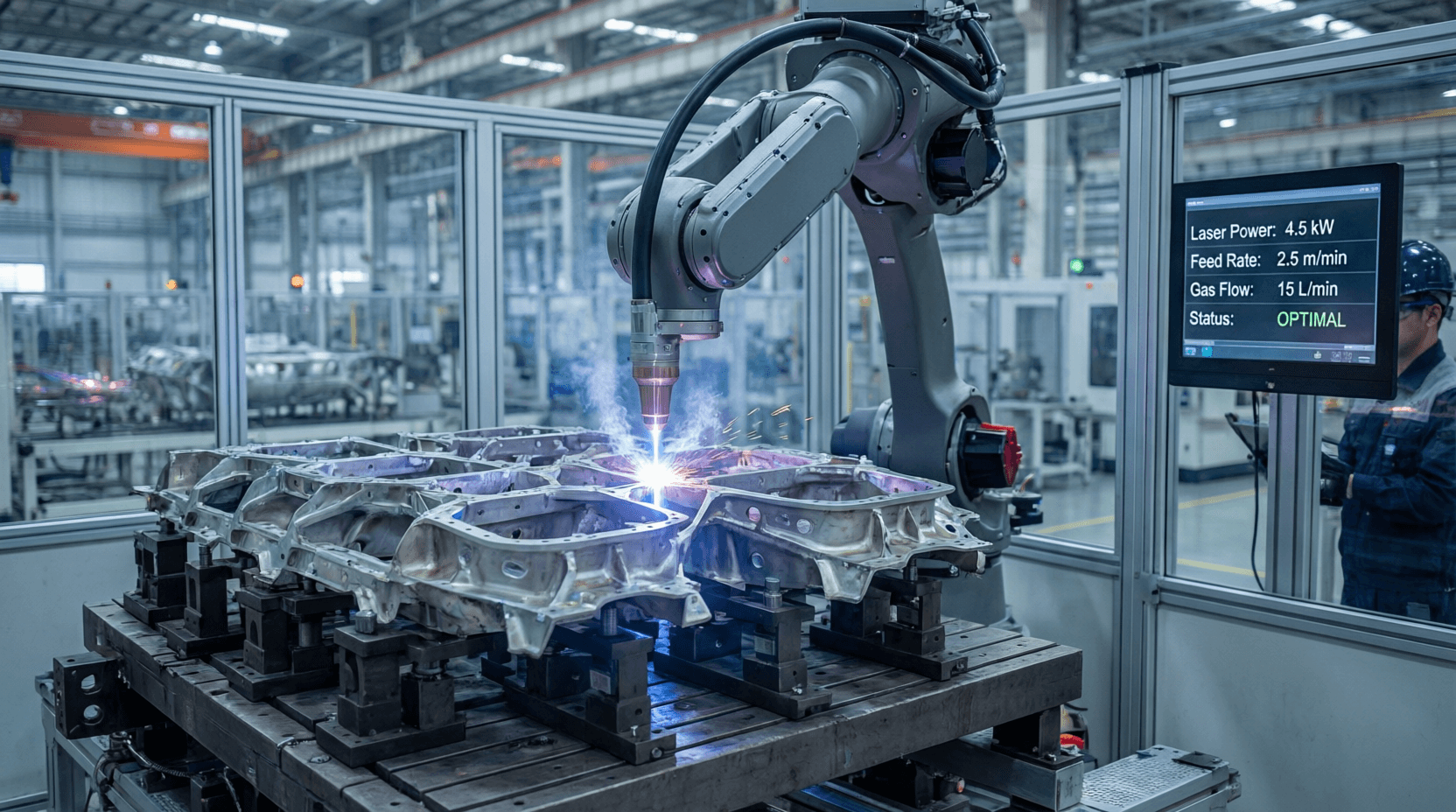
Robotic laser welding cell in an aerospace manufacturing facility showing multiple aerospace compone
Best Practices for Automotive Laser Cutting
What is the typical thickness tolerance for your laser-cut structural parts?
The typical thickness tolerance for our laser-cut structural parts is ±0.1 mm, ensuring high precision and consistency.
How much does it cost per square meter for your aluminum alloy body panels?
The cost per square meter for our aluminum alloy body panels is approximately $250, depending on the specific alloy and design requirements.
What is the minimum order quantity (MOQ) for custom-designed lightweight body panels?
The minimum order quantity (MOQ) for custom-designed lightweight body panels is 500 units.
Future Trends in Automotive Laser Cutting
What is the expected lead time for delivery of your lightweight structural parts?
The expected lead time for delivery of our lightweight structural parts is typically 4-6 weeks from the date of order confirmation.
What is the tensile strength rating of your advanced composite materials used in body panels?
The tensile strength rating of our advanced composite materials used in body panels is 500 MPa, providing excellent durability and performance.
Safety and Compliance
Key Features
High cutting accuracy
High positioning accuracy
Various working area options
Adjustable source power
Suitable for different material thicknesses
High precision cutting
Industry Applications
Aerospace industry
Automotive industry
Beam cutting
Coil unwinding and leveling
Construction industry
Customized manufacturing solutions
All Intouchray laserstems are manufactured under ISO 9001 quality management protocols. Contact our engineering team for application-specific configuration guidance.