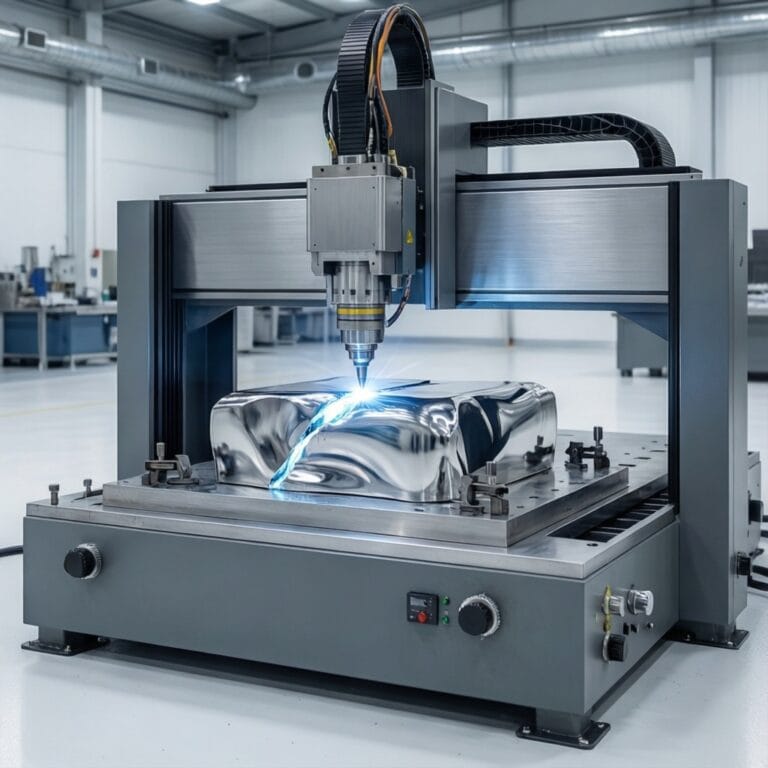
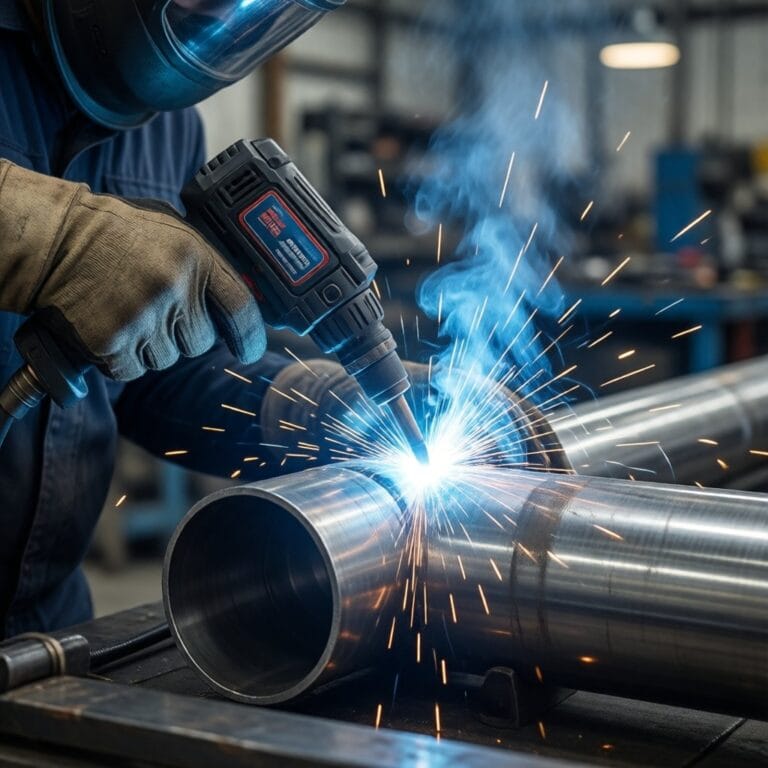
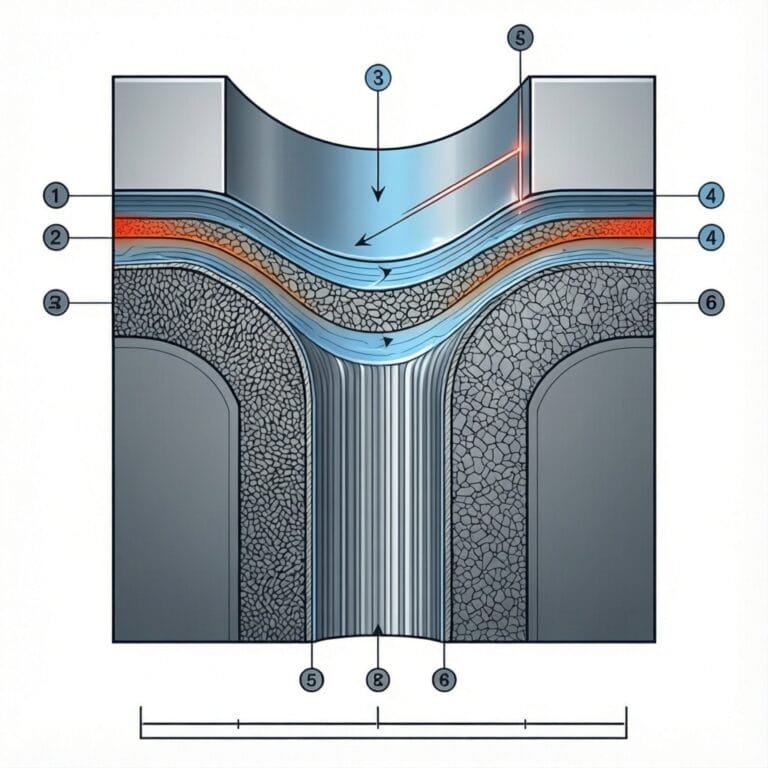
Selecting the correct assist gas fundamentally dictates the metallurgical integrity and production yield of automated laser welding systems. Gap Bridging Technology: Solving Fit-Up Issues in Large Parts This analysis compares the thermodynamic properties, ionization thresholds, and cost structures of argon and nitrogen to help engineers optimize weld pool stability for high-value manufacturing. By matching the gas to the base material, factories can eliminate porosity, ensure regulatory compliance, and maximize the lifespan of their fiber laser equipment.
Yes—nitrogen is used for welding, but selectively. It works as an assist gas on austenitic stainless steel, where it lowers operating cost and can add beneficial surface hardening; on carbon steel it risks porosity, and on reactive alloys such as titanium and aluminum, argon remains the safe default. The sections below give the purity, flow-rate, and cost decision matrix.
The Shift Toward Precision Shielding Environments
The transition by global brands like Consumer electronics manufacturers to Grade 5 titanium enclosures and Leading EV manufacturers to 4680 structural battery packs has pushed automated manufacturing tolerances to unprecedented levels. Argon vs. Nitrogen: Assist Gas Selection in Laser Welding Food & Medical Grade Seams: Achieving Porosity-Free Welds In these high-stakes applications, the shielding environment is just as critical as the 1,064nm fiber laser beam itself. A microscopic deviation in gas chemistry or flow dynamics can introduce atmospheric contaminants, compromising the structural integrity of the final assembly.
Key Considerations in Laser Welding
Engineers can no longer rely on generic gas flow rates or assume a single shielding gas works universally across all alloys. A mismatch between assist gas and base material leads to porosity, spatter, or catastrophic joint failure under cyclic loading. The interaction between the assist gas and the high-energy beam directly impacts the keyhole stability, especially when operating at power levels up to 6kW+.
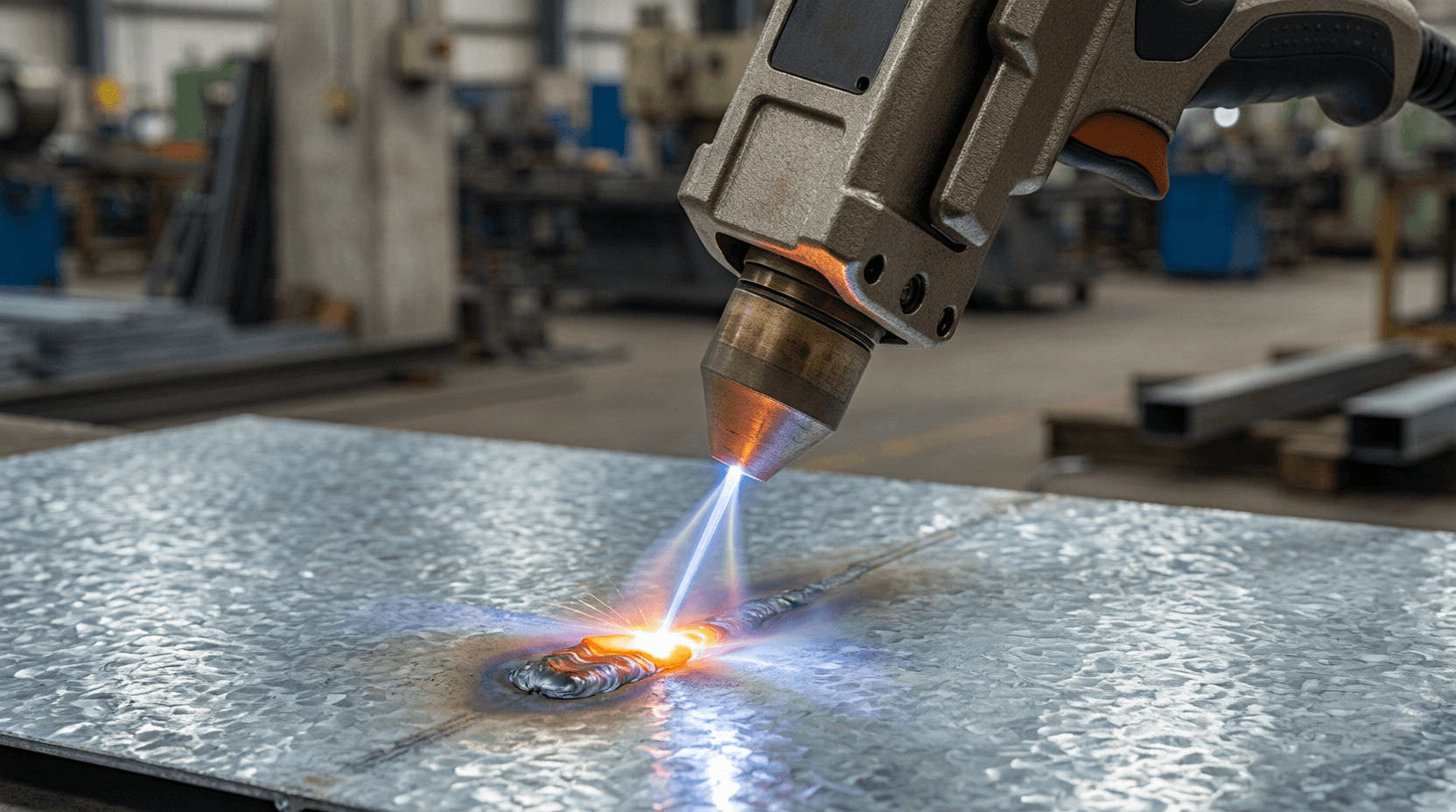
By examining the precise ionization energies, thermal conductivities, and flow dynamics of argon vs. nitrogen, this guide provides a data-backed framework for selecting the optimal assist gas. Understanding these variables ultimately reduces scrap rates, ensures adherence to strict automotive and medical standards, and protects your capital equipment investment.
Welding Standards and Beam Quality Benchmarks
When evaluating laser beam welded joints, quality is measured against stringent international benchmarks such as ISO 13919-1, which defines acceptable limits for imperfections like porosity and underfill. Achieving Level B (stringent) quality requires not only a highly focused beam but also an inert environment that prevents oxidation and laser welding shielding. For fiber laser systems, a beam quality of M²≤1.1 is essential to maintain the intense energy density required for deep penetration welding.
However, even an optimally focused 1,064nm beam will produce defective welds if the assist gas fails to displace ambient air effectively. The gas must flow consistently over the melt pool without creating turbulence, which could draw oxygen into the weld zone. Maintaining this pristine environment ensures that automated systems can achieve and sustain a positioning accuracy of ±0.03mm throughout long production runs.
Technical Comparison of Assist Gases
The choice between argon and nitrogen hinges on the specific metallurgical requirements of the base material and the economic realities of production. Below is a technical breakdown of their physical properties and performance thresholds.
| Parameter | Argon (Ar) | Nitrogen (N2) |
| :— | :— | :— |
| Atomic Weight | 39.95 u | 28.01 u |
| First Ionization Energy | 15.76 eV | 15.58 eV |
| Thermal Conductivity (300K)| 0.0177 W/(m·K) | 0.0258 W/(m·K) |
| Gas Density (at 1 atm) | 1.784 kg/m³ | 1.251 kg/m³ |
| Relative Operating Cost | 1.5x baseline | 1.0x baseline |
| Optimal Flow Rate (2kW) | 12–15 L/min | 15–20 L/min |
| Titanium Compatibility | 100% inert | Forms brittle nitrides >400°C |
| Stainless Steel Porosity Risk| <2% at 3kW | <5% at 3kW (with minor nitride hardening) |Argon excels in welding highly reactive metals due to its higher atomic weight and density, which provides superior blanketing over the weld pool. Conversely, nitrogen offers a distinct economic advantage and higher thermal conductivity, which can accelerate cooling rates in less reactive alloys, though it risks embrittlement in specific metallurgical contexts.
Industry Applications and Real-World Specifications
In medical device manufacturing, where systems operate under FDA compliance requirements, material purity is non-negotiable. When welding 316L stainless steel surgical instruments using a 2kW fiber laser, nitrogen is frequently specified as the assist gas at a flow rate of 18 L/min. Nitrogen prevents surface oxidation while adding a beneficial degree of surface hardening to the heat-affected zone, extending the functional lifespan of the tool without compromising the strict hygienic standards of the industry.
For the electric vehicle sector, welding 6061 aluminum battery enclosures requires an entirely different approach. A 4kW welding system utilizes argon at 15 L/min to ensure total atmospheric isolation. Because aluminum is highly susceptible to hydrogen-induced porosity, the heavier argon gas effectively blankets the joint, leveraging the system’s 25-30% wall-plug efficiency to deliver deep, defect-free penetration.
Best Practices for Laser Welding
Aerospace applications involving Grade 5 titanium demand the absolute highest shielding fidelity. Using nitrogen in these scenarios is strictly prohibited, as it will rapidly form titanium nitride at temperatures exceeding 400°C, rendering the joint brittle and prone to cracking. Argon is the only viable assist gas here, ensuring the structural integrity required for flight-critical components.
Future Trends in Laser Welding
Selecting the right assist gas is only half the equation; delivering that gas precisely to the workpiece requires advanced laser welding architecture. Intouchray engineers its systems around high-performance IPG, Raycus, and MAX laser sources, offering a scalable power range from 500W to over 6kW. This flexibility allows manufacturers to fine-tune their parameters for any material thickness, supported by rigorous CE marking (Machinery Directive 2006/42/EC and EMC Directive 2014/30/EU) and ISO 9001 quality management protocols.
Reliability on the factory floor is guaranteed through our comprehensive after-sales policy, which includes a 2-year warranty on the machine body and a 1-year warranty on the laser source. Whether you require standard deployment with a 20-30 day lead time or expedited express delivery in 15 days, Intouchray ensures your production line remains operational. Our systems are designed for seamless integration with automated gas delivery networks, maintaining the precise flow rates required for flawless metallurgical outcomes.
Safety and Compliance
Specify argon for reactive materials like titanium and aluminum where absolute ionization suppression and porosity prevention are critical. Specify nitrogen for austenitic stainless steel applications where operating cost reduction and slight surface hardening are acceptable and beneficial.
What purity levels are required for assist gases in laser welding?
For critical applications like aerospace and medical devices, argon must be supplied at 99.99% purity, while nitrogen requires a minimum purity of 99.9% to prevent atmospheric contamination.
Can compressed air be used instead of argon or nitrogen?
No, compressed air contains approximately 21% oxygen, which will cause severe oxidation, porosity, and joint embrittlement in fiber laser welding applications above 500W.
How does assist gas flow rate scale with laser power?
As laser power increases from 500W to 6kW+, the flow rate must be adjusted to maintain shielding; typically, this ranges from 12 L/min at lower powers up to 25 L/min for deep-penetration keyhole welding at 6kW.
The decision between argon and nitrogen is fundamentally a metallurgical one, driven by the chemical reactivity of your base material and the required structural performance of the final weld. Argon provides unmatched protection for reactive alloys, while nitrogen offers a cost-effective, high-thermal-conductivity solution for stainless steel production. Matching the correct gas to a highly stable, precision-engineered fiber laser system is the fastest route to zero-defect manufacturing.
Request a customized welding sample with full material compatibility data and gas flow parameters from Intouchray to validate your production parameters today.
Laser Solutions
As a leading manufacturer of industrial laser equipment, designs and builds fiber laser welding and handheld welding systems that combine precision engineering with operational reliability. Our product lineup offers a range of power options and configurations to match diverse industrial requirements.
Product Models
- Auxiliary Equipment – Nitrogen Generator
- HW-Pro Galvo Battery Handheld Laser Welding Machine
- HW-Pro Handheld Laser Welding Machine
- HW-Smart Handheld Laser Welding Machine
- HW-Smart Inner Feeder Handheld Laser Welding Machine
- Nitrogen Generator Handheld Laser Welding Machine
- QCW Spot Handheld Laser Welding Machine
- Raytools 4 in 1 Welding Cleaning Head
Key Features
- Water cooling system
- Multiple laser power options
- Versatile functions: welding, cleaning, and cutting
- Portable design with wheels
- Suitable for various materials up to 10mm thickness
- Water Cooling Option
Industry Applications
- Automotive Industry
- Automotive Repair
- Automotive industry
- Automotive parts welding
- Cutting of thin metal sheets
- Electronics Assembly
All laser weldiare manufactured under CE protocols. Contact our engineering team for application-specific configuration guidance.
Industry Standards & References
- The Fabricator: Laser Welding Best Practices — Practical guide to laser welding in metal fabrication
- TRUMPF: Laser Welding Technology Overview — Laser welding process fundamentals and industrial applications
- IPG Photonics: Fiber Laser Welding Technical Guide — Industrial fiber laser welding applications and specifications