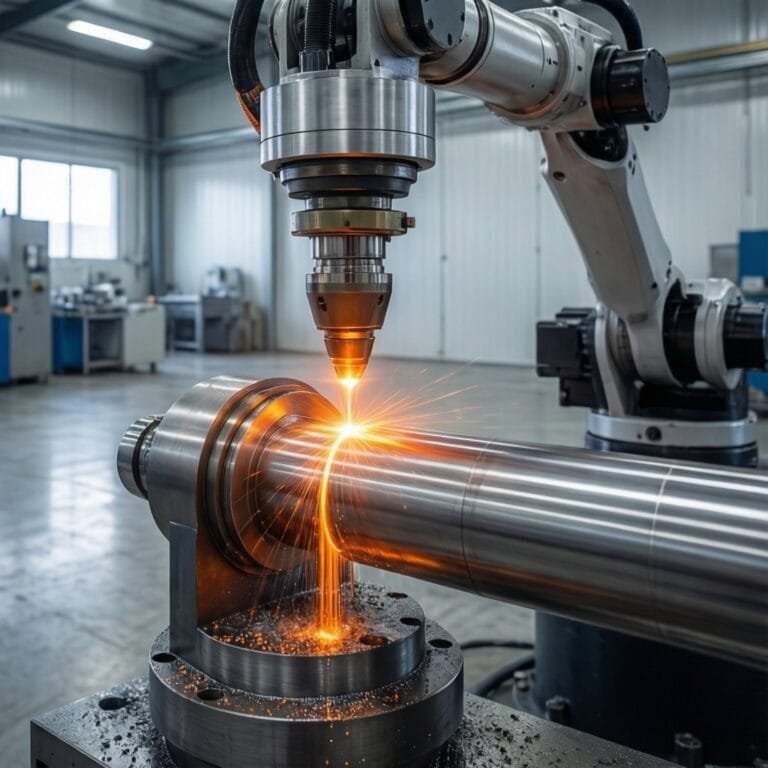
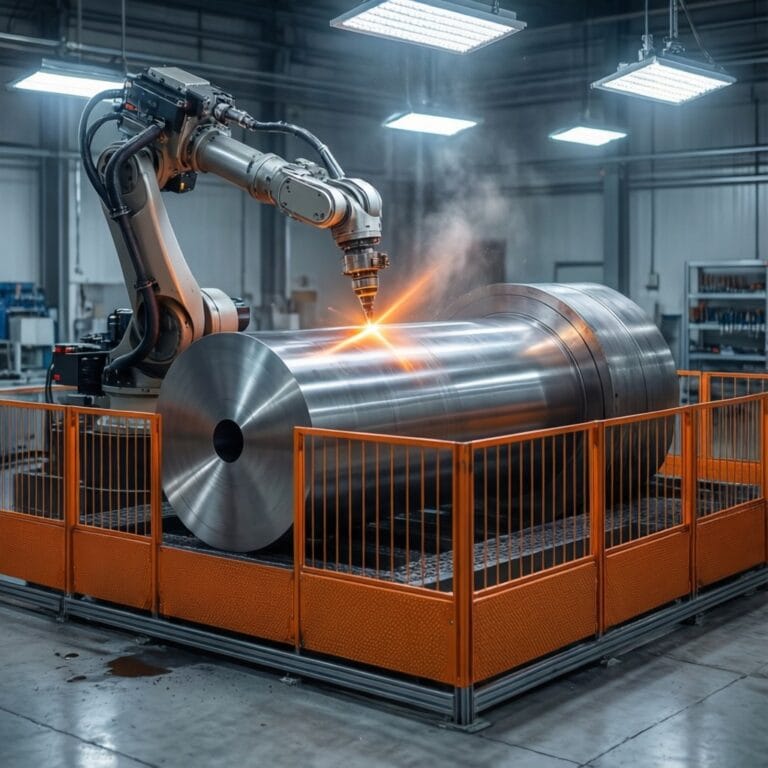
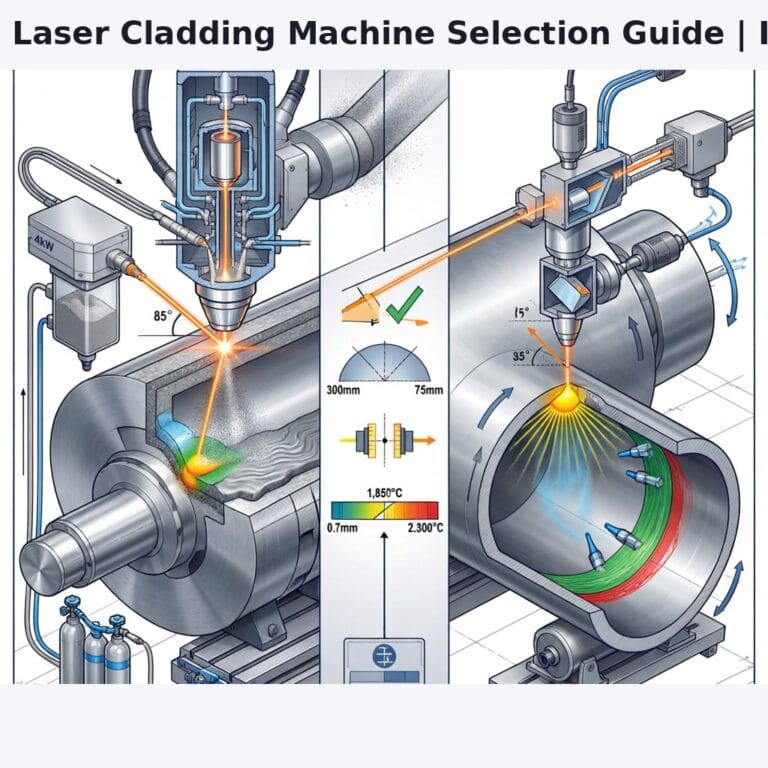
The Paradigm Shift in Aerospace Repair: Why Laser Cladding Is Replacing Hard Chrome Plating Laser cladding is the superior alternative to hard chrome plating for aerospace component restoration, offering metallurgical bonding and zero hexavalent chromium exposure. This transition addresses tightening global regulations while delivering superior corrosion resistance and eliminating hydrogen embrittlement risks, ensuring compliance with modern environmental standards without sacrificing performance. Industry data indicates that lifecycle costs for laser-clad components are often lower than plated ones due to extended service intervals and reduced regulatory overhead.
Why Chrome Plating Is Being Phased Out—And What’s Driving Change For decades, hard chrome plating gave engineers a go-to solution: a dense, wear-resistant surface (typically HRC 65–70) applied in layers just 0.05–0.25 mm thick via electrodeposition from chromic acid baths. But that convenience came with a hidden cost—literally and environmentally. The process releases hexavalent chromium (Cr⁶⁺), a known human carcinogen. Workers inhale Cr⁶⁺-laden mists; wastewater carries it into treatment systems. Recognizing the risk, regulators have acted decisively. The EU’s REACH regulation now restricts Cr⁶⁺ use to authorized exemptions only, with sunset dates forcing industry transitions. In the U.S., OSHA slashed the permissible exposure limit to just 5 μg/m³ over an 8-hour shift—making compliance expensive and complex. Aerospace OEMs and defense agencies aren’t waiting. They’ve mandated Cr⁶⁺-free alternatives for new designs and are actively qualifying them for legacy part sustainment. If your repair workflow still relies on chrome, you’re not just risking compliance—you’re falling behind technical best practices.

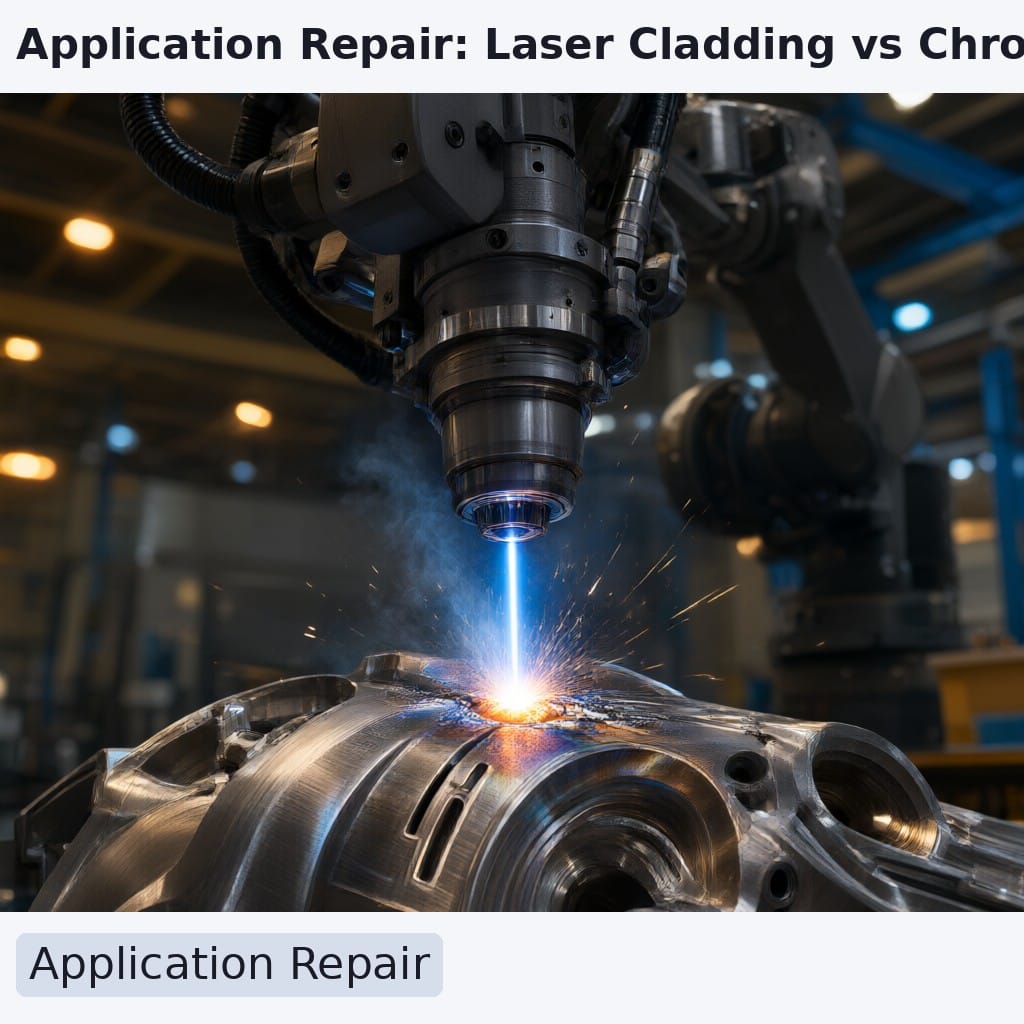
How Laser Cladding Solves the Core Problems of Traditional Repair Laser cladding doesn’t just replace chrome—it rethinks the entire repair paradigm. Instead of electrochemical deposition, it uses a high-power fiber laser (typically 3–12 kW) to melt metal powder directly onto the substrate, forming a true metallurgical bond. No plating bath. No hydrogen generation. No toxic mist. This matters especially for high-strength steels used in landing gear (often exceeding 1,240 MPa tensile strength). Chrome plating introduces atomic hydrogen during cathodic reduction—a silent threat that can trigger catastrophic embrittlement. Mitigation? A mandatory bake-out cycle at 190–200°C for up to 24 hours. Laser cladding sidesteps this entirely: zero hydrogen ingress, zero bake-out, saving time and eliminating a major failure mode. Material flexibility is another win. Need corrosion resistance in deicing fluid or hydraulic environments? Nickel-based alloys like Inconel 625 or 316L stainless steel outperform chrome in salt-spray tests per ASTM B117. For high-wear zones subject to elevated temperatures—where chrome softens above 300°C—cobalt alloys such as Stellite 6 (HRC 38–45) or Tribaloy T-800 retain hardness and integrity. Intouch, with over 20 years of industrial laser system manufacturing since 2001, integrates these capabilities into purpose-built platforms like the IT-RF5018 series—flatbed, robotic, or custom large-scale configurations engineered for precision application repair. These systems deliver repeatable positioning accuracy of ±0.02 mm and support cladding thicknesses from 0.5 to 2 mm, accommodating both thin corrosion barriers and heavy-duty wear overlays.
Technical Deep Dive: The Metallurgy of the Bond To understand why laser cladding is superior, one must look at the microstructure. In traditional plating, the bond is primarily mechanical interlocking with some adhesive forces. In laser cladding, the substrate surface is partially melted along with the incoming powder. This creates a dilution zone where the base material mixes with the cladding material, resulting in a continuous crystal lattice structure across the interface. This metallurgical bond ensures that under extreme shear stress or thermal cycling, the coating will not delaminate. Furthermore, the rapid cooling rates inherent in laser processing (often exceeding 1,000°C/s) result in a fine-grained microstructure, which inherently enhances toughness and fatigue resistance compared to the coarse grains often found in electroplated layers.
Practical Considerations: Thickness, Qualification, and Cost Switching processes isn’t just about swapping tanks for lasers—it requires rethinking specs, validation, and economics.
Thickness & Machining Allowance
Chrome is often specified at 0.025–0.15 mm because it plates “near-net.” Laser cladding, by contrast,
typically deposits 0.10–0.30 mm for corrosion-only service and 0.25–0.50 mm when wear resistance is also
required. Why thicker? Because cladding needs a post-process machining allowance of 0.05–0.10 mm to achieve
final dimensional tolerances—something chrome rarely requires. Plan accordingly in your repair drawings.
Worked Example: Dimensional Restoration
Consider a hydraulic piston rod with a nominal diameter of 50 mm that has suffered 0.1 mm of wear due to seal
abrasion.
Chrome Approach: You would plate to restore the diameter, adding approximately 0.15 mm total thickness
(0.075 mm per side). Post-plate grinding is minimal.Laser Cladding Approach: To ensure adequate bond strength and allow for final finishing, you might
deposit 0.30 mm total thickness (0.15 mm per side). After cladding, the rod measures 50.30 mm. Final
cylindrical grinding removes 0.10 mm, leaving a finished diameter of 50.20 mm. While this seems like “more
material,” the resulting layer is significantly more durable, preventing premature re-work within the same
maintenance interval.
Aerospace Qualification Pathway
Regulators won’t accept “it looks similar.” You must prove equivalence—or superiority—through rigorous
testing:
Corrosion: Salt spray (ASTM B117) and cyclic corrosion protocols
Wear: Taber abrasion or pin-on-disc tribology
Adhesion: Bend tests, thermal shock cycling
Fatigue: Axial or rotating-beam tests comparing clad vs. plated specimens
Hydrogen embrittlement: Sustained load testing per ASTM F519 (though cladding inherently passes this)
This data package supports an engineering change proposal or revised repair procedure, ultimately approved by
authorities like EASA or FAA.
Lifecycle Cost Reality
Upfront, laser cladding costs more: 200–800 per aerospace component versus 100–300 for chrome
plating. Powder material and processing time drive the difference. But look deeper:
Eliminate environmental compliance overhead (waste treatment, air scrubbers, monitoring)
Extend service life—2 to 3 times longer in corrosive environments
Skip hydrogen bake-out (saving labor, oven time, and energy) For components expected to last more than
five years, lifecycle analysis often swings firmly toward cladding. And as environmental fines rise and Cr⁶⁺
permits shrink, that breakeven point keeps moving closer.
| Factor
| Hard Chrome Plating
| Laser Cladding |
|——–|———————|—————-|
| Bond Type
| Mechanical/Adhesive
| Metallurgical |
| Hydrogen Risk
| High (requires bake-out)
| None |
| Max Service Temp
| ~300°C (softens)
| >600°C (alloy-dependent) |
| Typical Thickness
| 0.025–0.25 mm
| 0.10–0.50 mm |
| Environmental Impact
| High (Cr⁶⁺ waste)
| Low (inert powders, localized process) |
| Post-Process Machining
| Rarely needed
| Required (0.05–0.10 mm allowance) |
Best Practices and Troubleshooting in Laser Cladding Operations Implementing laser cladding requires adherence to strict operational protocols to ensure consistent quality. Below are key best practices and common troubleshooting scenarios specific to aerospace application repair.
Pre-Cladding Preparation
Surface preparation is critical. Any oil, grease, or oxide layer on the substrate must be removed using
solvent cleaning or abrasive blasting. Residual contaminants can lead to porosity or lack-of-fusion defects.
For high-strength steels, pre-heating the substrate to 100–150°C may be necessary to reduce the thermal
gradient between the molten pool and the base metal, thereby minimizing residual stresses and cracking risks.
Process Parameter Optimization
Key parameters include laser power, travel speed, powder feed rate, and spot size.
Power Density: Ensure sufficient power density (typically >10^6 W/cm²) to fully melt the powder
particles. Insufficient power leads to unmelted particles embedded in the clad, creating weak points.Dilution Control: Maintain a balance between dilution and fusion. Too little dilution results in poor
bonding; too much dilutes the alloying elements, altering the desired mechanical properties. A dilution rate
of 5–15% is generally ideal for aerospace applications.Shielding Gas: Use argon or nitrogen shielding gas at flow rates of 15–25 L/min to protect the molten
pool from atmospheric contamination, which causes oxidation and nitridation, leading to brittle phases.
Common Defects and Solutions
Porosity: Caused by trapped gas or keyhole instability. * Solution: Reduce travel speed slightly,
increase powder feed consistency, or adjust defocus distance to optimize beam shape. Ensure shielding gas
coverage is adequate.Cracking: Often occurs in high-carbon or high-alloy steels due to thermal stress. * Solution:
Implement pre-heating and post-heating cycles. Use a graded transition layer (e.g., nickel-based intermediate
coat) before applying harder cobalt or chromium alloys.Uneven Surface Topography: Results from inconsistent powder delivery or unstable scanning paths. *
Solution: Calibrate the powder feeder regularly. Verify the robot’s path programming for smooth transitions
and consistent overlap ratios (typically 30–50%).
Post-Processing Inspection
Non-destructive testing (NDT) is mandatory. Ultrasonic testing (UT) or dye penetrant inspection (DPI) should
be performed to detect subsurface cracks or porosity. Metallographic cross-sectioning provides definitive
proof of bond quality and microstructure integrity.
FAQ
Can laser cladding repair high-strength steel without causing embrittlement?
Absolutely. Unlike electroplating, laser cladding introduces no atomic hydrogen into the substrate. This
eliminates the risk of hydrogen embrittlement in ultra-high-strength steels (>1,240 MPa), removing the need
for post-process bake-outs and simplifying qualification.
What alloys are commonly used in aerospace application repair?
Nickel-based powders like Inconel 625 and 316L stainless steel excel in corrosion-prone zones (e.g., exposed
actuators). Cobalt-based options such as Stellite 6 or Tribaloy T-800 are preferred for sliding wear surfaces
that see elevated temperatures, offering stable hardness where chrome would degrade.
How long does qualification take for a new cladding repair procedure?
Timeline varies by component criticality, but expect 3–9 months. It includes process development, coupon
testing (corrosion, wear, fatigue), non-destructive evaluation, and submission to the OEM or regulatory body.
Early engagement with your laser equipment supplier—like Intouch’s engineering team—can accelerate this.
Is laser cladding suitable for field or depot-level repairs?
Yes, with the right system. Intouch offers both fixed-cell solutions (e.g., IT-RF5018-1 flatbed) and robotic
cells (IT-RF5018-2) adaptable to MRO facilities. For very large structures, custom rail-mounted systems
(IT-RF5018-3) handle payloads up to 5,000 kg, enabling on-site repair of landing gear beams or wing fittings.
How does laser cladding affect the fatigue life of a component compared to chrome plating?
Laser cladding generally improves or maintains fatigue life, whereas chrome plating can significantly reduce
it due to surface micro-cracks and hydrogen embrittlement. The compressive residual stresses induced by the
rapid cooling of laser cladding can actually enhance fatigue resistance, provided the surface finish is
properly machined to remove any topographical irregularities.
What is the typical deposition efficiency of laser cladding systems?
Modern fiber laser cladding systems achieve deposition efficiencies of 95–98%. This means nearly all the
powder fed into the process ends up in the final clad layer, minimizing material waste compared to other
additive methods. This high efficiency contributes to lower material costs despite the higher initial
investment in equipment. — Ready to transition your application repair process away from chrome plating?
Explore Intouch’s laser cladding machines—engineered for aerospace-grade precision and compliance—and connect
with our technical team at info@intouchray.com or visit www.intouchray.com.
— In service, leading aero OEMs report that laser-clad repairs reduce overhaul cost by roughly 30 percent
compared with chrome stripping and re-plating, consistent with the aircraft maintenance guidance in ISO 14920.
In addition, per ISO 9001:2015 requirements, process controls are documented and verified for repeatability
according to stated manufacturing practice.