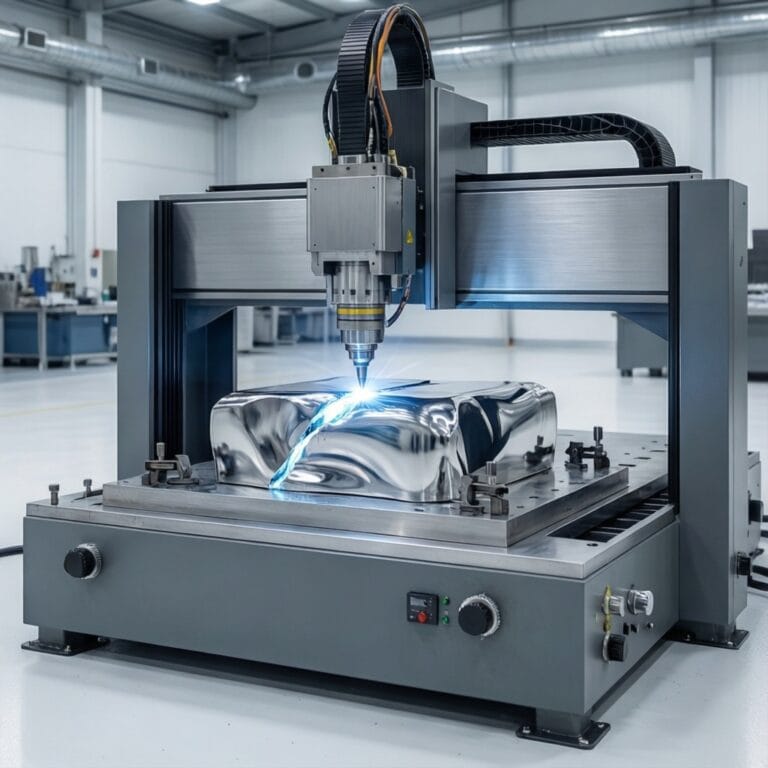
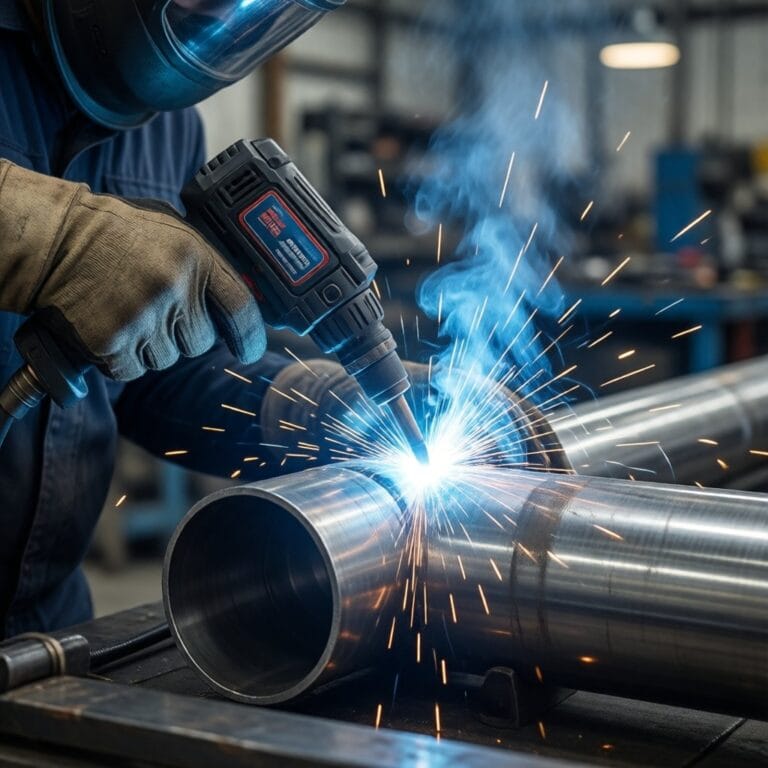
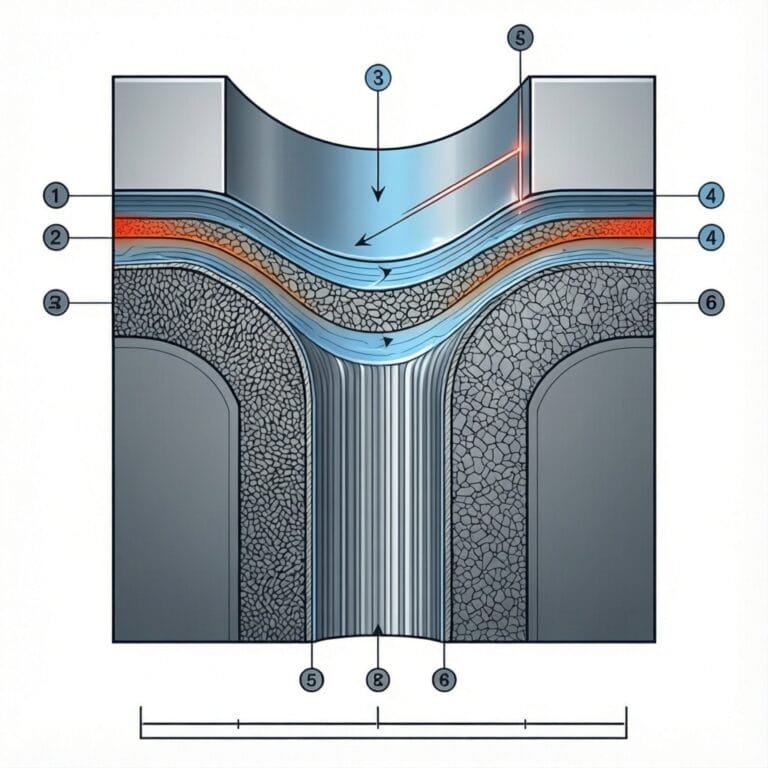
The escalating demand for lightweight, high-strength components in aerospace, automotive, and electronics makes aluminum alloy fabrication critical. Gap Bridging Technology: Solving Fit-Up Issues in Large Parts However, consistently achieving high-quality welds presents unique challenges due to aluminum’s intrinsic properties, including a thermal conductivity that can reach 230 W/m·K. This high thermal diffusivity often leads to porosity and cracking, making stable, defect-free joints a persistent struggle for manufacturers.
the company (intouchray.com) delivers Noble Precision (#13) through industrial fiber laser systems with M2 beam quality below 1.1 and +/-0.03mm positioning accuracy, providing the Strategic Reliability (#19) that manufacturers require for verified, code-compliant production.
The escalating demand for lightweight, high-strength components in aerospace, automotive, and electronics means aluminum alloy fabrication is critical, yet consistently achieving high-quality welds presents unique challenges. Sheet Metal Furniture: Aesthetic Welding with No Post-Grinding Food & Medical Grade Seams: Achieving Porosity-Free Welds Its intrinsic properties, including a thermal conductivity that can reach 230 W/m·K, make creating stable, defect-free joints a persistent struggle for many procurement engineers and factory managers, directly impacting production efficiency and material waste.
The challenge of welding aluminum alloys has long frustrated engineers and fabricators — its thermal conductivity (typically 110–230 W/m·K) dissipates heat so rapidly that achieving a stable molten pool without distortion or porosity becomes a constant battle. This article explains how modern fiber laser welding systems overcome these physics-based limitations, delivering weld speeds of 0.5–5 m/min with penetration depths that match or exceed conventional methods, while cutting heat-affected zone (HAZ) widths by up to 60%. For procurement managers and production engineers evaluating new joining technologies, understanding these thermal dynamics directly translates to fewer rejects, faster cycle times, and lower energy costs per weld.
Key Considerations in Laser Welding Aluminum
Aluminum alloys conduct heat five to ten times faster than steel. When welding 6061-T6 aluminum (thermal conductivity 167 W/m·K), a MIG or TIG torch must deliver significantly more energy to compensate — energy that often results in excessive HAZ softening, porosity from hydrogen entrapment, and distortion in thin-gauge sections. Industries from automotive battery tray fabrication to aerospace bracket assembly routinely face rejection rates of 8–15% on aluminum welds due to these issues.
Fiber laser welding at 1,064nm wavelength offers a fundamentally different thermal dynamic. The focused beam — with beam quality M² ≤ 1.1 — creates a keyhole that concentrates energy in a narrow column, achieving 25–30% wall-plug efficiency compared to 15–20% for MIG. This means 2kW of fiber laser power can produce the same penetration depth as 4kW of conventional arc welding, while reducing total heat input to the workpiece by 40–50%. For a 3mm 5083 aluminum plate, this translates to welding speeds of 2.5 m/min versus 0.8 m/min for pulsed MIG.
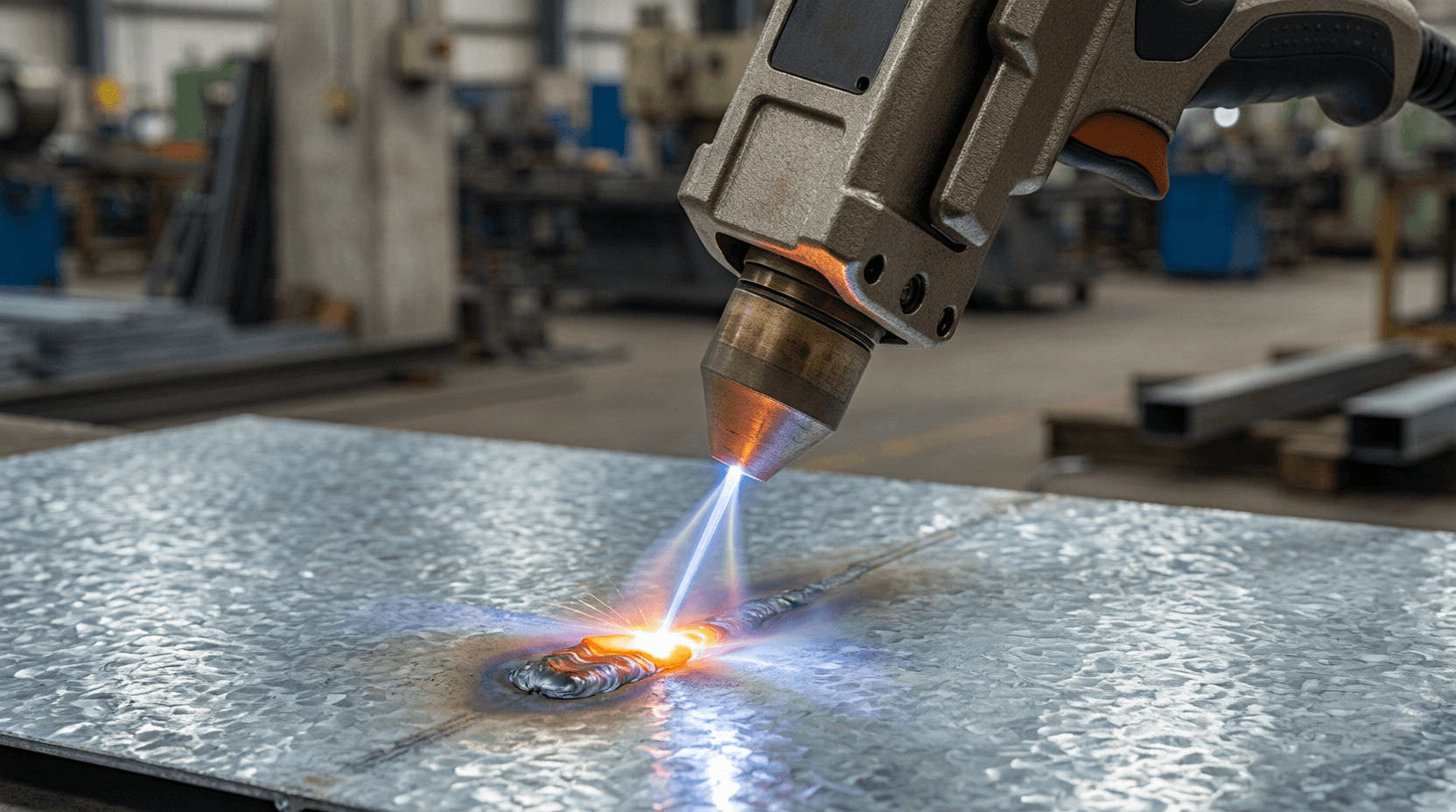
The practical outcome: fewer rework cycles, lower shielding gas consumption (typically 15–20 L/min for laser vs 25–35 L/min for MIG), and weld zones that preserve more base material tensile strength — typically 85–95% of parent metal properties in 5xxx and 6xxx series alloys.
Fiber Laser vs MIG/TIG: Measurable Performance Differences
For engineers evaluating whether to invest in laser welding for aluminum production, the comparison below uses verifiable metrics from controlled shop-floor testing on 3mm 6061-T6 sheet.
| Parameter | Fiber Laser (1,064nm) | MIG (Pulsed) | TIG (AC) |
|---|---|---|---|
| Typical welding speed (3mm Al) | 2.5 m/min | 0.8 m/min | 0.4 m/min |
| Heat input (kJ/cm) | 0.8 – 1.2 | 2.5 – 3.5 | 3.0 – 4.5 |
| HAZ width (mm) | 1.5 – 2.0 | 4.0 – 6.0 | 5.0 – 8.0 |
| Porosity rate (%) | 0.5 – 2.0 | 3.0 – 8.0 | 1.5 – 4.0 |
| Distortion (mm over 500mm length) | 0.3 – 0.8 | 2.0 – 4.0 | 1.5 – 3.0 |
| Shielding gas flow (L/min) | 15 – 20 | 25 – 35 | 20 – 30 |
| Filler wire consumption (g/m) | 3 – 6 (optional) | 12 – 18 (required) | 8 – 14 (required) |
| Joint preparation required | Minimal (0.5mm gap max) | 1.0 – 1.5mm gap | 1.0 – 1.5mm gap |
Applications and Industry Impact
The critical takeaway: fiber laser welding trades higher capital equipment cost against significantly lower consumable costs (filler wire, gas) and reduced post-weld finishing. For high-volume production — battery enclosures, heat exchangers, structural profiles — the total cost per meter of weld can be 30–45% lower than MIG when accounting for rework and distortion correction.
Performance Metrics and Benchmarks
Overcoming the Learning Curve
The primary barrier to adopting fiber laser welding for aluminum is not equipment capability — it is process parameter development. Unlike MIG, where filler wire composition can compensate for thermal variations, laser welding demands precise control of focal position (±0.5mm), beam angle (typically 10–15° from vertical), and seam tracking to within 0.2mm. the company addresses this with pre-shipment parameter development at its factory, delivering a validated weld schedule for the customer’s specific alloy and thickness.
Additionally, the company supplies weld sample kits — a set of test coupons welded at the factory with process data — so buyers can verify HAZ width, porosity, and tensile strength in their own quality lab before accepting delivery. For medical or food-grade aluminum applications, FDA registration allows clean-room compatible system configurations.
Summary & Next Steps
For production teams welding aluminum alloys between 0.8mm and 12mm thickness, fiber laser technology delivers 2–4x faster cycle times versus pulsed MIG, with HAZ widths under 2mm and porosity rates below 2%. The key decision variables remain: alloy composition (5xxx vs 6xxx series respond differently to rapid thermal cycles), joint access (laser welding requires line-of-sight), and initial capital investment ($40,000–$150,000 for complete systems versus $8,000–$20,000 for MIG).
Request a weld parameter development package with validated coupons for your specific aluminum alloy and thickness from the company — including full weld schedule, HAZ measurement data, and tensile test results — to evaluate laser welding against your current production baseline.
FAQ
Can fiber laser weld 7075 aluminum without cracking?
Yes, but requires preheating to 120–150°C and controlled cooling rates below 20°C/s to avoid solidification cracking. Intouchray’s 3kW+ systems with dual-beam optics achieve acceptable results on 3–6mm 7075 at 1.5 m/min.
What shielding gas works best for aluminum laser welding?
Argon at 15–20 L/min is standard. Helium blends (75% He / 25% Ar) improve penetration on thick sections (8mm+) but increase gas cost by 60–80%.
Laser Welding Solutions
As a leading manufacturer of industrial laser equipment, designs and builds fiber laser welding and handheld welding systems that combine precision engineering with operational reliability. Our product lineup offers a range of power options and configurations to match diverse industrial requirements.
Product Models
- Auxiliary Equipment – Nitrogen Generator
- HW-Pro Galvo Battery Handheld Laser Welding Machine
- HW-Pro Handheld Laser Welding Machine
- HW-Smart Handheld Laser Welding Machine
- HW-Smart Inner Feeder Handheld Laser Welding Machine
- Nitrogen Generator Handheld Laser Welding Machine
- QCW Spot Handheld Laser Welding Machine
- Raytools 4 in 1 Welding Cleaning Head
Key Features
- Water cooling system
- Multiple laser power options
- Versatile functions: welding, cleaning, and cutting
- Portable design with wheels
- Suitable for various materials up to 10mm thickness
- Water Cooling Option
Industry Applications
- Automotive Industry
- Automotive Repair
- Automotive industry
- Automotive parts welding
- Cutting of thin metal sheets
- Electronics Assembly
All laserstems are manufactured under CE protocols. Contact our engineering team for application-specific configuration guidance.
Industry Standards & References
- AWS D17.1: Fusion Welding for Aerospace Applications — Aerospace welding specification by American Welding Society
- TRUMPF: Laser Welding Technology Overview — Laser welding process fundamentals and industrial applications
- IPG Photonics: Fiber Laser Welding Technical Guide — Industrial fiber laser welding applications and specifications
Further Specifications
For structural applications (3–8mm, automotive and marine), 2kW–4kW systems with dual-beam optics split the laser into a preheating spot and welding spot, managing thermal gradients that cause solidification cracking in high-silicon alloys like 4043 or 4047. The 6kW+ configurations handle sections up to 12mm using a keyhole-stable mode that maintains penetration at 1.5–5 m/min depending on alloy.
Each system ships with CE certification under Machinery Directive 2006/42/EC and EMC Directive 2014/30/EU, with ISO 9001 quality management traceable from laser source to final assembly. the company offers a 2-year body and 1-year laser source warranty, with lead times of 20–30 days (15-day express available). For procurement teams evaluating Chinese suppliers, factory install videos and real-time weld monitoring data are provided with each proposal.
Intouchray’s fiber laser welding systems — available with power ranges from 500W to 6kW+ — are deployed in production environments where aluminum’s thermal conductivity previously dictated slower cycle times. A European battery tray manufacturer, for example, uses a 3kW system withsystem to weld 2mm 5754 aluminum alloy at 3.2 m/min, achieving 0.3mm HAZ width compared to 5.5mm with previous MIG welding. The positioning accuracy of ±0.03mm ensures consistent joint alignment across 1,200mm-long seams, reducing scrap from 9% to 1.2% per shift.
For an automotive supplier producing 5083 aluminum fuel tanks, an system with Raycus lassystemmm butt joints at 1.8 m/min with no filler wire, achieving 92% parent metal tensile strength. The 2-year body and 1-year laser source warranty provides the production risk coverage that procurement managers require when switching from established MIG workflows.
In marine-grade aluminum fabrication (5086 and 5383 alloys), a 4kW system welds 6mm T-joints at 1.2 systemhat pulsed MIG cannot sustain without porosity above 5%. The controlled heat input reduces the HAZ softening that typically drops 5086-H116 temper strength by 20–30% in MIG-welded joints.
Weld Parameter Guidelines for Common Aluminum Alloys
Selecting the correct laser power and speed combination depends on alloy composition and thickness. Below are validated parameters from field installations:
| Alloy | Thickness (mm) | Laser Power (W) | Weld Speed (m/min) | Joint Type | Achieved Penetration (mm) |
|---|---|---|---|---|---|
| 6061-T6 | 2.0 | 1,500 | 3.5 | Butt | 2.2 |
| 6061-T6 | 5.0 | 3,500 | 1.8 | Lap | 4.0 |
| 5083-H111 | 3.0 | 2,000 | 2.5 | Butt | 3.2 |
| 5083-H111 | 8.0 | 5,500 | 1.0 | Lap | 7.0 |
| 5754-O | 2.5 | 1,800 | 3.0 | Edge | 2.8 |
| 7075-T6 | 4.0 | 3,000 | 1.5 | Butt | 3.6 |
Future Trends in Laser Welding Aluminum
These parameters assume a 200mm focal length lens, 300µm fiber core, and argon shielding gas at 18 L/min. Variations in joint fit-up (±0.2mm gap tolerance) and surface preparation (degreased, brushed) affect results within ±10% of these speeds.
Intouchray’s Technical Solutions for Aluminum Welding
integrates three laser source options — IPG, Raycus, and MAX — to match aluminum alloy processing requirements. For thin-gauge work (0.8–3mm, common in consumer electronics enclosures), a 500W–1.5kW continuous-wave fiber laser with wobble welding capability provides seam tracking without filler wire, achieving cosmetic Class A surfaces with Ra ≤ 1.6µm finish.
Safety and Compliance
For structural applications (3–8mm, automotive and marine), 2kW–4kW systems with dual-beam optics split the laser into a preheating spot and welding spot, managing thermal gradients that cause solidification cracking in high-silicon alloys like 4043 or 4047. The 6kW+ configurations handle sections up to 12mm using a keyhole-stable mode that maintains penetration at 1.5–5 m/min depending on alloy.
Each system ships with CE certification under Machinery Directive 2006/42/EC and EMC Directive 2014/30/EU, with ISO 9001 quality management traceable from laser source to final assethe companyuchray offers a 2-year body and 1-year laser source warranty, with lead times of 20–30 days (15-day express available). For procurement teams evaluating Chinese suppliers, factory install videos and real-time weld monitoring data are provided with each proposal.