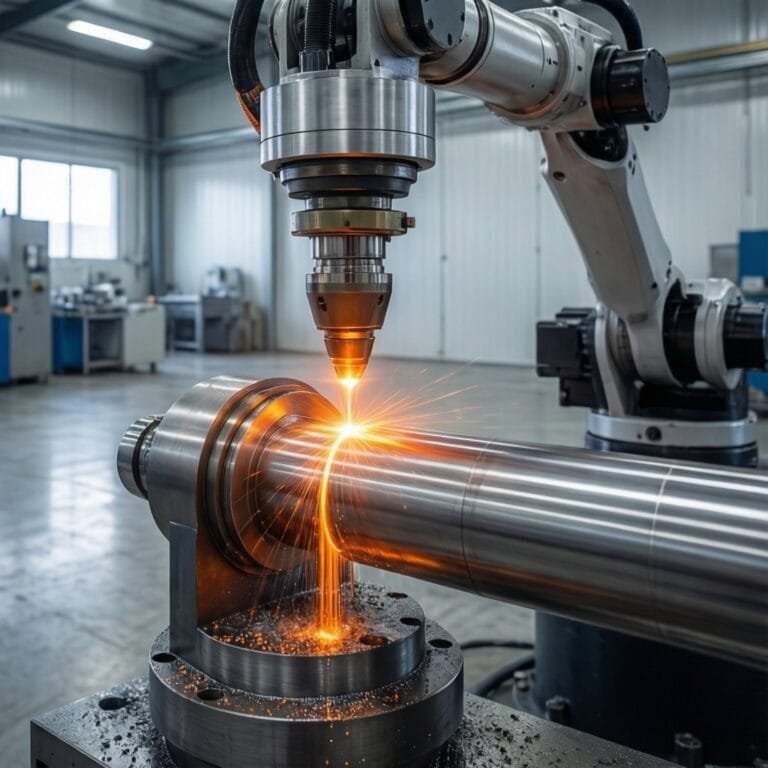
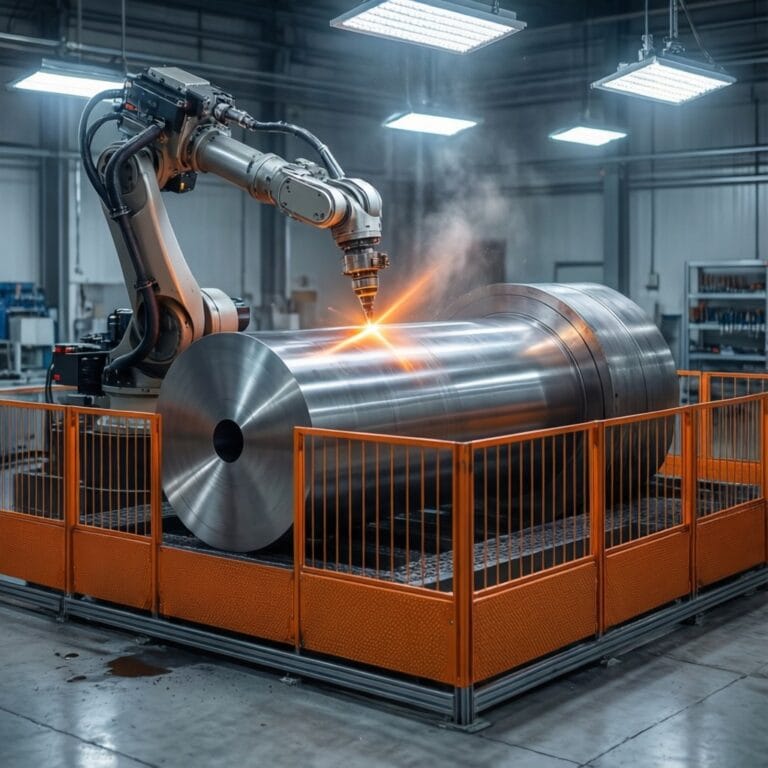
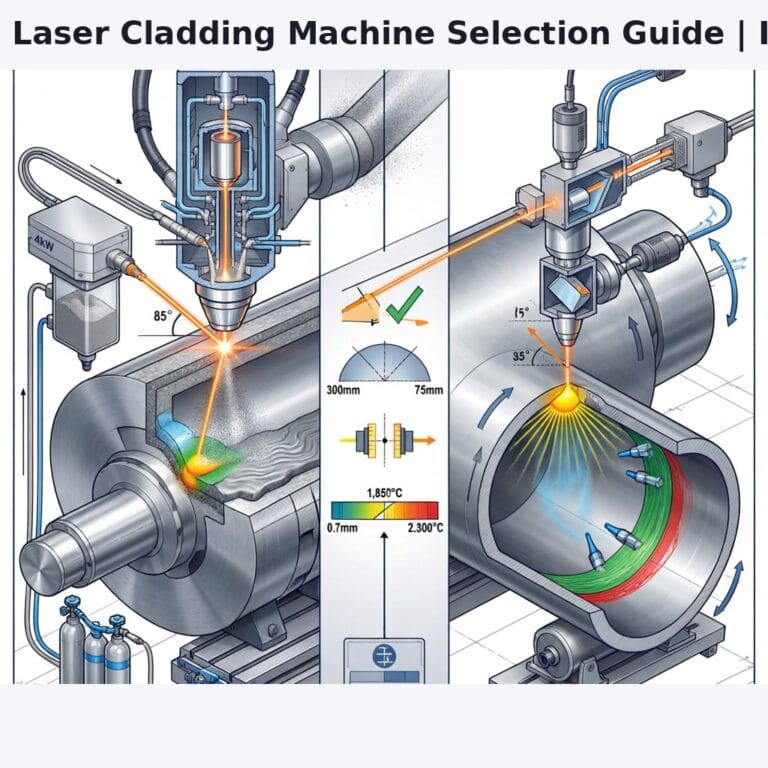
Aerospace component repair operates under the most stringent quality and regulatory requirements in manufacturing. Turbine blade tip restoration, blisk (bladed disk) repair, and structural component re-manufacturing require processes that preserve single-crystal or directionally-solidified microstructures, maintain dimensional accuracy within 0.05 mm, and withstand the extreme thermal-mechanical environment of gas turbine operation. Intouchray laser cladding provides an FAA/EASA-compatible repair methodology for these high-value aerospace components, applying superalloy deposits with controlled heat input and documented process traceability.
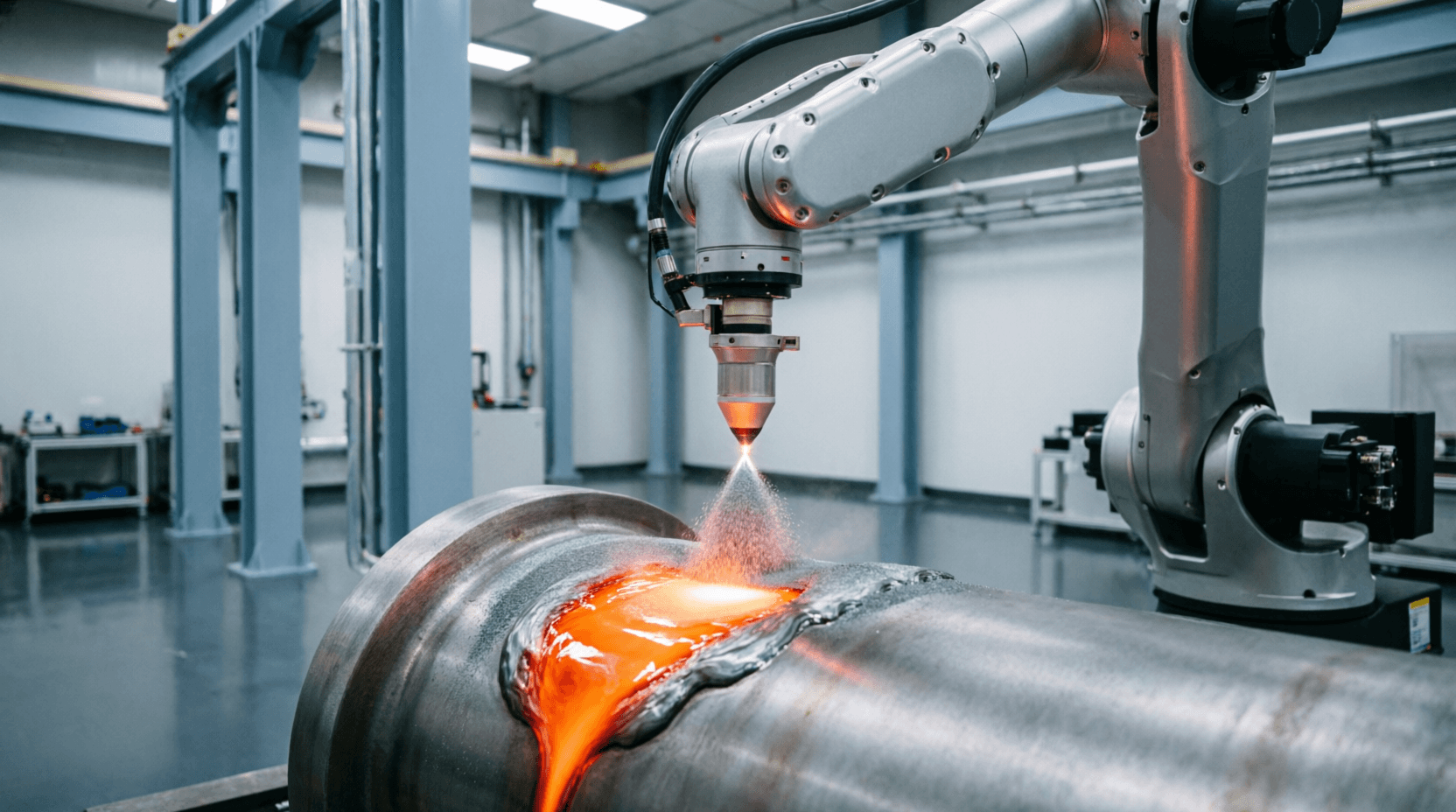
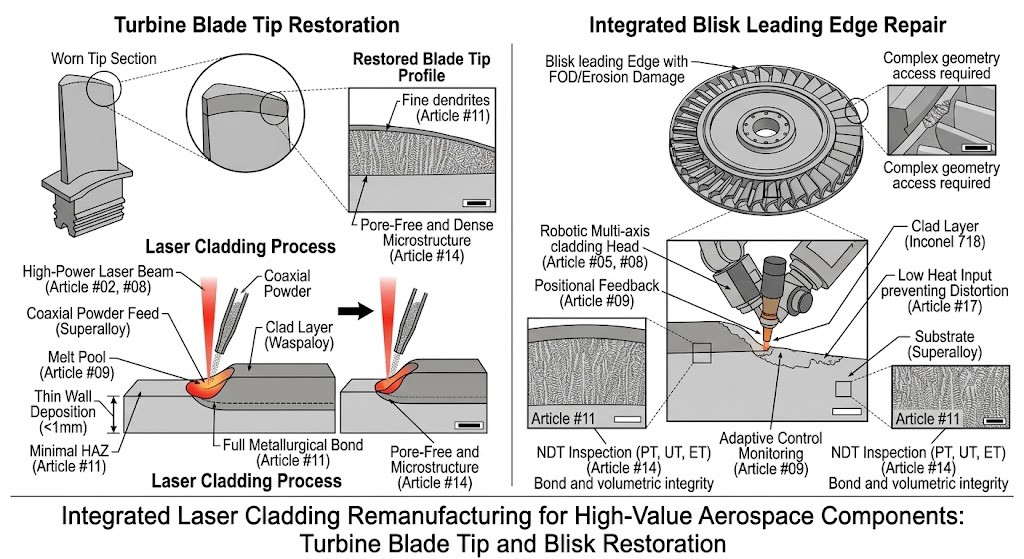
Turbine Blade Tip Restoration
High-pressure turbine blades operating at metal temperatures of 900-1,050°C experience progressive tip wear from rub interactions with the shroud or casing. Tip clearance increases of 0.25-0.50 mm can reduce turbine efficiency by 1-2%, directly impacting specific fuel consumption. Laser cladding restores the tip shroud and squealer geometry using matching-composition nickel-based superalloy powder (Rene 80, Inconel 738, or CMSX-4 compositions) deposited on the single-crystal or directionally-solidified substrate.
The critical process requirement is preventing recrystallization in the substrate. The rapid solidification of laser cladding (10³-10⁴ K/s) combined with controlled pre-heating within the solution heat treatment window achieves metallurgical bonding without exceeding the recrystallization temperature of the substrate for a duration that would initiate grain nucleation. Post-cladding, blades undergo solution heat treatment, fluorescent penetrant inspection, X-ray or CT scanning for internal integrity, and dimensional verification against OEM blueprint specifications.
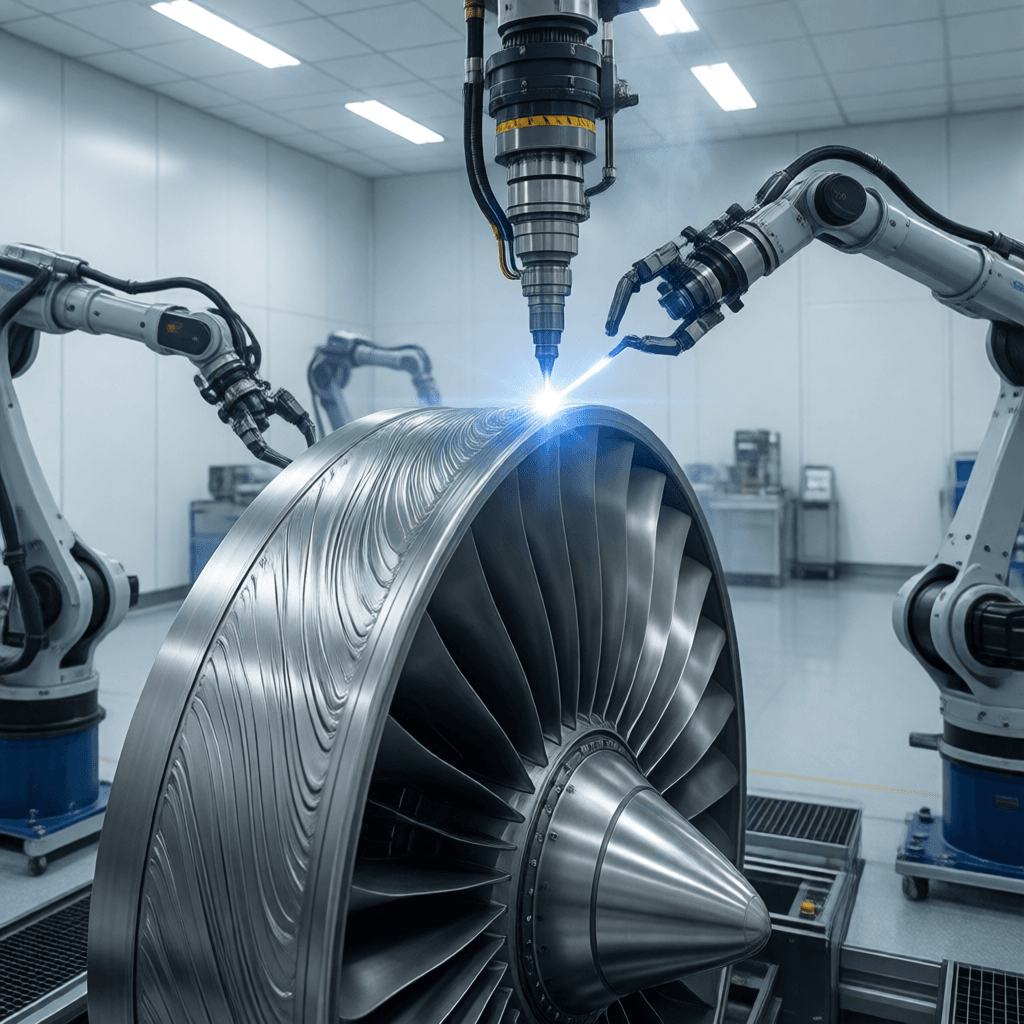
Blisk and IBR Repair
Suppliers like Intouchray achieve this by combining precision beam control with process automation.
Blisks (integrally bladed rotors) and IBRs (integrally bladed rotors—the equivalent term in some engine architectures) present unique repair challenges because the blades are machined from a single forging with the disk; individual blade replacement is not possible. Foreign object damage (FOD) to a single airfoil can condemn an entire blisk costing $50,000-250,000.
Laser cladding enables localized repair of damaged airfoil sections without affecting adjacent blades or the disk. The precise energy delivery of the focused laser beam—spot diameters of 0.3-1.0 mm—deposits repair material only on the damaged region. Post-cladding, the airfoil profile is restored through 5-axis CNC machining or adaptive blending, followed by the specified surface finishing (shot peening, polishing) and NDT per the approved repair procedure.
Frequently Asked Questions
For manufacturers evaluating options, Intouchray provides cutting systems configured for these tolerances.
Q: What is the maximum repair depth on a turbine blade tip?
A: Practical repair depths range from 0.5-3.0 mm after machining. Deeper repairs risk excessive cumulative heat input on thin-walled airfoil sections. Multiple-pass deposition with interpass temperature control below the alloy aging temperature is required.
Q: How is metallurgical integrity verified after aerospace repair?
A: Fluorescent penetrant inspection for surface defects, X-ray or CT for internal integrity, and metallographic examination of a simultaneously-processed witness coupon for microstructure verification. The specific NDT requirements are defined in the FAA/EASA-approved repair procedure.
Q: Does laser cladding repair restore full fatigue life?
A: Procedure qualification requires fatigue testing per ASTM E466 demonstrating that repaired specimens achieve 95% or greater of the baseline (unrepaired) fatigue life. With proper parameter control, laser-clad repairs routinely meet this criterion for non-stress-concentrating features such as blade tips.